
Freedom Camping North Island: Rules by District
North Island freedom-camp legal map — Northland through Wellington, district-bylaw differences. Honest, granular how-to — written from on-th...
- logistics
- free-stays
Freedom camping on the North Island is not one rule from Cape Reinga to Wellington. The Freedom Camping Act 2011 sets the national frame, but local council bylaws decide the street, reserve, beach car park, time limit and vehicle type.
Get the planning checklist that pairs this with the route-level gotchas for your trip, or reply with your dates if you'd like a planner to flag the freedom-camping-specific traps on your week.
What the North Island rules actually turn on
The short version: your vehicle, the land owner, and the local bylaw all matter. Since the 2023 self-containment amendment, vehicle-based freedom camping is being pushed toward certified self-contained vehicles with toilets, water storage and sealed grey-water systems.
Older certificates were built around NZS 5465:2001. The current green-warrant system is tied to NZS 5465:2022. If a listing just says “self-contained”, ask what sticker or warrant it carries. The Self-contained certification explained guide goes deeper on that paperwork.
Council bylaws override the national Act locally. Auckland is one of the stricter North Island councils, and Queenstown Lakes and Tasman are similarly tight on the South Island. Fines are not theoretical: $400 instant fines are common, illegal grey-water dumping can be up to $200 per litre, and serious cases can reach $10,000. For the base law, see doc.govt.nz and council freedom camping pages before you sleep there.
Northland, Auckland and Coromandel: coastal pressure zones
This is where first-timers get caught. The Bay of Islands round-trip and Auckland to Bay of Islands drive look easy on a map, but summer demand changes the camping reality. Auckland to Paihia is about 230 km and usually 4 hours in a motorhome, longer on Friday afternoons.
Far North, Whangārei and Kaipara Districts all manage popular beach reserves closely. Paihia, Russell, Tutukākā and Matapōuri are not places to assume a quiet overnight beside the water. Use signed sites only, and expect time limits.
Auckland Council uses mapped permitted and prohibited areas. Many waterfront reserves are no overnight camping, even if there are toilets nearby. The Auckland region is also where city parking rules and freedom camping rules overlap, so read the sign twice.
On the Coromandel Peninsula loop, Thames-Coromandel and Hauraki rules vary by location. January is the pinch month. If you do not have a confirmed legal site, use safer bases like Miranda Holiday Park, Athenree, or a booked DOC-style campground rather than gambling on a beach car park.
Rotorua, Taupō and Tongariro need different thinking
The Rotorua + Tongariro loop is not hard because of distance. Auckland to Rotorua is about 230 km and 3.5 to 4 hours on SH1 and SH5, then Rotorua to Taupō is 80 km and 1 hour 15 minutes. The trap is assuming tourist towns are relaxed about overnight parking.
Rotorua Lakes Council generally points campers to signed places, with conditions. Geothermal areas, lakefront reserves and busy city edges are watched. Rotorua Thermal Holiday Park is a practical fallback when you need showers, laundry and a legal reset.
Tongariro National Park is stricter. You cannot just sleep at a Tongariro Alpine Crossing car park because you are starting early. Use booked legal camping or holiday park options around National Park Village, Whakapapa or Tūrangi, and check current DOC notices at doc.govt.nz. Weather changes fast there, even in March.
Hawke's Bay to Wellington: do not leave it until dark
Napier to Wellington is about 320 km and 5 to 6 hours in a motorhome via SH2, depending on wind and road works. Rotorua to Wellington is closer to 450 km and 7 to 8 hours. Those are long North Island days, especially if you are new to left-side driving.
Hawke's Bay councils control beach reserves carefully around Napier, Hastings and coastal settlements. Wairarapa has some easier-feeling country roads, but legal overnight spots are still signposted and bylaw-led.
Wellington is not a good place to improvise in a large vehicle. City streets are tight, hills are steep, and ferry mornings create pressure. If you are joining the Wellington to Picton ferry crossing, allow 3 hours 20 minutes on the water, or about 3.5 hours with loading. For ferry rules and vehicle length, see Maritime NZ for the ferry side and the Cook Strait ferry with a campervan guide.
Safer fallbacks when the bylaw answer is not clear
If a sign, app pin or old blog post disagrees, trust the sign and the council bylaw. Apps are useful, but they are not legal authority.
- Use a holiday park on arrival nights. Russell Top 10, Miranda Holiday Park and Rotorua Thermal Holiday Park remove the first-night stress.
- Use DOC or council campgrounds where camping is clearly allowed. Uretiti Beach, Puriri Bay and Tapotupotu are useful Northland examples, but check seasonal access and booking rules at doc.govt.nz.
- Empty grey water before it is urgent. Pair this page with the Dump stations North Island map, especially before Coromandel, East Cape or Wellington.
- Plan by month. The Best time of year for a NZ campervan trip guide matters because January and Easter change availability more than most visitors expect.
- Pick the right size. A compact self-contained van is easier in Auckland and Wellington. A larger ensuite motorhome gives more comfort, but parking choices shrink.
For the wider national rule set, start with Freedom camping in NZ, then apply this North Island layer to your actual route.
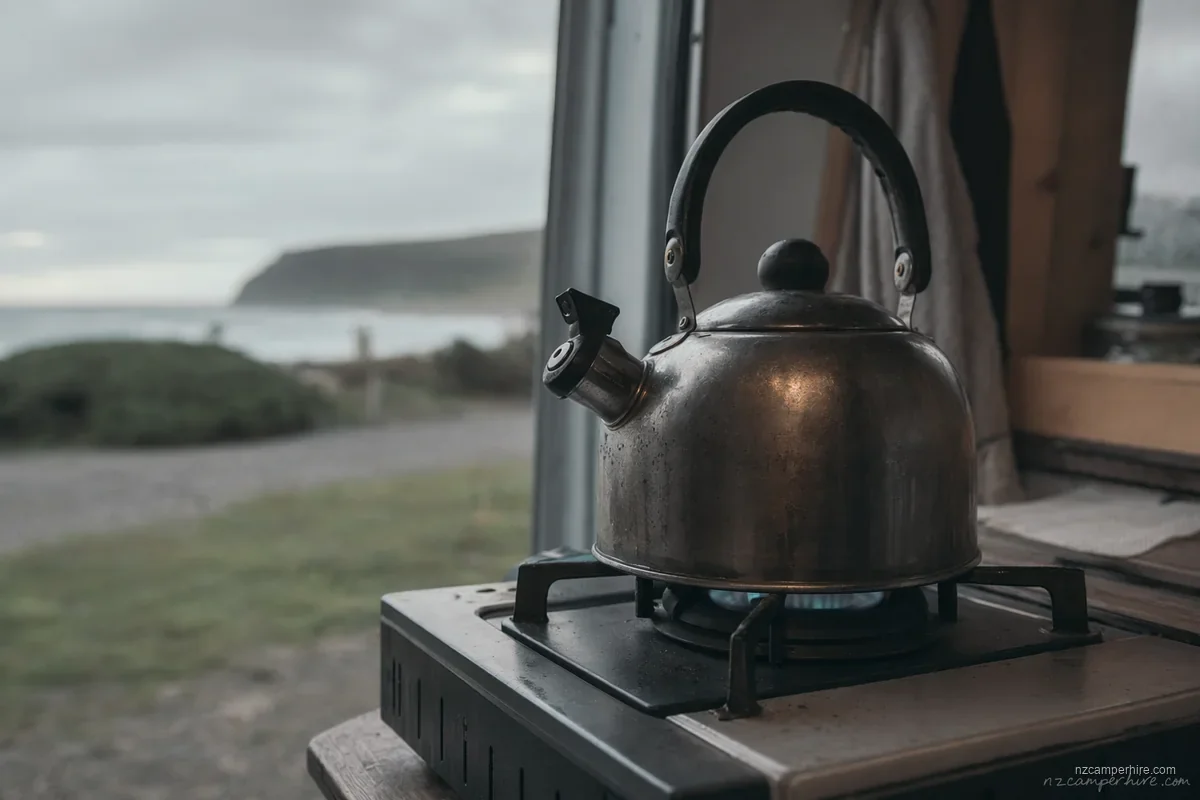
Rules and practicalities are easier to remember when you've felt them — the cold of a wet boot at a freedom camp, the relief of an early ferry slot. This guide is written from those moments, not from a checklist.
Related reading
 ROUTE
ROUTE South Island in 14 days
Classic clockwise South Island loop — Kaikoura, Nelson, West Coast glaciers, Wanaka, Queenstown, Milford Sound, Tekapo, back to Christchurch.
See the route REGION
 Queenstown
Southern Lakes depot. Closest pickup for Milford Sound, Wanaka, Glenorchy, and the Southern Scenic Route.
See the region PRACTICAL GUIDE
 Best time of year for a NZ campervan trip
Month-by-month — weather, demand, school holidays, peak ferry windows.
Read the guideFreedom camping North Island FAQ
Do I need a certified self-contained vehicle for North Island freedom camping?
Can I sleep in a North Island rest area if I am too tired to drive?
Are freedom camping apps enough proof that a place is legal?
Where is freedom camping hardest on the North Island?
Have a planner answer this for your specific trip
Rules and practicalities depend on dates, party size, and route. Send us your outline and we'll come back with answers tailored to your trip.