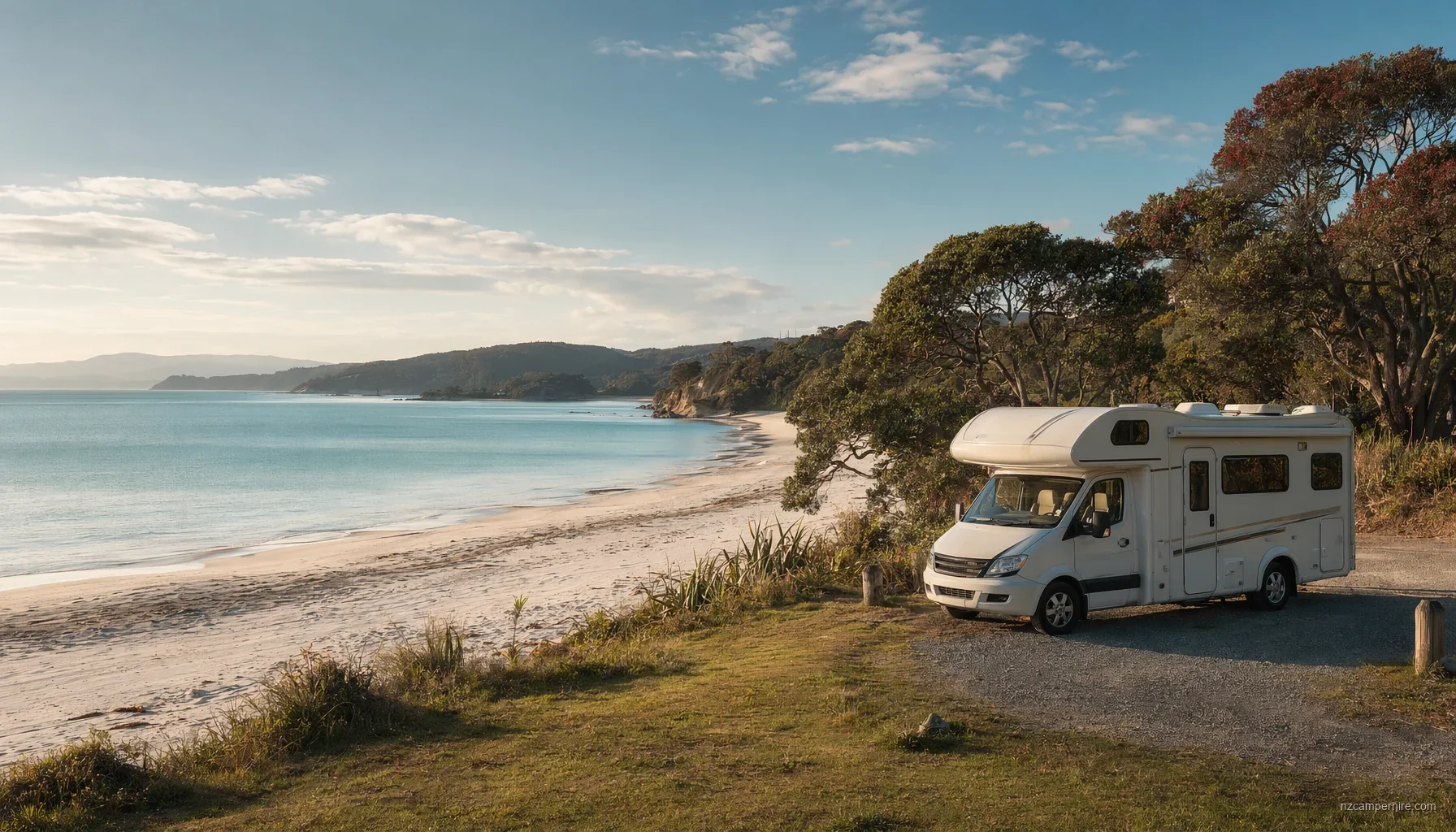
Freedom camping Northland: rules and safer stops
Far North freedom-camp options, Whangarei district, Bay of Islands. Honest, granular how-to — written from on-the-ground knowledge, not comp...
- logistics
- free-stays
Freedom camping in Northland is possible, but it is not a beach-by-beach free-for-all. The tightest pressure is around the Bay of Islands, Cape Reinga day trips, and the Whangārei coast in December and January.
This guide sits under our Freedom camping in NZ guide and pairs well with the Auckland to Bay of Islands drive and the Bay of Islands round-trip. Get the planning checklist that pairs this with the route-level gotchas for your trip, or reply with your dates if you'd like a planner to flag the Northland freedom-camping-specific traps on your week.
Northland has three rule books, not one
Northland is split between Far North District, Whangārei District, and Kaipara District. The Bay of Islands, Paihia, Russell, Kerikeri, Kaitaia, Ahipara, and Cape Reinga access roads sit in the Far North. Whangārei, Tutukaka, Whangārei Heads, Waipū and Bream Bay sit under Whangārei District rules.
The national starting point is the Freedom Camping Act 2011, updated by the 2023 self-containment amendment. Local council bylaws then decide where you can actually stay. Those bylaws override the national permission locally. Queenstown Lakes, Tasman, and Auckland are the names travellers hear about most, but Northland councils also use restricted and prohibited areas.
Do not rely on an old app pin without checking the sign on site. For live rules, see the council pages at fndc.govt.nz and wdc.govt.nz, DOC campsite details at doc.govt.nz, and road-rest rules through NZTA / Waka Kotahi.
Far North and Bay of Islands pressure points
The Auckland to Bay of Islands drive is about 230 km to Paihia and usually takes 3.5 to 4.5 hours in a motorhome on SH1, longer on a Friday before a public holiday. January is the hardest month. Paihia, Waitangi, Russell waterfront, Kerikeri Basin, and popular beach reserves are closely watched because locals have dealt with waste, noise, and blocked access.
Far North District uses designated responsible camping areas and prohibited zones. If a sign says no overnight camping, a certified self-contained vehicle does not change that. Around Cape Reinga, the common mistake is trying to sleep in a car park after the long drive north. Paihia to Cape Reinga is about 210 km each way and a real 3 hours one way, so plan a legal night rather than driving tired.
Safer public-land options in the far north are often DOC campsites, not freedom camping. Check Tapotupotu Campsite near Cape Reinga, Rarawa Beach Campsite, Maitai Bay Campsite, Puketi Recreation Area, and Puriri Bay at Whangaruru North Head. They have rules, fees, booking windows or on-site payment, and capacity limits.
Whangārei, Waipū and the SH1 overnight problem
Whangārei is where many travellers reset before heading north. It has supermarkets, fuel, laundries, water, dump stations, and easier road access than the smaller coastal settlements. Whangārei to Paihia is only about 70 km, but allow 1 hour 15 minutes in a motorhome because SH1 is not a motorway here.
Whangārei District is more useful as a planning buffer than as a random overnight zone. Coastal areas such as Tutukaka, Matapōuri, Whangārei Heads, and Waipū Cove have local restrictions and heavy summer demand. A road-end car park that looks empty at 6 pm can still be a prohibited camping area.
For a lawful low-friction night, look at DOC's Uretiti Beach Campsite south of Whangārei, Otamure Bay near Whananaki, or a proper holiday park if you need power and showers. Uretiti is handy if you are driving north from Auckland late in the day, but book early for Christmas, New Year, and Auckland Anniversary weekend.
Self-contained does not mean park anywhere
Northland freedom camping only works if the vehicle and the location both qualify. Your vehicle needs valid self-containment certification under the relevant NZS 5465:2001 or NZS 5465:2022 green-warrant standard during the transition period. The newer rules focus more tightly on a fixed toilet, sealed grey-water storage, and enough capacity for the people sleeping in the vehicle.
Carry the certificate details and check that the windscreen label matches the vehicle. A 2-berth or compact 4-berth is easier in Northland than a long 6-berth because beach access roads, ferry ramps, and small turning areas are not built for large vehicles. NZ drives on the left, and many Northland roads are narrow, winding, and slower than they look on a map.
The fine can be $400 instantly for illegal freedom camping. Illegal grey-water dumping can reach up to $200 per litre, and serious cases can climb to $10,000. Pair this with Self-contained certification explained, Dump stations North Island map, and Freedom camping North Island before you build a week around free nights.
Safer fallbacks when the legal spots are full
If you do not have certified self-containment, if you arrive after dark, or if the legal sites are full, use a paid fallback. It is usually cheaper than a fine and much better than arguing with a ranger at 7 am.
- Bay of Islands: Russell Top 10, Waitangi Holiday Park, Bay of Islands Holiday Park near Haruru Falls, and Russell-Orongo Bay Holiday Park.
- Far North: Ahipara Holiday Park, Pukenui Holiday Park, and DOC sites such as Rarawa Beach or Tapotupotu when open and available.
- Whangārei and Bream Bay: Whangārei TOP 10 Holiday Park, Uretiti Beach Campsite, and Waipū Cove campgrounds when you want a proper shower and power night.
For a first trip, I would not plan more than one or two freedom-camp nights on a Northland week in summer. Use the Bay of Islands region guide for pacing, the North Island in 10 days route if Northland is only one piece of the trip, and Holiday parks vs DOC campsites for the comfort trade-off.
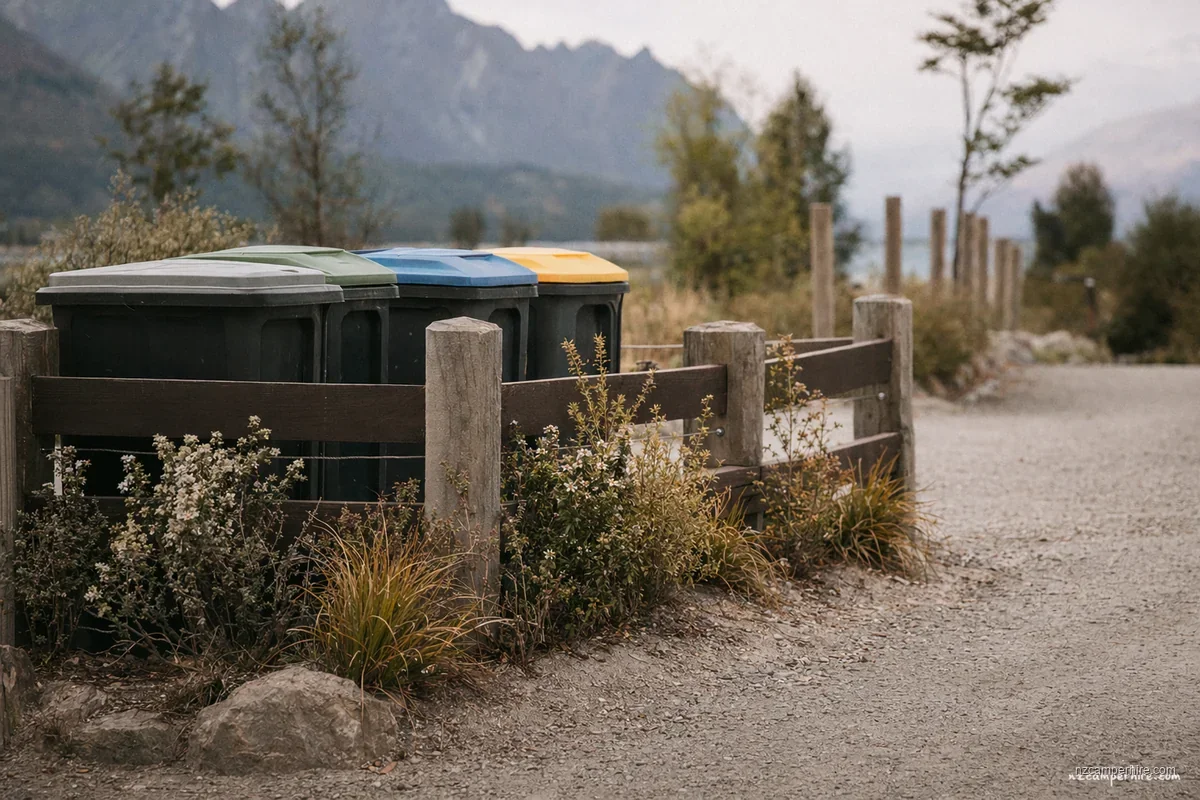
Rules and practicalities are easier to remember when you've felt them — the cold of a wet boot at a freedom camp, the relief of an early ferry slot. This guide is written from those moments, not from a checklist.
Related reading
 ROUTE
ROUTE South Island in 14 days
Classic clockwise South Island loop — Kaikoura, Nelson, West Coast glaciers, Wanaka, Queenstown, Milford Sound, Tekapo, back to Christchurch.
See the route REGION
 Queenstown
Southern Lakes depot. Closest pickup for Milford Sound, Wanaka, Glenorchy, and the Southern Scenic Route.
See the region PRACTICAL GUIDE
 Best time of year for a NZ campervan trip
Month-by-month — weather, demand, school holidays, peak ferry windows.
Read the guideFreedom camping Northland FAQ
Can I freedom camp at Paihia or Russell in a certified motorhome?
Is Cape Reinga okay for overnight freedom camping?
What self-containment sticker do I need in Northland?
Are Northland freedom camping fines actually enforced?
Have a planner answer this for your specific trip
Rules and practicalities depend on dates, party size, and route. Send us your outline and we'll come back with answers tailored to your trip.