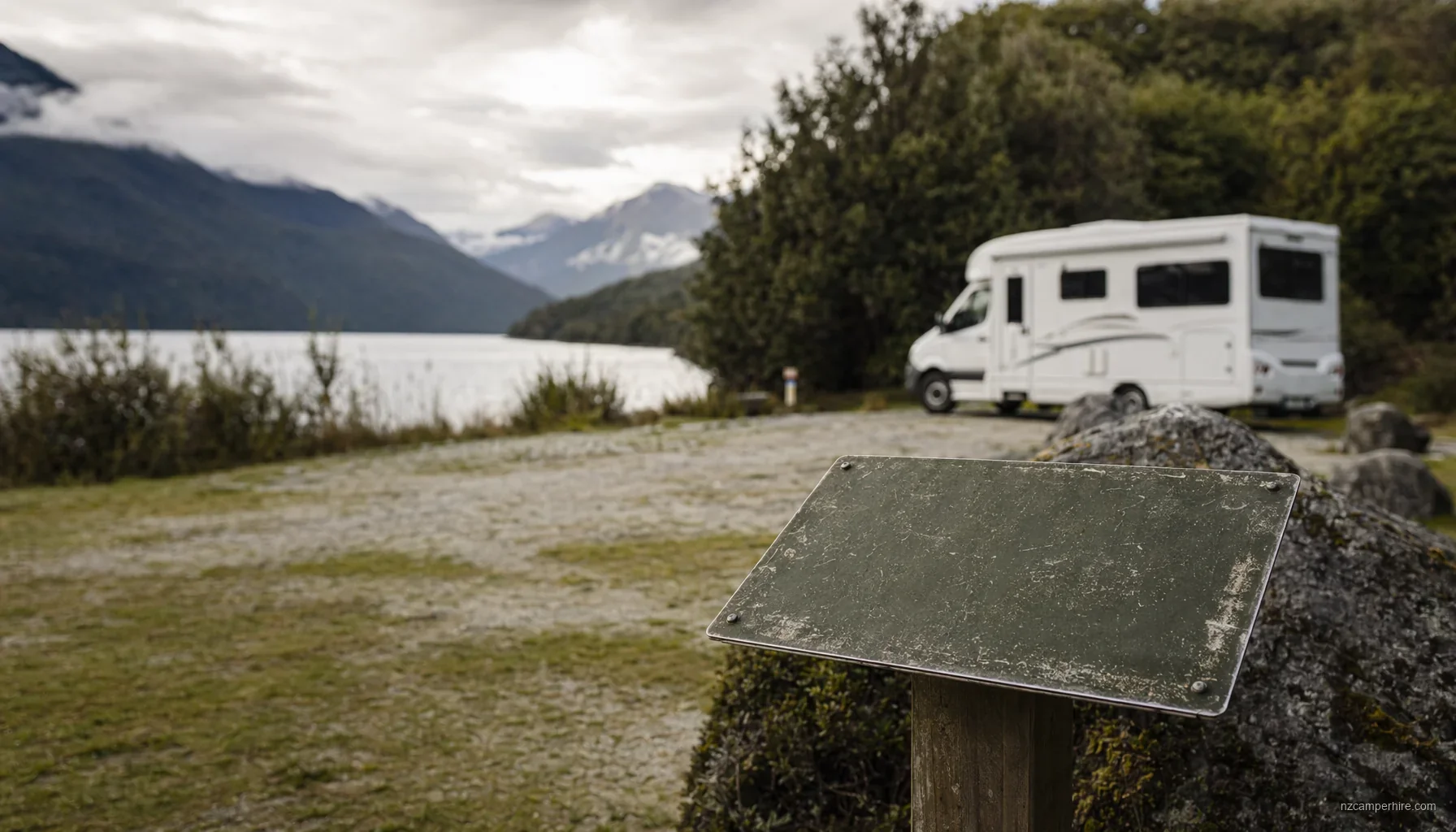
Freedom camping rules 2026 for NZ motorhomes
2024-onwards Self-Contained Motor Vehicles Act changes, blue certification sticker rules, fines. Honest, granular how-to — written from on-t...
- logistics
- free-stays
Freedom camping in New Zealand is not a simple yes-or-no rule in 2026. The national law changed, older blue self-containment stickers are no longer enough in many cases, and councils can still close popular spots street by street.
This is the narrow rules update. For the wider trip-planning view, pair it with the Freedom camping in NZ guide, especially if your route includes Queenstown, Tasman, Auckland, or the South Island in 14 days loop in January.
Get the planning checklist that pairs this with the route-level gotchas for your trip, or reply with your dates if you'd like a planner to flag the freedom camping rule-specific traps on your week.
What changed for freedom camping after 2024
The base law is still the Freedom Camping Act 2011. The big shift came through the 2023 self-containment amendment, which tightened who can legally claim to be certified self-contained. By 2026, assume the old casual standard has gone.
The earlier blue sticker system was based on NZS 5465:2001. The current system points to NZS 5465:2022 and the newer green-warrant certification. The practical difference is simple: a proper toilet, waste storage, fresh water, and inspection record matter. A portable toilet shoved under a bed is not the safe assumption anymore.
If your rental is sold as self-contained, ask what certification it carries. Do not rely on a faded sticker in a window. Check the certification card, the registration plate, and the expiry date. For official background, see doc.govt.nz for DOC camping rules and the government self-containment guidance before relying on a roadside app.
Reading the sticker before you rely on it
There are three things to check before sleeping outside a paid campground:
- Certification type: old NZS 5465:2001 blue labels are not the same as the 2026 green-warrant expectation.
- Vehicle match: the certificate must match the registration plate, not just the vehicle model.
- Expiry: an expired certificate is not a certificate when an enforcement officer checks you at 7 am.
This bites hardest on tight routes where people arrive late and hope to find a legal pull-off. The Queenstown + Fiordland loop is the classic one. Queenstown to Te Anau is 172 km, about 2 hours 15 minutes in a motorhome. Te Anau to Milford Sound on SH94 is another 118 km, but allow 2.5 to 3 hours with photo stops, traffic, and weather.
Where the national rule stops and council bylaws start
The national Act sets the framework. Council bylaws override the national Act locally in practice. Queenstown Lakes, Tasman, and Auckland are among the most restrictive areas, and their rules can change by reserve, street, lakefront, or vehicle class.
That means a certified self-contained motorhome is only the first gate. It does not give you the right to park anywhere. In Queenstown, many lakefront and town-edge areas are prohibited overnight. Around Nelson and Tasman, some coastal areas have marked zones and season rules. In Auckland, distance from beaches, town centres, and reserves can matter.
Use apps as a clue, not the law. Then check the council website or the sign on the ground. If the sign says no overnight camping, the app is wrong for that spot.
Fines and the grey-water line people miss
The standard instant fine for breaching freedom camping rules is $400. Illegal dumping is treated much more seriously. Grey water dumped on the ground can attract penalties of up to $200 per litre, with serious cases reaching a maximum of $10,000.
Grey water is not clean water. It is sink and shower waste with food scraps, soap, sunscreen, and bacteria. Use signed dump stations, not gravel pull-offs. The Dump stations and water fills guide is worth reading before you leave Christchurch, Auckland, or Queenstown, because the easy stops are not always where you need them.
Road legality is separate again. New Zealand drives on the left. Foreign licences in English are usually valid for up to 12 months; if the licence is not in English, carry an IDP or approved translation. See the NZTA / Waka Kotahi rule for licence details.
Safer fallbacks when the legal box is not clear
If you are tired, arriving after dark, or unsure about the sign, use a paid or low-cost fallback. It is cheaper than a fine and usually a better night.
- DOC campsites: Mavora Lakes, Cascade Creek near the Milford road, White Horse Hill near Aoraki/Mount Cook, and Lake Lyndon near SH73 are useful examples, but check season access and booking rules on doc.govt.nz.
- Holiday parks: Creeksyde Queenstown, North South Holiday Park in Christchurch, Rotorua Thermal Holiday Park, and Russell Top 10 are safer town bases when bylaws are tight.
- Route planning: on South Island in 10 days or Auckland to Queenstown one-way, mark legal nights before you drive, not at dinner time.
A self-contained 2-berth or 4-berth with an internal toilet gives you more legal options than a non-certified sleeper. A 6-berth can be comfortable for families, but it is harder to park discreetly and more awkward in small council-designated bays.
Rules and practicalities are easier to remember when you've felt them — the cold of a wet boot at a freedom camp, the relief of an early ferry slot. This guide is written from those moments, not from a checklist.
Related reading
 ROUTE
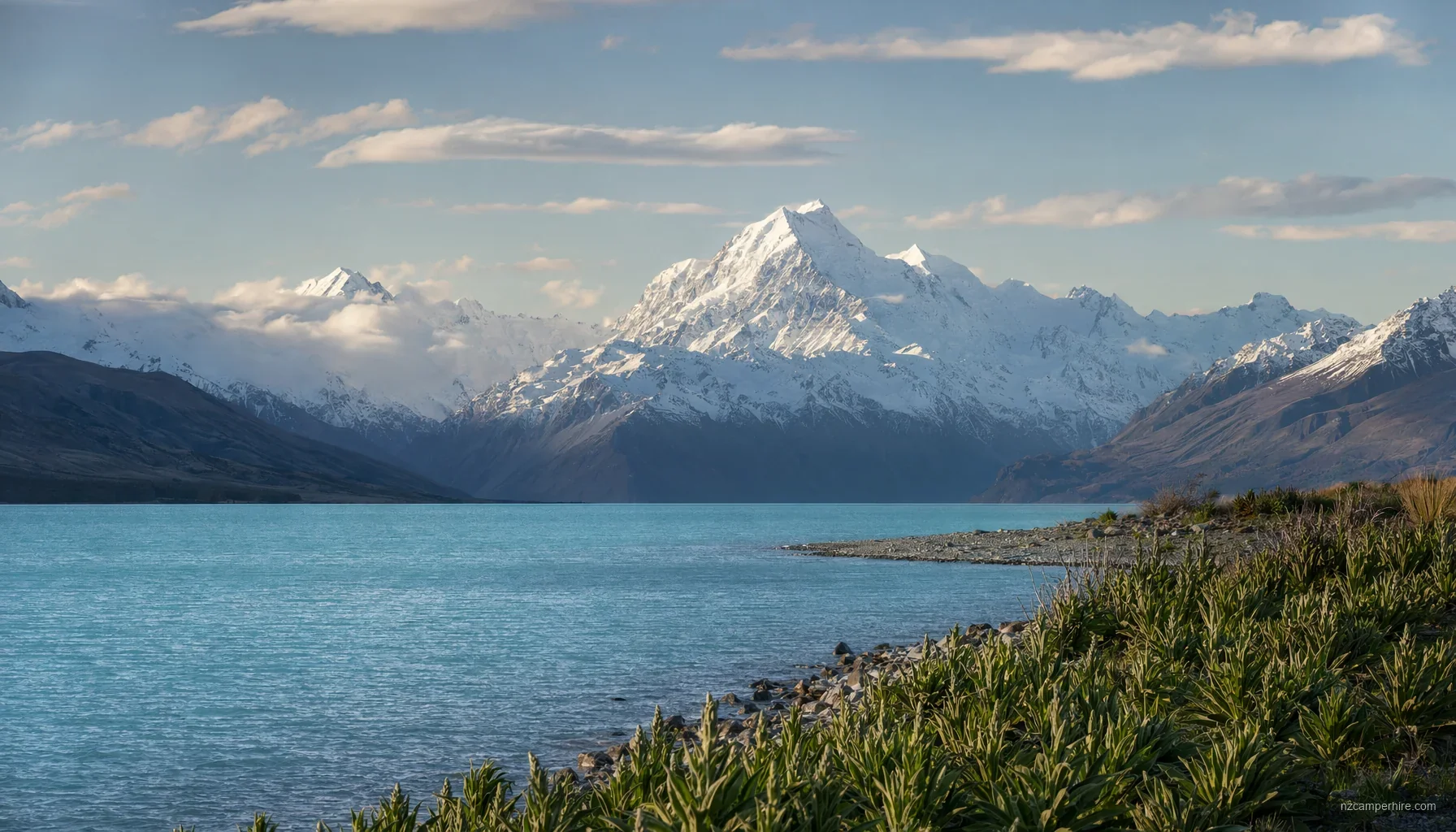
ROUTE South Island in 14 days
Classic clockwise South Island loop — Kaikoura, Nelson, West Coast glaciers, Wanaka, Queenstown, Milford Sound, Tekapo, back to Christchurch.
See the route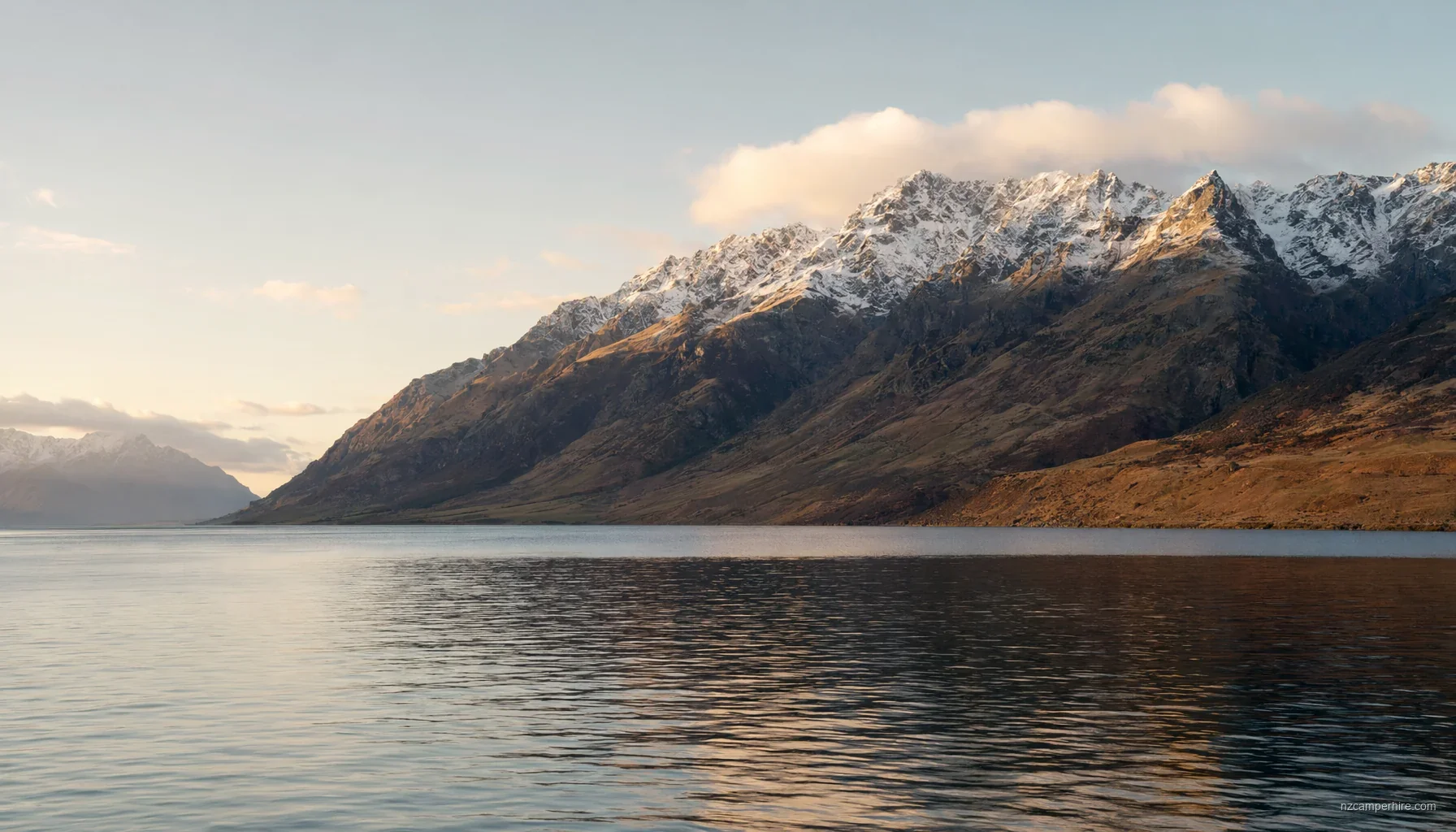 REGION
 Queenstown
Southern Lakes depot. Closest pickup for Milford Sound, Wanaka, Glenorchy, and the Southern Scenic Route.
See the region PRACTICAL GUIDE
 Best time of year for a NZ campervan trip
Month-by-month — weather, demand, school holidays, peak ferry windows.
Read the guideFreedom camping rules 2026 FAQ
Is a blue self-containment sticker still valid for freedom camping in 2026?
Can I freedom camp anywhere if my motorhome is certified self-contained?
What fine will I get for illegal freedom camping?
Are DOC campsites the same as freedom camping?
Have a planner answer this for your specific trip
Rules and practicalities depend on dates, party size, and route. Send us your outline and we'll come back with answers tailored to your trip.