Interislander vs Bluebridge 2026: Which Ferry to Pick for NZ
Two operators, sailings, vehicle pricing, cabin options, current strike/maintenance reality. Honest, granular how-to — written from on-the-g...
- logistics
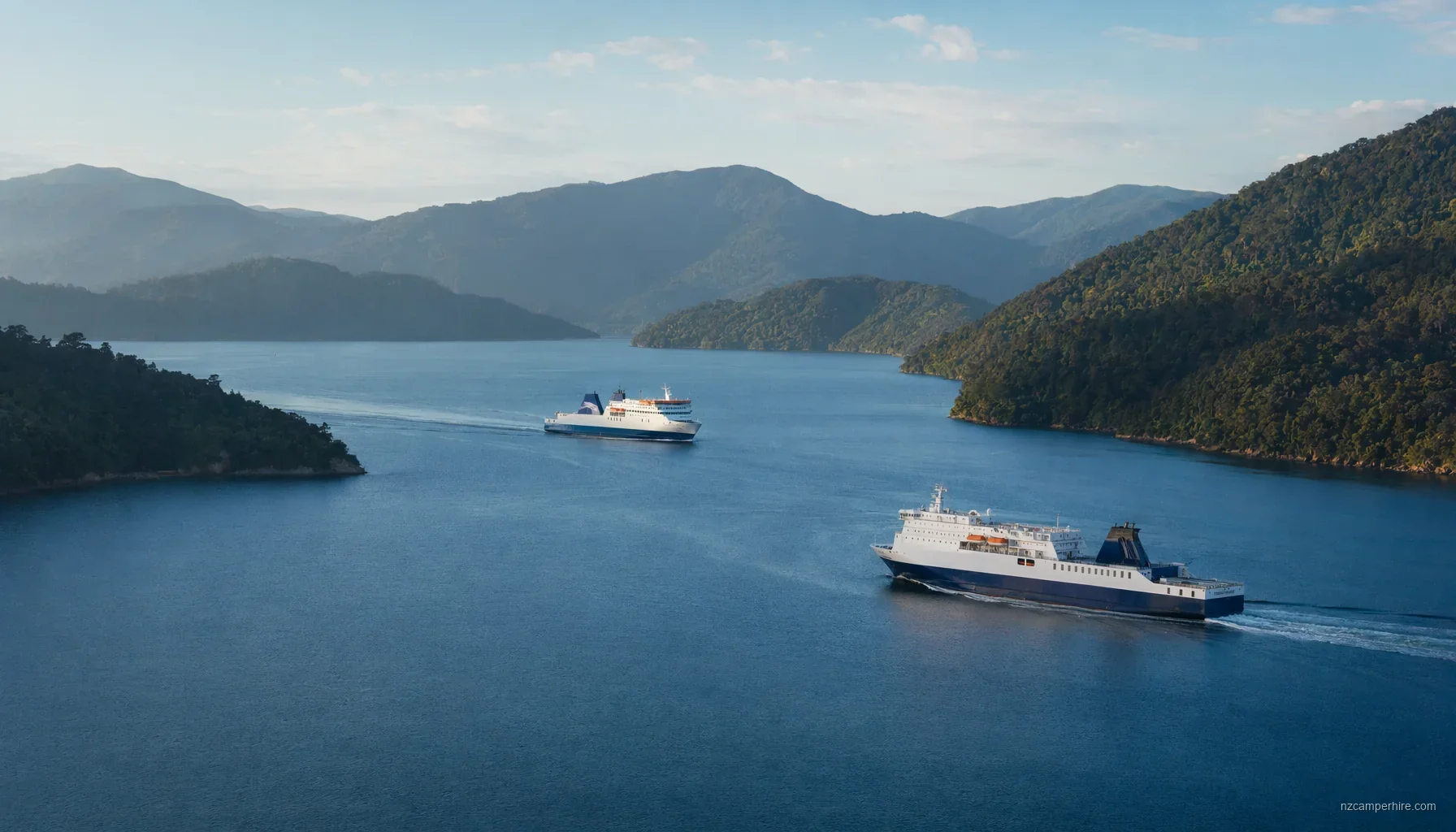
Interislander and Bluebridge both cross Cook Strait between Wellington and Picton. The sailing is 3 hours 20 minutes on paper, closer to 3.5 to 4 hours once you include loading, and the right choice usually comes down to sailing time, vehicle length rules, and how much disruption buffer your route has.
Get the planning checklist that pairs this with the route-level gotchas for your trip, or reply with your dates if you'd like a planner to flag the ferry-specific traps on your week.
The decision is mostly timetable, then backup room
For a motorhome trip, neither ferry is automatically the better operator. Pick the sailing that protects your day. If you are driving the Wellington to Picton ferry crossing and then continuing to Kaikoura, Nelson, or Blenheim, an early sailing gives you daylight on SH1 or SH6 after Picton.
Interislander uses the Kaiwharawhara terminal in Wellington. Bluebridge uses the central Wellington terminal near the railway station. In Picton, both arrive close to town. The bigger difference is schedule fit. January sailings can fill well ahead, especially with vehicles over 6 m, so treat the Cook Strait leg like a fixed accommodation night, not a casual bridge.
This is the pinch point on North to South in 21 days and Auckland to Queenstown one-way. It matters less on a single-island route.
Vehicle fares: measure the whole camper, not the badge
Both operators price vehicles by size bands. Measure the full length stated by the rental operator, including rear bike racks or towbar fittings if they are fitted. A compact self-contained van sits in a different bracket from a 6-berth motorhome. The large vehicle may still be cheaper per person across the whole trip, but the ferry fare and loading space are part of the trade-off.
- Use the exact length, not a guess from the vehicle class name.
- Check whether the fare allows changes, because weather and mechanical delays do happen.
- Arrive for vehicle check-in early. One hour is a minimum, and 90 minutes is calmer in peak season.
- You cannot stay in the motorhome during the crossing. Take medication, chargers, passports, warm layers, and snacks upstairs with you.
Our parent guide, Cook Strait ferry with a campervan, goes deeper on LPG, handbrakes, and loading etiquette.
Cabins, lounges and rough-water comfort
Cook Strait can be flat and lovely. It can also be lumpy in a southerly. If you are prone to seasickness, choose a daytime sailing with a cabin or a reserved seat if available, and carry medication before boarding. Cabins are not just for overnight crossings. They are useful for children, jet-lagged drivers, and anyone who needs quiet before tackling South Island roads.
Bluebridge is often considered when travellers want cabin-style comfort on certain sailings. Interislander is often considered when its timetable lines up better with a long driving day. That is the honest comparison: sailing time first, onboard comfort second, price third.
A daytime north-to-south crossing also gives you the Marlborough Sounds approach into Picton. A night sailing is practical, but you are using it as transport rather than scenery.
The 2026 disruption check you should actually do
Cook Strait ferries have had maintenance issues, weather cancellations, and crew-related disruption in recent years. Do not build a same-day international flight, Milford Sound cruise, or non-refundable long drive around one ferry arriving exactly on time.
Check travel alerts from the operator 48 hours out, then again on the morning of travel. For the safety and regulatory side, see Maritime NZ for the ferry side. For road access to the terminals, check the NZTA / Waka Kotahi rule and traffic notices, especially SH1 north of Wellington, SH2 through the Hutt Valley, and SH1 south of Picton toward Kaikoura.
The Wellington region is where this plays out hardest. City traffic, terminal check-in, and left-side driving after a long flight are not a good mix. If you collect a motorhome in Wellington, sleep nearby before sailing.
Safer fallbacks when the ferry choice is too tight
If your itinerary has no spare day, simplify it. For a 7 to 10 day holiday, starting and finishing on one island is often better than forcing Cook Strait into the middle. South Island in 10 days from Christchurch avoids the ferry completely. North Island in 10 days works the same way from Auckland or Wellington.
If you must cross, add one flexible night. Southbound, stay in Wellington or Lower Hutt before sailing, then use Picton Campervan Park or a Blenheim holiday park if the ferry lands late. Northbound, stay near Picton the night before rather than rushing up from Kaikoura or Nelson on the day.
For large motorhomes, families, winter travel, and January peak dates, choose the sailing with the most recovery room, not the one that looks neatest on a spreadsheet.
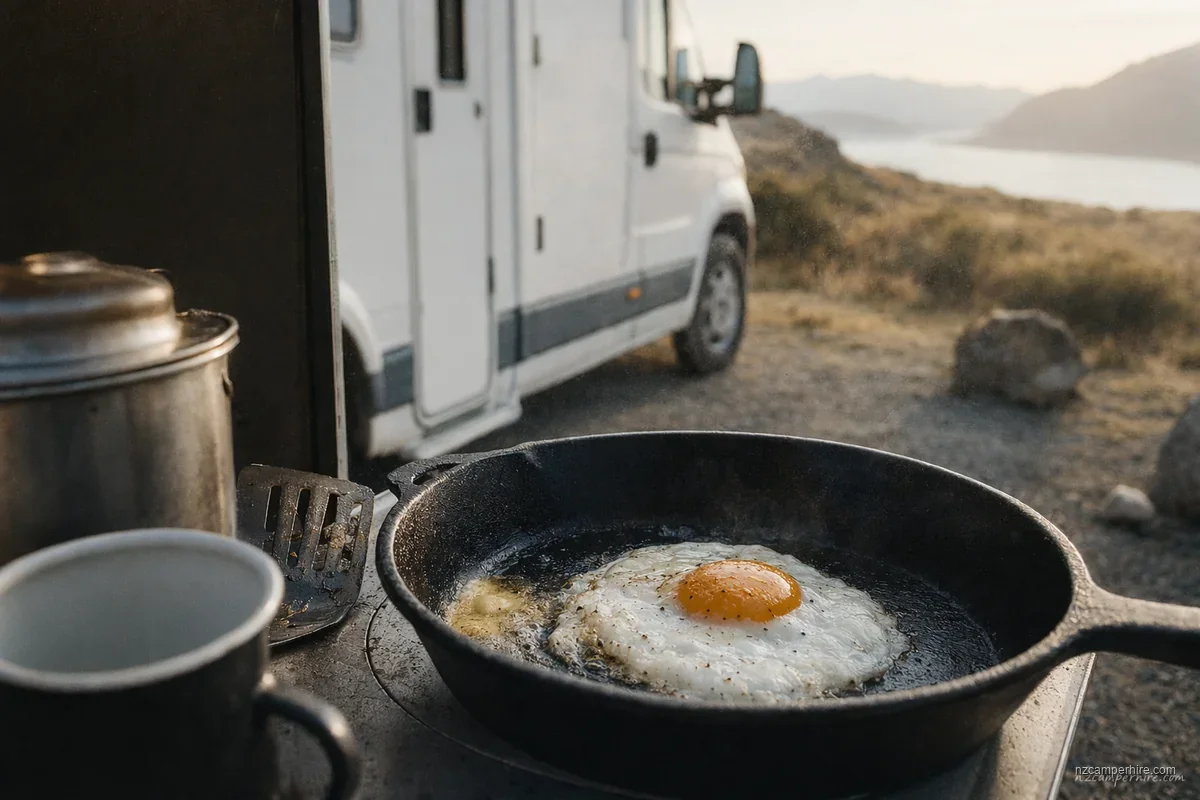
Rules and practicalities are easier to remember when you've felt them — the cold of a wet boot at a freedom camp, the relief of an early ferry slot. This guide is written from those moments, not from a checklist.
Related reading
 ROUTE
ROUTE South Island in 14 days
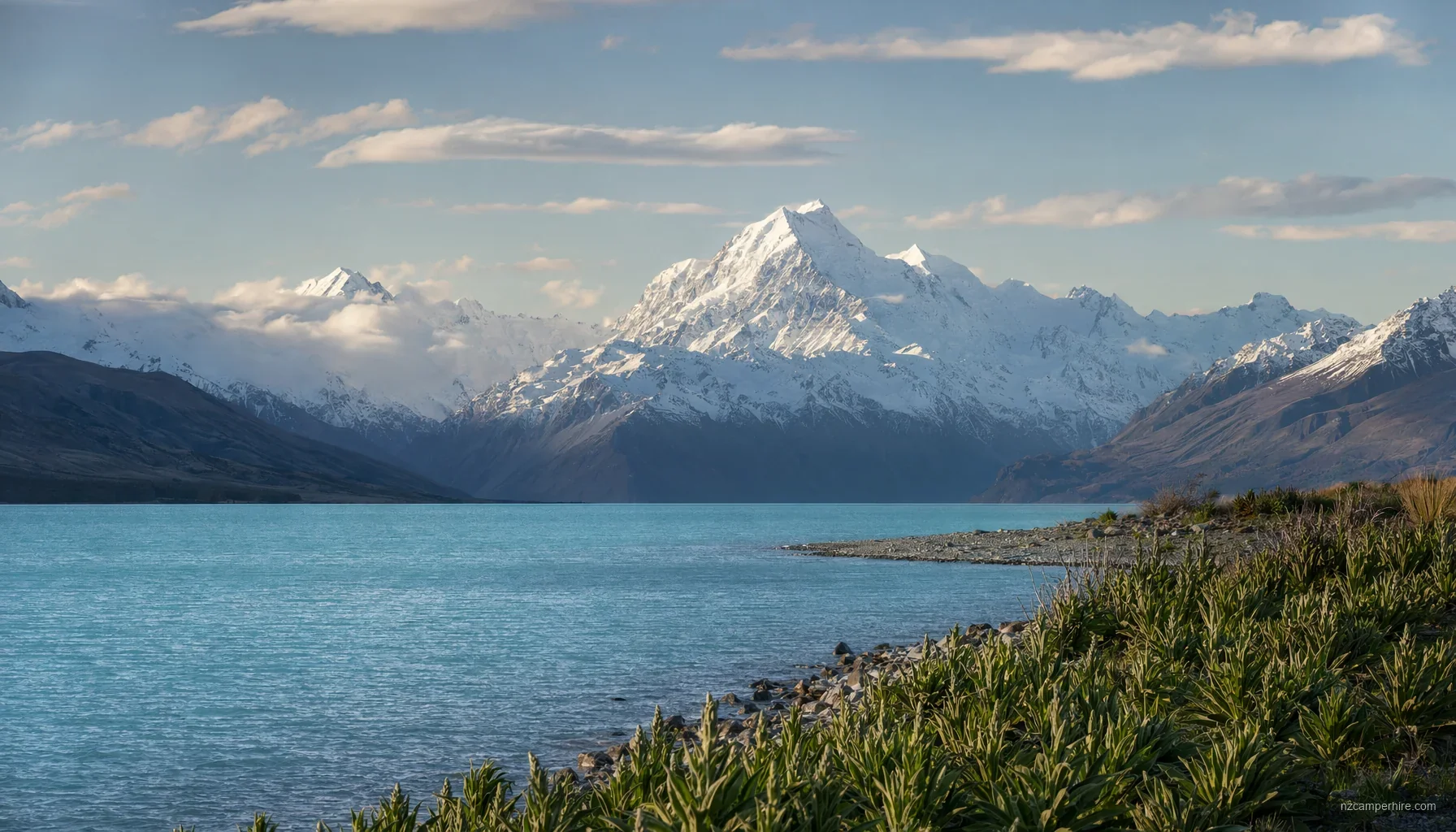
Classic clockwise South Island loop — Kaikoura, Nelson, West Coast glaciers, Wanaka, Queenstown, Milford Sound, Tekapo, back to Christchurch.
See the route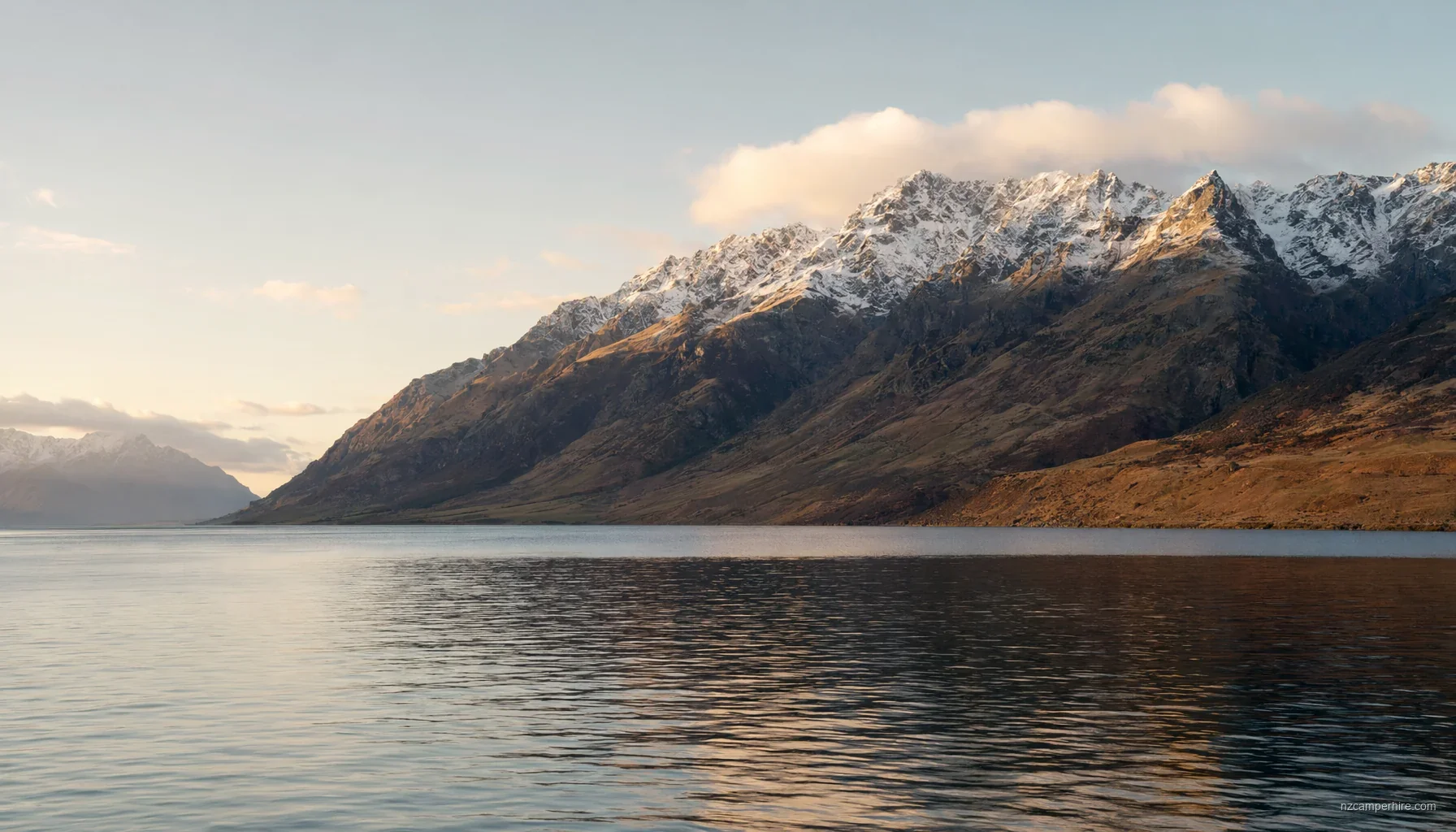 REGION
 Queenstown
Southern Lakes depot. Closest pickup for Milford Sound, Wanaka, Glenorchy, and the Southern Scenic Route.
See the region PRACTICAL GUIDE
 Best time of year for a NZ campervan trip
Month-by-month — weather, demand, school holidays, peak ferry windows.
Read the guideInterislander vs Bluebridge 2026 — which to pick FAQ
Is Interislander or Bluebridge better for a motorhome?
How long is the Wellington to Picton ferry crossing?
Can I sleep in my campervan during the ferry crossing?
How far ahead should I plan the ferry in 2026?
Have a planner answer this for your specific trip
Rules and practicalities depend on dates, party size, and route. Send us your outline and we'll come back with answers tailored to your trip.