
Motorhome trip vs hotel and rental car costs
Honest cost-comparison spreadsheet for couple, family, group of four. Honest, granular how-to — written from on-the-ground knowledge, not co...
- logistics
- budget
The nz motorhome vs rental car question has no tidy winner. A motorhome rolls transport and bed into one, but you still pay for fuel, campsites, ferry length, insurance excess choices, and the odd powered site when everyone needs showers and laundry.
Get the planning checklist that pairs this with the route-level gotchas for your trip, or reply with your dates if you'd like a planner to flag the cost-specific traps on your week.
Start with the trip shape, not the vehicle
A fair spreadsheet starts with the same route, same month, and same comfort level. A South Island in 14 days plan in January is a different calculation from North Island in 7 days in May. January lifts accommodation pressure around Queenstown, Wanaka, Lake Tekapo, and Mount Cook. March usually gives more breathing room.
Use a real driving day, not a map fantasy. Christchurch to Queenstown via SH8 and SH6 is about 480 km and 6.5 to 7.5 hours in a motorhome once you include Tekapo, the Lindis Pass at 965 m, and fuel stops. Queenstown to Milford Sound is 288 km each way via SH6 and SH94, often 4.5 to 5.5 hours one way.
Set up two columns: motorhome, and hotel plus rental car. Then use the same nights, same towns, and same one-way direction. Otherwise the answer is mostly theatre.
The spreadsheet lines most visitors forget
For the motorhome column, include the daily vehicle rate, insurance excess reduction if you want it, fuel or diesel plus any Road User Charges recovery, LPG, paid campsites, DOC campsites, laundry, dump station fees where charged, and ferry length if crossing Cook Strait. Wellington to Picton on Interislander or Bluebridge is 3 hours 20 minutes sailing, closer to 3.5 hours with loading. A longer vehicle costs more than a small car.
For the hotel and car column, include the car, accommodation, parking, breakfast, luggage storage days, one-way fees, child seats, after-hours pickups, and hotel nights near airports. In Christchurch, North South Holiday Park can be a practical first night. In Queenstown, Creeksyde Queenstown puts you close to town without fighting for central parking. Near Aoraki/Mount Cook, White Horse Hill is a different experience from a motel room, but it is not the same product.
Couples, families, and four adults break even differently
For a couple, a 2-berth motorhome often competes well against a rental car plus mid-range rooms, especially if you use a mix of holiday parks and DOC sites such as Lake Lyndon, Lake Pukaki, Mavora Lakes, or Cascade Creek. It loses ground if you book powered sites every night in peak towns and never cook.
For a family, the motorhome can work because the bedding, transport, snacks, wet weather gear, and kitchen move with you. The trade-off is space. A 6-berth is cheaper per person on paper, but it is slower through town, harder in supermarket car parks, and more tiring on roads like the Crown Range at 1,121 m.
For four adults, be careful. Two hotel rooms plus one car can be more comfortable than four people sharing one bathroom and one small dinette for two weeks.
Where New Zealand geography changes the maths
The motorhome gets stronger on routes with expensive or scarce beds, long scenic gaps, and useful campsites. The Queenstown + Fiordland loop is a good example. Te Anau to Milford Sound is 118 km one way on SH94, but road works, tunnel waits, weather, and photo stops stretch the day. Staying near Te Anau or at a legal campsite can reduce backtracking.
The hotel plus car option gets stronger in cities and short hops. Auckland, Wellington, and central Queenstown have parking friction. A car is easier for restaurant nights and tight motel forecourts. Queenstown is also one of the regions where freedom camping rules are strict, so do not assume free nights will balance the spreadsheet.
Read this beside What a NZ campervan trip actually costs, Fuel economy and prices in NZ, and Holiday parks vs DOC campsites. Those guides fill in the numbers that change by season.
Safer fallbacks if the sums are too tight
If the motorhome column is close but not clearly better, adjust the plan before cutting the essentials. Travel in shoulder season, especially March, April, October, or November. Shorten the one-way distance. Drop Cook Strait if the ferry length charge and timing hurt the budget. Build a loop from Christchurch, Auckland, or Queenstown instead.
- Use a smaller vehicle: a 2-berth or compact 4-berth is easier to park and usually uses less fuel than a large family motorhome.
- Mix campsite types: alternate holiday parks with DOC sites, rather than relying on either every night.
- Choose fewer bases: three nights in Wanaka or Rotorua can cost less than moving daily.
- Keep the car option honest: add parking, meals, and hotel location, not just the room headline.
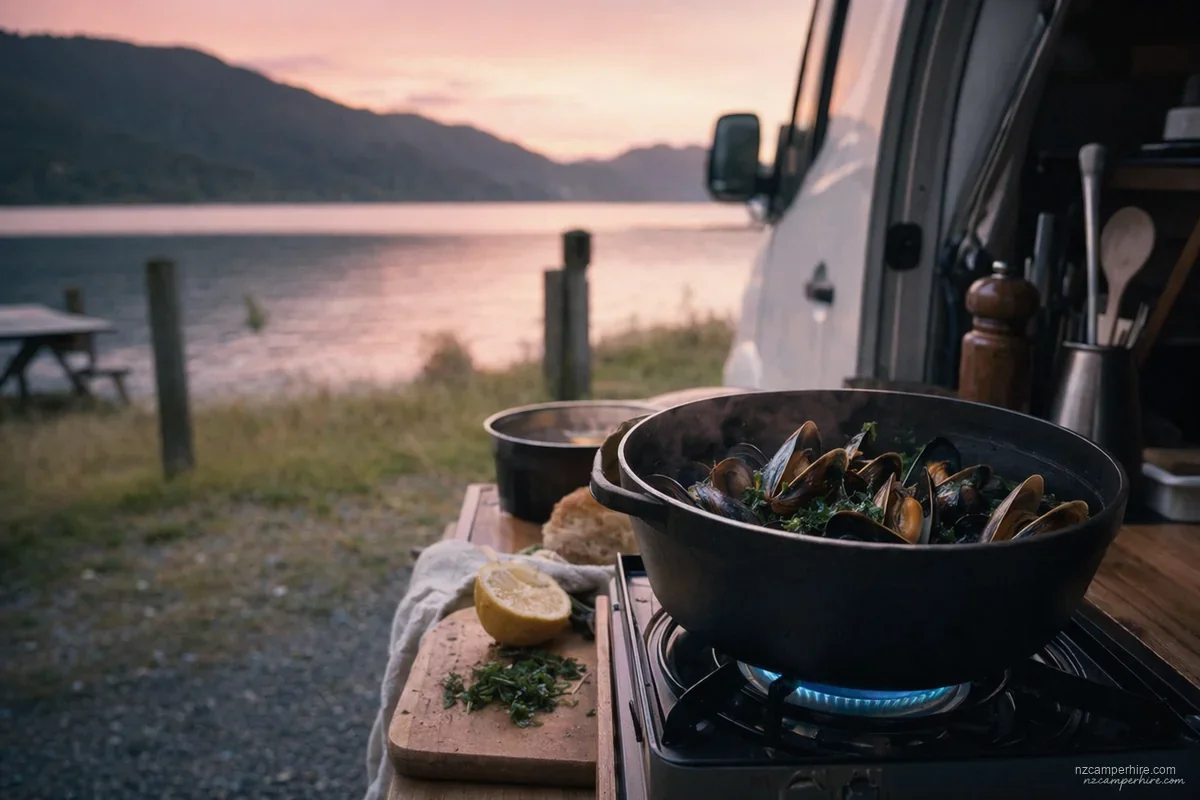
Rules and practicalities are easier to remember when you've felt them — the cold of a wet boot at a freedom camp, the relief of an early ferry slot. This guide is written from those moments, not from a checklist.
Related reading
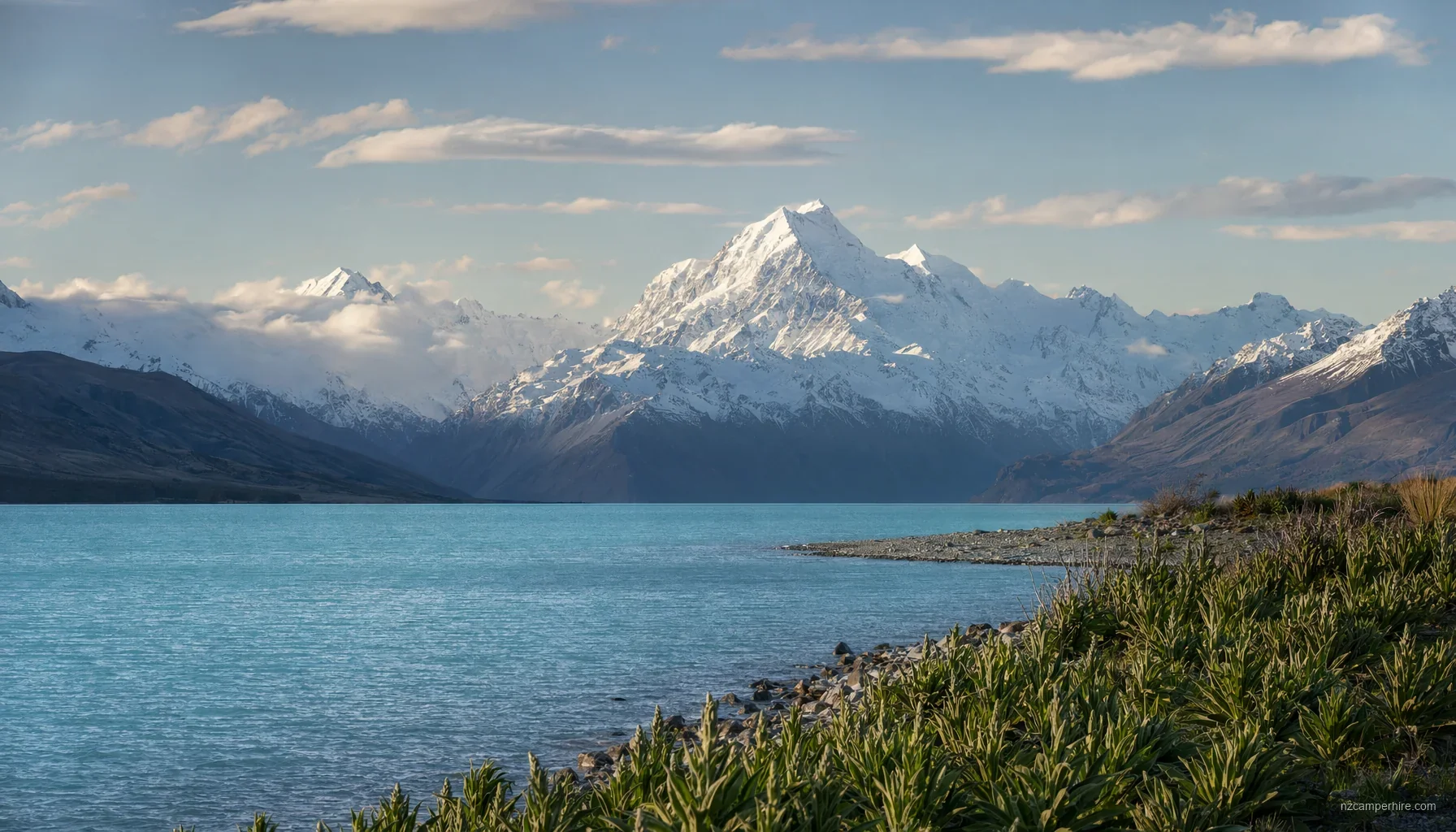 ROUTE
ROUTE South Island in 14 days
Classic clockwise South Island loop — Kaikoura, Nelson, West Coast glaciers, Wanaka, Queenstown, Milford Sound, Tekapo, back to Christchurch.
See the route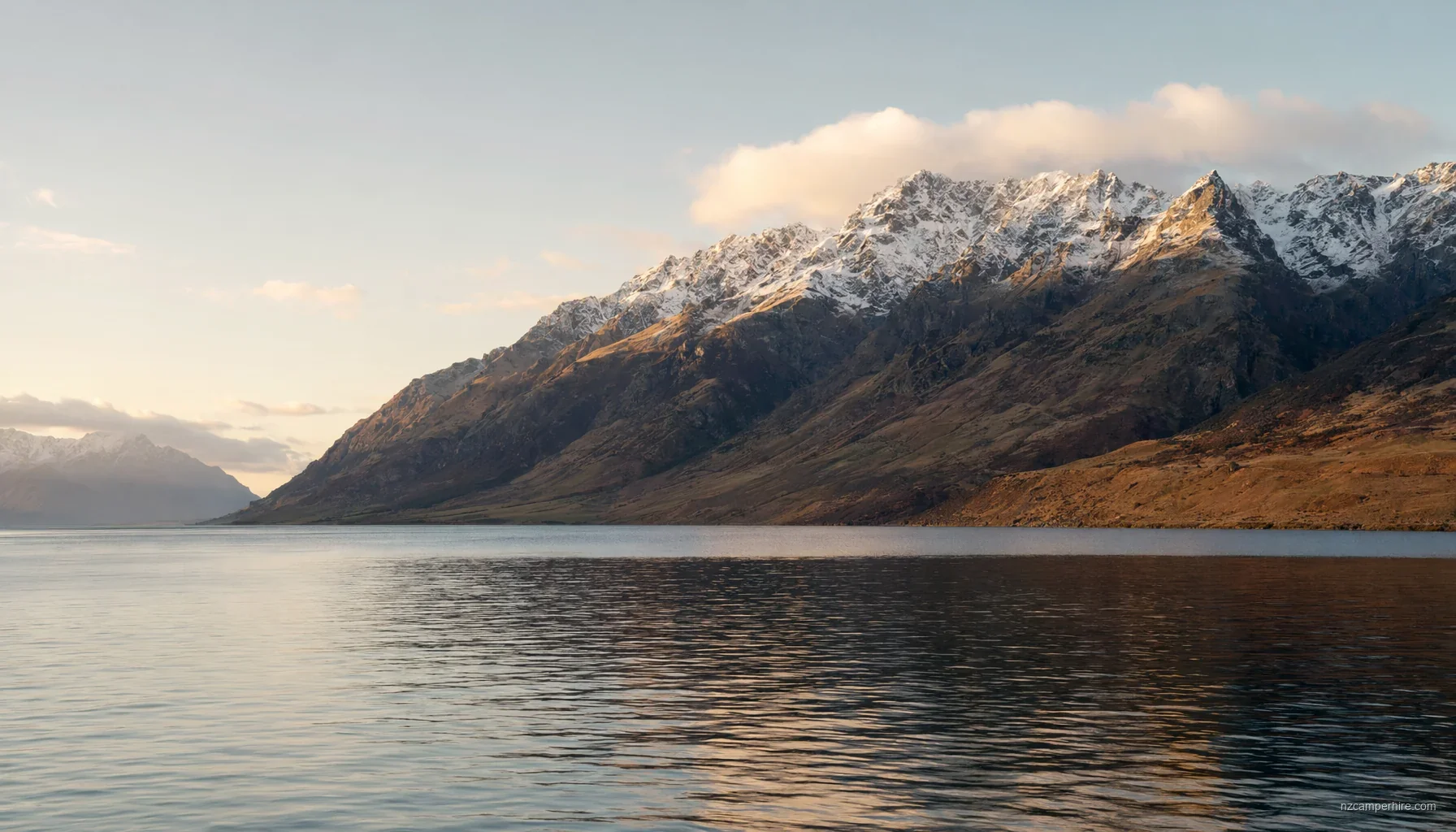 REGION
 Queenstown
Southern Lakes depot. Closest pickup for Milford Sound, Wanaka, Glenorchy, and the Southern Scenic Route.
See the region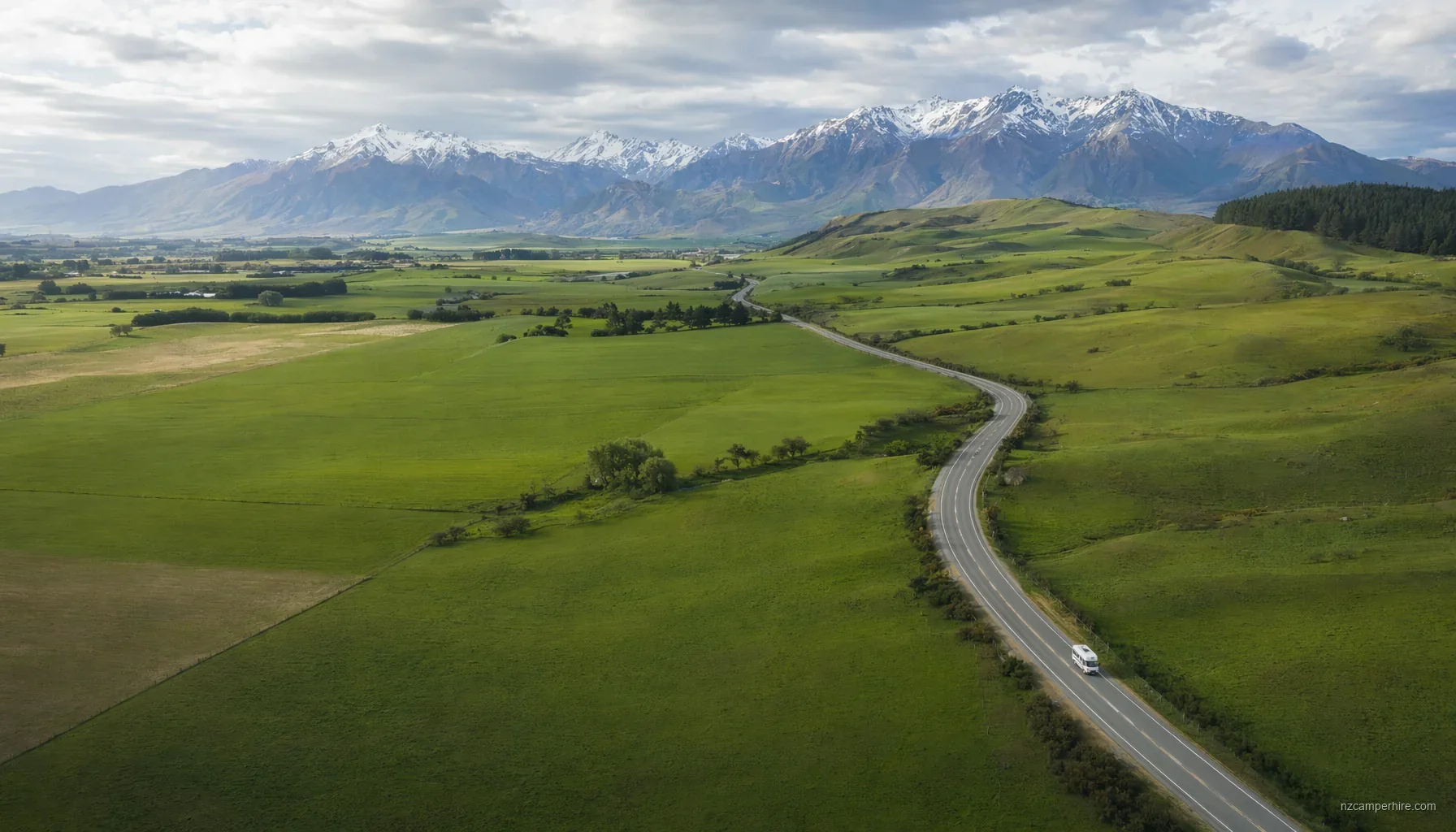 PRACTICAL GUIDE
 Best time of year for a NZ campervan trip
Month-by-month — weather, demand, school holidays, peak ferry windows.
Read the guideMotorhome trip vs hotel + rental car — cost reality FAQ
Is a motorhome always cheaper than a rental car and hotels?
What vehicle size should I use for a fair cost check?
Does freedom camping make the motorhome option much cheaper?
Should I include driving rules in a cost comparison?
Have a planner answer this for your specific trip
Rules and practicalities depend on dates, party size, and route. Send us your outline and we'll come back with answers tailored to your trip.