
Petrol prices and Road User Charges explained
Diesel RUC, petrol-includes-RUC, what you actually pay per 100 km. Honest, granular how-to — written from on-the-ground knowledge, not compe...
- logistics
New Zealand fuel looks confusing at first because petrol and diesel are taxed differently. Petrol has road tax built into the pump price. Diesel is cheaper at the pump, then Road User Charges, usually called RUCs, are paid separately.
This matters most on long motorhome days, especially the Queenstown to Milford Sound drive on SH6 and SH94, the South Island in 14 days route, and January travel around Milford Sound when distances are fixed and fuel stops are limited.
Get the planning checklist that pairs this with the route-level gotchas for your trip, or reply with your dates if you'd like a planner to flag the fuel-cost-specific traps on your week.
The simple split: petrol pays at the pump, diesel pays RUCs
For a petrol campervan, the pump price already includes the main road-use tax. You fill with the correct grade, pay the station, and there is no separate RUC bill for normal petrol driving.
For a diesel motorhome, the pump price does not include that road-use tax. Diesel vehicles need a RUC licence based on distance travelled and vehicle weight. The legal rule sits with NZTA / Waka Kotahi, see nzta.govt.nz for current RUC rates and vehicle classes.
Most visiting drivers do not buy RUCs themselves. The rental operator usually handles the licence and recovers the cost from you in one of three ways:
- included in the daily rate, with no separate line on return,
- charged per kilometre when you return the vehicle,
- sold as a prepaid kilometre block, then adjusted if you go over.
Ask how it is charged before you judge a diesel as cheaper. A low pump price can still become the same, or more, once RUCs and any admin charge are added.
How to calculate the real cost per 100 km
Use a per-100 km calculation. It keeps things honest when you are choosing between a compact 2-berth and a larger 4-berth or 6-berth.
Petrol formula: litres per 100 km x petrol pump price.
Diesel formula: litres per 100 km x diesel pump price + RUC per 100 km + any rental admin charge.
As a working example for the RUC part only, a light diesel vehicle up to 3.5 tonnes has commonly sat at $76 per 1,000 km, which is $7.60 per 100 km before transaction or operator fees. Check the current NZTA / Waka Kotahi rate, because RUCs are set by vehicle type and can change.
Fuel burn varies more than visitors expect. A small high-roof camper may sit around 10 to 12 L/100 km in calm conditions. A bigger motorhome can be 14 to 18 L/100 km, especially into a nor'wester, over Arthur's Pass at 920 m, or climbing toward the Homer Tunnel on SH94.
The parent guide, Fuel economy and prices in NZ, is worth reading beside What a NZ campervan trip actually costs, because fuel is only one line in the trip budget.
Where RUCs and fuel planning bite hardest
The strictest feeling is not the tax rule. It is distance plus limited fuel. Milford Sound is the region where this catches people. Te Anau to Milford Sound is about 118 km each way, usually 2 to 2.5 hours each way in a motorhome, and there is no normal tourist fuel stop at Milford Sound. Fill in Te Anau.
Queenstown to Milford Sound is about 287 km one way and 4.5 to 5.5 hours in real driving. If you drive it as a return day, the odometer climbs quickly, and so do diesel RUC kilometres.
Other places where fuel planning matters:
- SH6 West Coast: long wet-road days between glacier towns, Haast, Hokitika and Greymouth.
- SH8 Lindis Pass: Omarama to Cromwell is about 113 km with the pass at 965 m and no useful mid-pass fuel.
- SH73 Arthur's Pass: Christchurch to the West Coast involves climbing, slower corners, and higher fuel burn.
January adds queues and full forecourts in Queenstown, Wanaka and Te Anau. Shoulder seasons (March to May and September to November) are calmer, but rural opening hours can still be shorter than visitors expect.
Fuel stops, cards, and the mistakes to avoid
NZ drives on the left, and fuel stations are often on the far side of busy roads. Give yourself room. A 7 m motorhome needs a wider swing than a rental car, especially at small-town forecourts.
Do not rely on nozzle colour. Read the label on the cap and pump. Most petrol vehicles use 91 unleaded unless the vehicle label says otherwise. Diesel motorhomes usually have a clearly marked diesel filler, but misfuelling is expensive and can stop your trip for a day or more.
Pay-at-pump cards usually work in cities. Rural stations may pre-authorise a card, close early, or have unmanned pumps after hours. Keep at least half a tank before long legs such as Te Anau to Milford Sound, Fox Glacier to Wanaka over Haast Pass at 564 m, or Picton to Kaikoura on SH1 when roadworks are active.
If you are still getting used to local road rules, read Driving in NZ on a foreign license and Driving on the left in NZ before pickup day. Foreign licences in English are generally valid for up to 12 months, and an IDP or approved translation is needed if the licence is not in English.
Safer fallbacks if the numbers do not suit your trip
If RUCs make your budget feel vague, pick a vehicle where the rental terms state clearly how road charges are handled. If you cannot see that, ask for the wording in writing before you commit.
If you are travelling only 7 days, a shorter route can save more than chasing a different fuel type. South Island in 7 days with Christchurch, Lake Tekapo, Mount Cook / Aoraki and Queenstown is easier to cost than adding Milford Sound, the West Coast and Picton in the same week.
If you dislike narrow roads, choose a smaller vehicle. The 6-berth is cheaper per person, but it burns more fuel and is harder work on the Crown Range road at 1,121 m, SH94 to Milford Sound, and tight holiday park access in Queenstown.
If in doubt, budget diesel motorhomes as pump fuel plus a separate per-kilometre RUC line. That one habit prevents most return-day surprises.
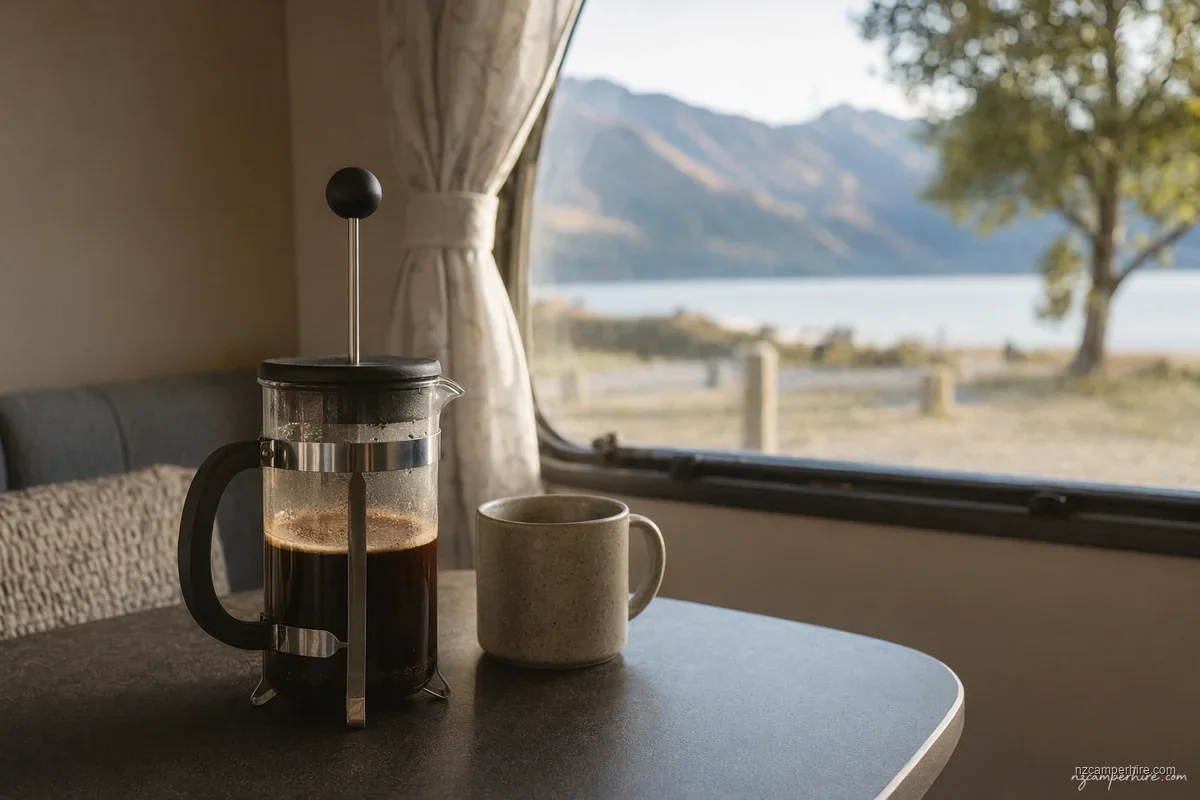
Rules and practicalities are easier to remember when you've felt them — the cold of a wet boot at a freedom camp, the relief of an early ferry slot. This guide is written from those moments, not from a checklist.
Related reading
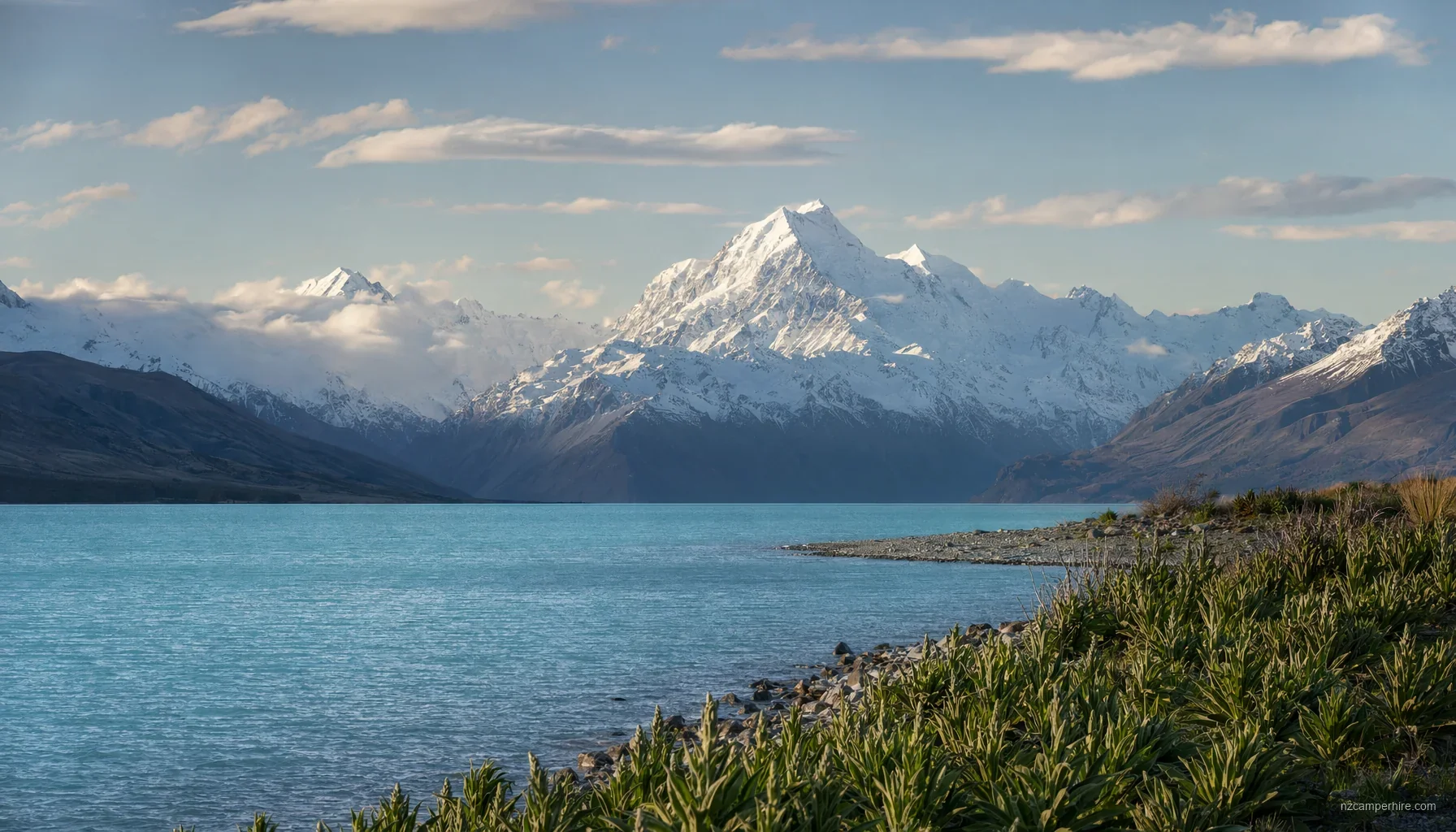 ROUTE
ROUTE South Island in 14 days
Classic clockwise South Island loop — Kaikoura, Nelson, West Coast glaciers, Wanaka, Queenstown, Milford Sound, Tekapo, back to Christchurch.
See the route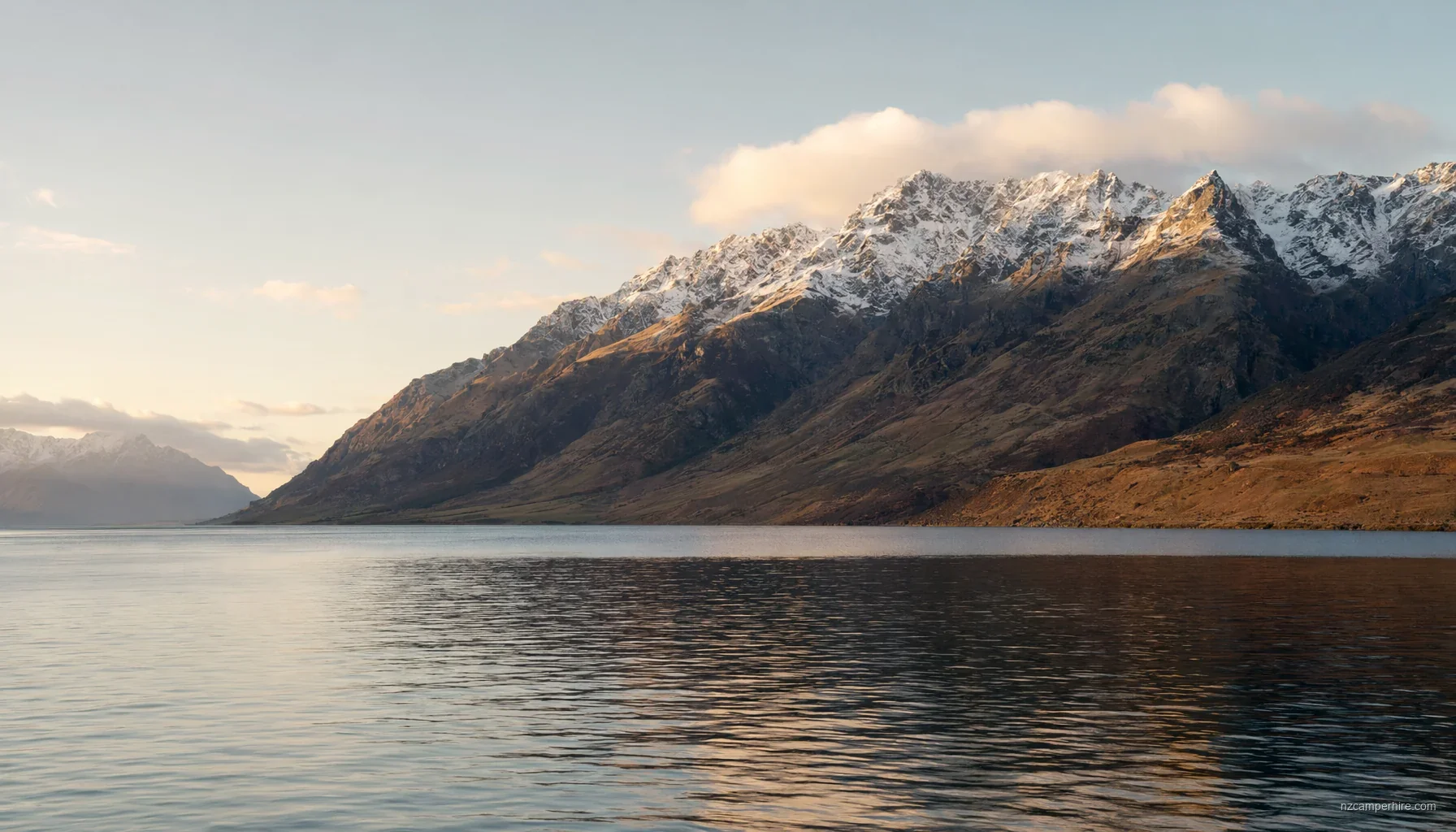 REGION
 Queenstown
Southern Lakes depot. Closest pickup for Milford Sound, Wanaka, Glenorchy, and the Southern Scenic Route.
See the region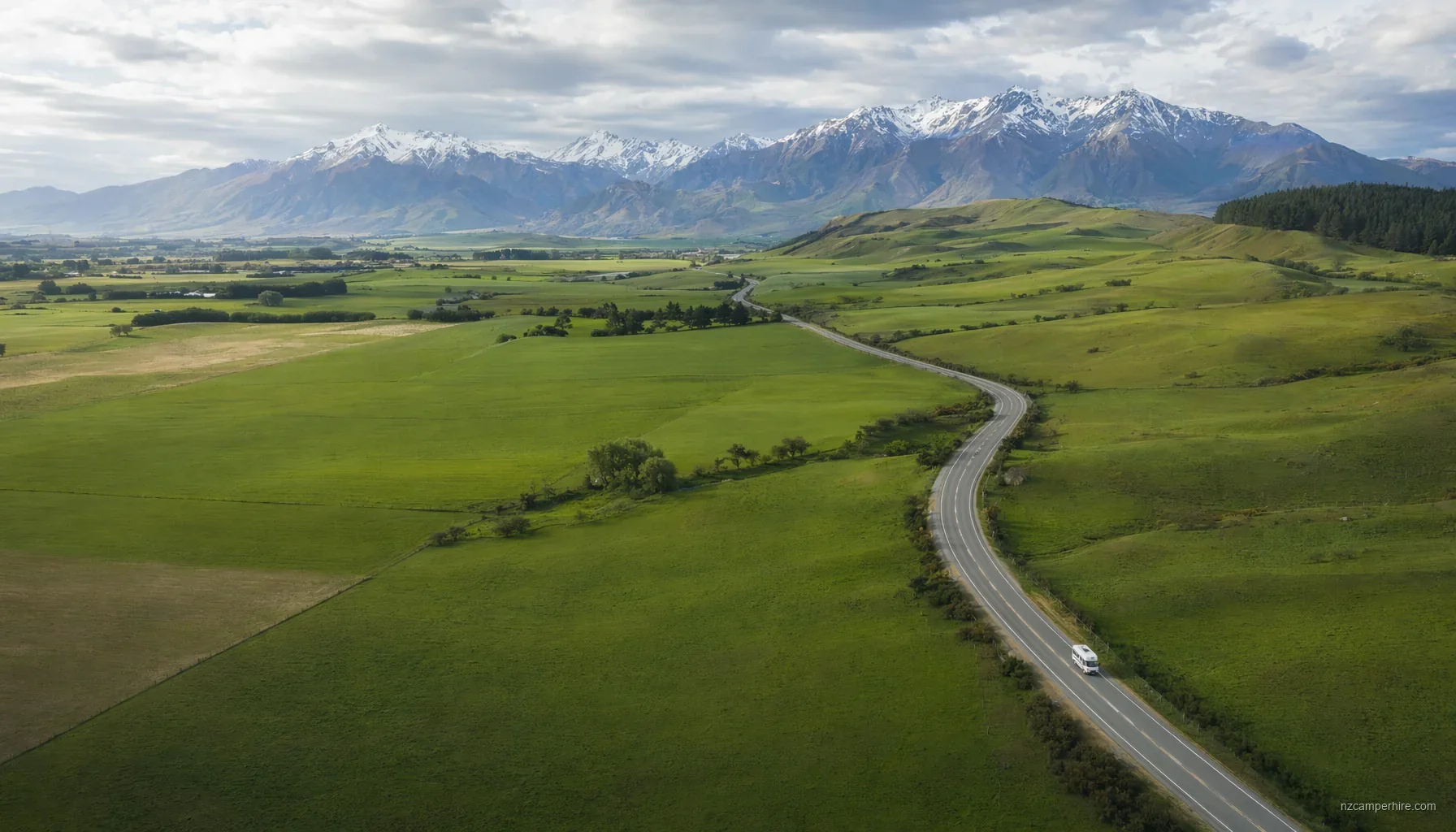 PRACTICAL GUIDE
 Best time of year for a NZ campervan trip
Month-by-month — weather, demand, school holidays, peak ferry windows.
Read the guidePetrol prices and Road User Charges (RUCs) explained FAQ
Do tourists have to pay Road User Charges in New Zealand?
Is diesel cheaper than petrol for a NZ motorhome trip?
How much are diesel RUCs per 100 km?
Where should I be most careful about fuel range?
Have a planner answer this for your specific trip
Rules and practicalities depend on dates, party size, and route. Send us your outline and we'll come back with answers tailored to your trip.