
Self-containment certification under the 2024 rules
The blue sticker, transition from green-sticker scheme, how to check before booking. Honest, granular how-to — written from on-the-ground kn...
- logistics
Self contained certification NZ rules changed because too many vehicles were using public land without proper toilets, tanks, or waste systems. The old green-sticker scheme is being phased out. The newer blue warrant sits under the 2023 amendment to the Freedom Camping Act 2011 and the NZS 5465:2022 standard.
The detail matters most if you want to freedom camp on the South Island in 14 days, the Queenstown + Fiordland loop, or any January trip through Queenstown Lakes, where council officers do check vehicles.
Get the planning checklist that pairs this with the route-level gotchas for your trip, or reply with your dates if you'd like a planner to flag the self-containment-specific traps on your week.
What changed under the 2024 blue-sticker system
New Zealand’s self-containment rules moved from the older NZS 5465:2001 green-sticker approach toward the stronger NZS 5465:2022 blue warrant system. The big practical change is simple: a certified vehicle needs a proper toilet setup, waste storage, fresh water, a sink, and a way to contain grey water without leaking it onto the ground.
The 2023 self-containment amendment to the Freedom Camping Act 2011 tightened who can certify vehicles and what counts as self-contained. It was aimed at vehicles that carried a portable toilet but had no realistic space for using it privately.
Some older green certificates remained valid during the transition, but you should not rely on colour alone. Check the expiry date, the vehicle registration, and whether the certificate matches the actual vehicle you are taking away.
The checks to make before you accept a vehicle
Do this at pickup, before you leave the depot. It takes three minutes and can save a $400 fine later.
- Find the blue self-containment warrant or the still-valid transitional certificate.
- Check the expiry date. A sticker that expires during your trip is not good enough.
- Match the registration plate on the certificate to the motorhome.
- Ask where the toilet, fresh-water tank, grey-water tank, and dump hose are stored.
- Confirm the certified occupancy. A vehicle certified for two people does not cover four people sleeping in it.
Also check that your hire agreement allows freedom camping. Certification says the vehicle can contain waste. It does not mean every council car park, beach reserve, or lakeside pull-off is legal overnight parking.
Where certification still does not give you a free pass
Council bylaws override the national Act locally. Queenstown Lakes, Tasman, and Auckland are among the stricter areas, especially near town centres, beaches, and lakefront reserves. A certified vehicle can still be illegal in a signed no-camping area.
This bites hardest around Queenstown and Wanaka in January, on the Queenstown + Fiordland loop, and on short South Island in 7 days itineraries where people arrive late and hope to find a free lakefront spot. SH6 through Queenstown and Wanaka is not a chain of legal overnight stops.
For DOC land, read the actual campsite page on doc.govt.nz. Some DOC sites accept certified self-contained vehicles only, while others have toilets and paid sites. Mavora Lakes, Cascade Creek, Lake Pukaki, and White Horse Hill near Aoraki/Mount Cook each have their own conditions and capacity pressure.
Fines, grey water, and the part travellers miss
The instant infringement for breaching freedom camping rules is commonly $400. Illegal dumping is treated more seriously. Grey water dumped in the wrong place can attract penalties of up to $200 per litre, with serious cases reaching a maximum of $10,000.
Grey water is not just “soapy water”. It carries food scraps, fats, sunscreen, detergent, and bacteria. Use public dump stations, holiday park dump points, or council facilities. Pair this page with Dump stations and water fills and Freedom camping in NZ before you build a route that depends on staying outside holiday parks.
For authority detail, see doc.govt.nz for DOC campsite rules and responsible camping notices. For road rules around driving the vehicle, use the NZTA / Waka Kotahi rule. If your itinerary crosses Cook Strait, Maritime NZ covers the ferry safety side, while the ferry operator handles vehicle length and gas-cylinder instructions.
Safer fallbacks if your vehicle or route does not fit
If the certificate is unclear, expired, or does not match the vehicle, assume you cannot freedom camp. Use paid sites until it is sorted. That is cheaper than arguing with a council officer at 7 am.
Good fallbacks include Creeksyde Queenstown for the Queenstown Lakes area, North South Holiday Park near Christchurch airport, Rotorua Thermal Holiday Park in Rotorua, Hokitika Holiday Park on the West Coast, and Oamaru Top 10 if you are cutting down SH1. DOC serviced or standard campsites can also work, but read the listing first.
If freedom camping is central to your budget, choose a self-contained motorhome with an ensuite and enough tank capacity for your group size. A smaller non-ensuite vehicle can still be a good call, but plan it around holiday parks vs DOC campsites rather than assuming the blue sticker will solve every night.
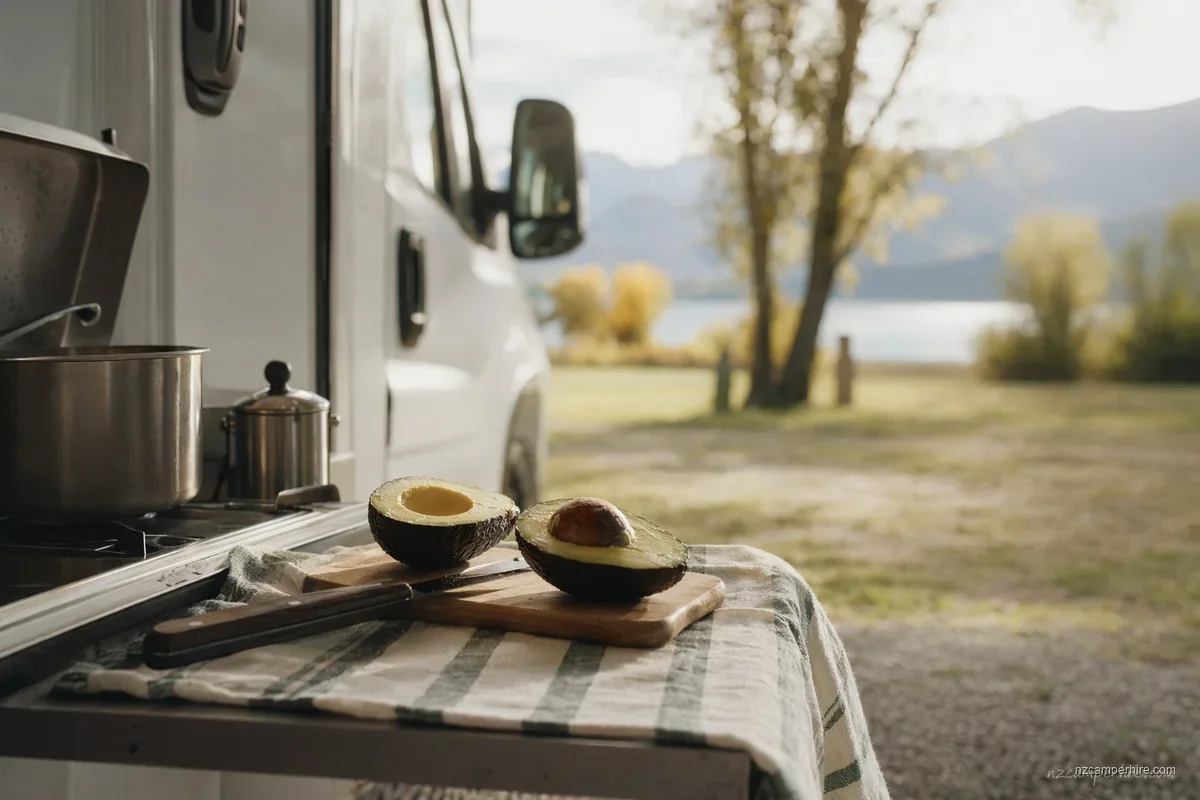
Rules and practicalities are easier to remember when you've felt them — the cold of a wet boot at a freedom camp, the relief of an early ferry slot. This guide is written from those moments, not from a checklist.
Related reading
 ROUTE
ROUTE South Island in 14 days
Classic clockwise South Island loop — Kaikoura, Nelson, West Coast glaciers, Wanaka, Queenstown, Milford Sound, Tekapo, back to Christchurch.
See the route REGION
 Queenstown
Southern Lakes depot. Closest pickup for Milford Sound, Wanaka, Glenorchy, and the Southern Scenic Route.
See the region PRACTICAL GUIDE
 Best time of year for a NZ campervan trip
Month-by-month — weather, demand, school holidays, peak ferry windows.
Read the guideSelf-containment certification under the 2024 rules FAQ
Is a blue self-containment sticker now required in New Zealand?
Can I freedom camp anywhere if my motorhome is self-contained?
What should I ask before hiring a vehicle for freedom camping?
Do I need an ensuite motorhome to meet the 2024 rules?
Have a planner answer this for your specific trip
Rules and practicalities depend on dates, party size, and route. Send us your outline and we'll come back with answers tailored to your trip.