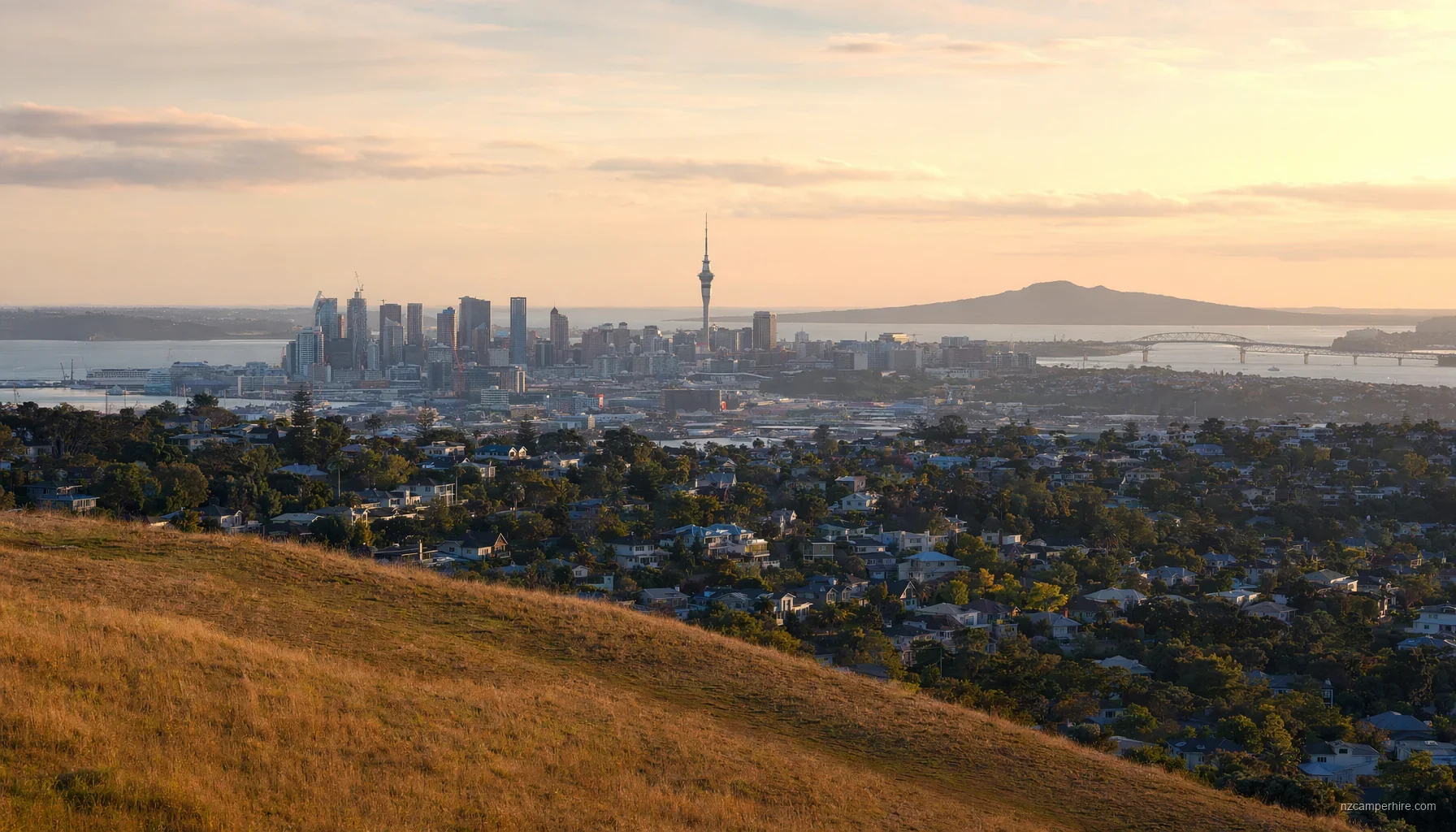
Auckland motorhome guide for first trips
North Island · depot pickup region
- slow-morning
- family-friendly
- busy-summer
- book-ahead
- coastal-stage
On a clear Auckland morning, gulls work the harbour air while the kettle finds its voice in the van. The city can feel half-asleep for a moment, until the motorway hum reminds you everyone else has places to be too.
Auckland is more than a place to collect a van and leave. It is a wide harbour city with black-sand west coast beaches, calm eastern bays, volcanic cones, island ferries, and some of the busiest roads in New Zealand.
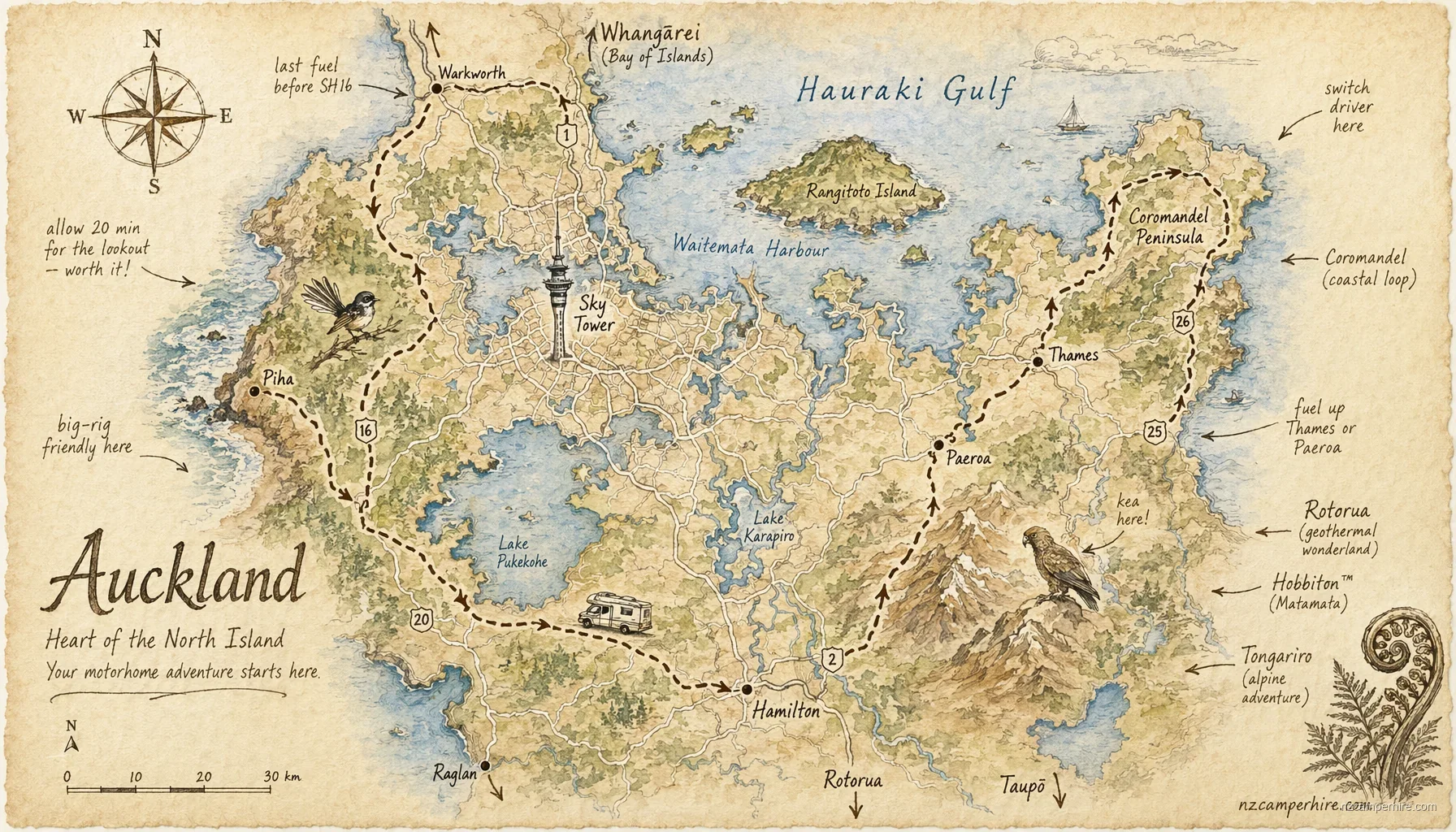
For a first motorhome trip, Auckland works best as a soft landing. Stay one night before driving north to the Bay of Islands, east to the Coromandel, or south toward Rotorua, Hobbiton near Matamata, and Tongariro.
See route guides that pass through Auckland — and reply with your dates if you'd like a planner to suggest the right number of nights here.
What Auckland is for, in a motorhome
Auckland is a reset point, not a wilderness base. Use it for sleep, groceries, jet lag, a test drive on the left, and one or two local outings before the bigger kilometres begin.
The city spreads over a narrow isthmus between the Waitematā and Manukau harbours. That shape matters. A 20 km drive can take 25 minutes at 10am and 70 minutes at 5pm. SH1, SH16 and SH20 are proper motorways, but merging in a wide vehicle takes focus when you are new to left-side driving.
The recommended vehicle size here is a 2-berth or compact 4-berth if you want to move around the inner city. A 6-berth is fine for a family, but park at the campground or at outer transport hubs and use buses, trains, ferries or rideshare for downtown. The same vehicle-size guide that helps with Auckland parking also matters later on the Coromandel Peninsula and in Rotorua holiday parks.
January is the peak month. Roads north of Auckland, beach campgrounds, and ferry car parks get tight from late December through the school holidays. If your North Island in 10 days route starts then, make Auckland simple: arrive, stock up, sleep, and leave early the next morning.
What to see, and what to skip
Good Auckland days are simple. Pick one harbour or one coast. Do not try to cross the city four times in a motorhome.
Auckland rewards choosing less; one good coast or ferry day will feel better than a long list of car parks.
- Mount Eden / Maungawhau: a quick volcanic cone stop with city views. Park lower down, respect the pedestrian-only summit road, and allow 60-90 minutes.
- Devonport: better by passenger ferry from downtown than by driving. North Head has harbour views and old military tunnels.
- Piha or Muriwai: west coast surf beaches, black sand, and strong water. From central Auckland allow 45-70 minutes each way, more on weekends.
- Waiheke Island: good for a car-free day by ferry. Taking a camper across is rarely worth the cost or logistics for a short visit.
- Mission Bay and Tamaki Drive: easy waterfront time if you are staying central, but parking a large van can be frustrating on sunny weekends.
Skip inner-city driving at rush hour unless you have no choice. Also skip narrow residential shortcuts suggested by mapping apps. In Auckland, the main road is often slower on the screen but easier in a van.
Where to stay overnight
There are no DOC campsites inside Auckland city limits. Freedom camping is tightly controlled by Auckland Council and generally only works in signed places with a certified self-contained vehicle. Read the freedom camping guide before assuming a beach car park is legal.
The best first Auckland night is often the quiet one, with the fridge stocked, the kettle sorted, and tomorrow's road already feeling less mysterious.
- Auckland Top 10 Holiday Park, Manukau: powered and unpowered sites, practical family feel, about 23 km south of the CBD. Good for airport access, motorway access, and an easy first night.
- Avondale Motor Park: powered sites, older and functional rather than scenic, about 10 km west of the CBD. Useful if you want a simple base near SH16 and the western suburbs.
- Takapuna Beach Holiday Park: powered and unpowered sites, beach-town feel, about 10 km north of the CBD by road. The draw is walking to Takapuna Beach and cafés without moving the van.
- Orewa Beach Holiday Park: powered and unpowered sites, family beach vibe, about 37 km north of central Auckland. Good first or last night if your route heads to the Bay of Islands on SH1.
- Martins Bay Holiday Park: powered and unpowered sites, quieter coastal feel, about 75 km north of the CBD. Works for travellers easing toward Matakana, Tāwharanui, or the east coast north of Auckland.
- Ambury Regional Park campground: unpowered Auckland Council camping, rural and simple, about 15 km from the CBD near Māngere. Book ahead, expect basic facilities, and use it for a calm night rather than city sightseeing.
Driving in and out - what the road is actually like
Northbound, Auckland to Paihia is about 230 km and usually 4-4.5 hours in a motorhome, not counting stops. SH1 can clog around Warkworth and Wellsford, especially Friday afternoons and holiday weekends. Leave before 8am if you are starting a Bay of Islands round-trip.
Eastbound to the Coromandel, Auckland to Thames is about 115 km and 2-2.5 hours. From there the coast roads get slower. The Coromandel Peninsula loop looks short on a map, but the roads curve tightly around bays and hills. A compact vehicle is much easier in towns such as Coromandel, Whitianga, Hahei and Tairua.
South to Rotorua is about 230 km and 3.5-4.5 hours via SH1 and SH5, or a little longer if you stop at Hobbiton near Matamata. The Rotorua + Tongariro loop suits travellers who want geothermal areas, lakes and volcanic landscapes without needing to rush to the South Island.
If you are continuing to Wellington for a Cook Strait ferry, remember the Interislander or Bluebridge crossing to Picton takes about 3 hours 20 minutes on the water, closer to 3.5 hours with loading. In peak season, book the ferry months ahead, not days ahead.
Best time of year for Auckland
Auckland is usable year-round. It has a mild, damp climate rather than a snow-and-ice problem. Summer brings beach weather, longer evenings and higher pressure on campgrounds. January is busiest. February often gives warm weather with slightly more breathing room after school holidays.
March and April are excellent for a first motorhome trip. Daylight is still useful, sea temperatures are reasonable, and routes to the Bay of Islands, Coromandel and Rotorua feel less compressed. September to November can be green and pleasant, with changeable rain.
Winter, from June to August, is fine for city time, food, galleries and short coastal drives. West coast beaches look dramatic then, but they are not gentle swimming spots. If your route later includes Tongariro, winter driving and alpine weather become a bigger planning issue than Auckland itself.
Practical notes before you leave the city
Fuel is easy across Auckland, but fill before leaving the motorway edges. Supermarkets are straightforward: look for large Countdown/Woolworths, New World and Pak'nSave stores in Manukau, Albany, Mt Roskill, Henderson and Wairau Valley. They are easier with a motorhome than small inner-city shops.
Dump stations are available at many holiday parks, and there are public dump points around the wider city, including at service areas and council-listed facilities. Check opening access before you rely on one. Do not empty grey water into street drains.
Foreign licences in English are valid for driving in New Zealand for up to 12 months. If your licence is not in English, carry an International Driving Permit or an approved translation. Minimum hire age varies by operator and vehicle class, commonly from 18 to 25.
Mobile coverage is strong in the city and weaker in some west coast pockets. Download maps before driving to Piha, Muriwai or the Hunua Ranges. Give yourself a short first driving day. The left-side driving, roundabouts, narrow lanes and mirrors all become easier after an hour, but the first hour should not be on a tight timetable.
Auckland rewards travellers who linger. Build in one slow morning — coffee on the camp table, the kettle whistling, the day not yet decided.
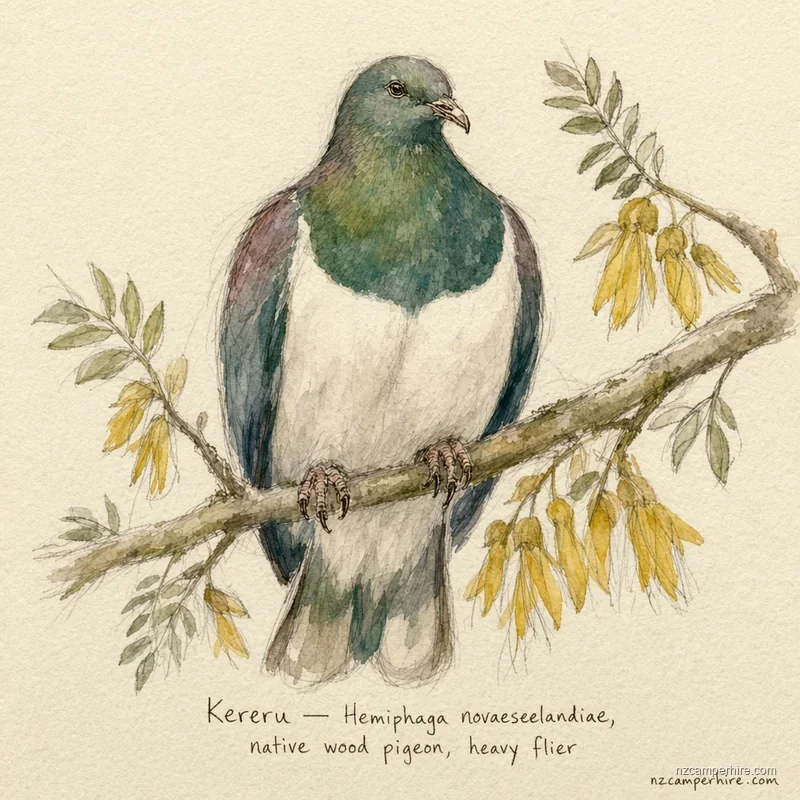
Tāmaki Makaurau — known internationally as Auckland
Auckland sits on a narrow isthmus that has been continuously occupied for around 800 years. Mana whenua (people with customary authority over the land) include Ngāti Whātua Ōrākei in central Tāmaki, Te Kawerau ā Maki across the Waitākere Ranges in the west, and Ngāti Pāoa around the Hauraki Gulf. Today thirteen iwi are formally recognised as having interests across the Auckland region.
Many of Auckland's fifty-three volcanic cones (maunga) carry te reo names that record pre-European pā (fortified village) sites: Maungawhau (Mount Eden), Maungakiekie (One Tree Hill), Takarunga (Mount Victoria). These maunga are now co-governed by mana whenua under the Tūpuna Maunga Authority.
- Auckland War Memorial Museum (Tāmaki Paenga Hira) — Te Ao Māori gallery on the ground floor — Hotunui meeting house, the waka taua Te Toki ā Tāpiri, and daily cultural performances. Public ticketed.
- Maungawhau / Mount Eden — Volcanic cone with visible pā terraces — the summit crater (Te Ipu-a-Mataaho) is wāhi tapu, do not enter the crater itself; walking tracks around it are open.
- Bastion Point (Takaparawhau) — Site of the 1977-78 Ngāti Whātua Ōrākei land protest — public clifftop park with interpretive signage.
Aoraki Routes acknowledges the mana whenua of Ngāti Whātua Ōrākei, Te Kawerau ā Maki, Ngāti Pāoa and Waiohua confederation. We recommend visiting cultural sites with respect and following the tikanga (protocol) of the host iwi.
Related reading
 ROUTE
ROUTE North Island in 10 days
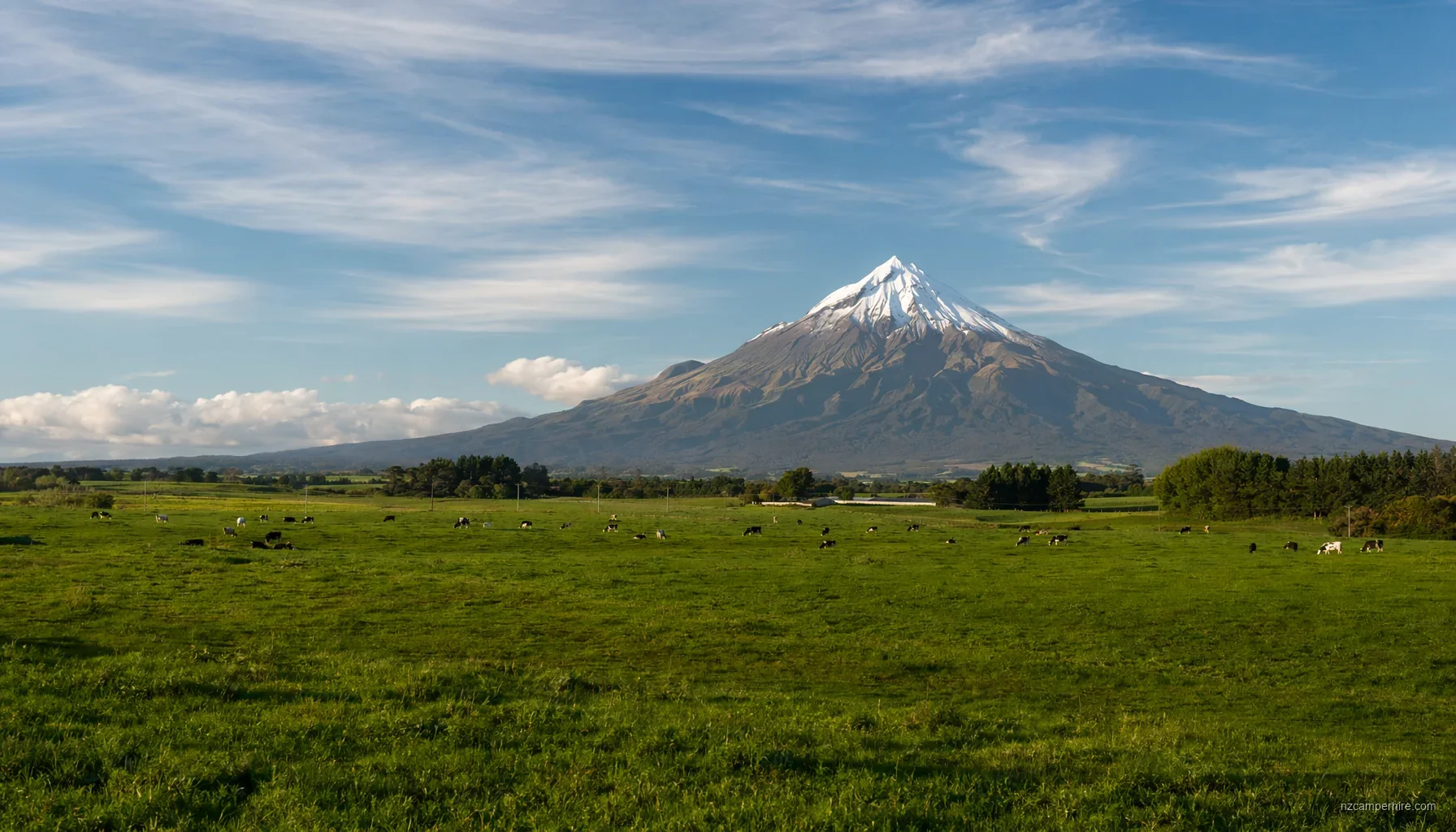
Auckland to Wellington via Bay of Islands, Coromandel, Rotorua, Hobbiton, and Tongariro.
See the route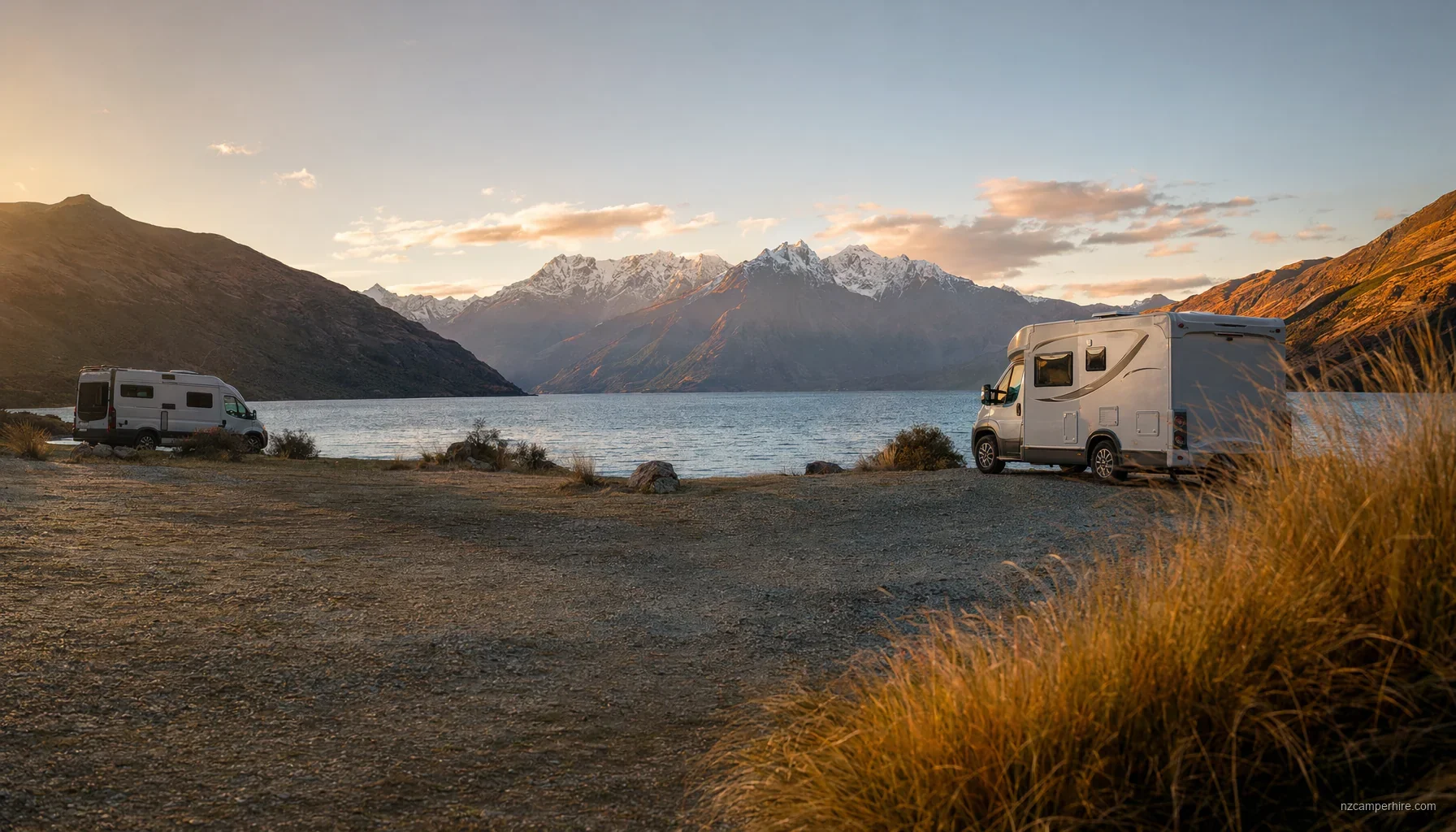 WHEN TO GO
 Summer (December-February)
Peak season — what to book early, where to escape the crowds, sunscreen reality.
Read the timing notes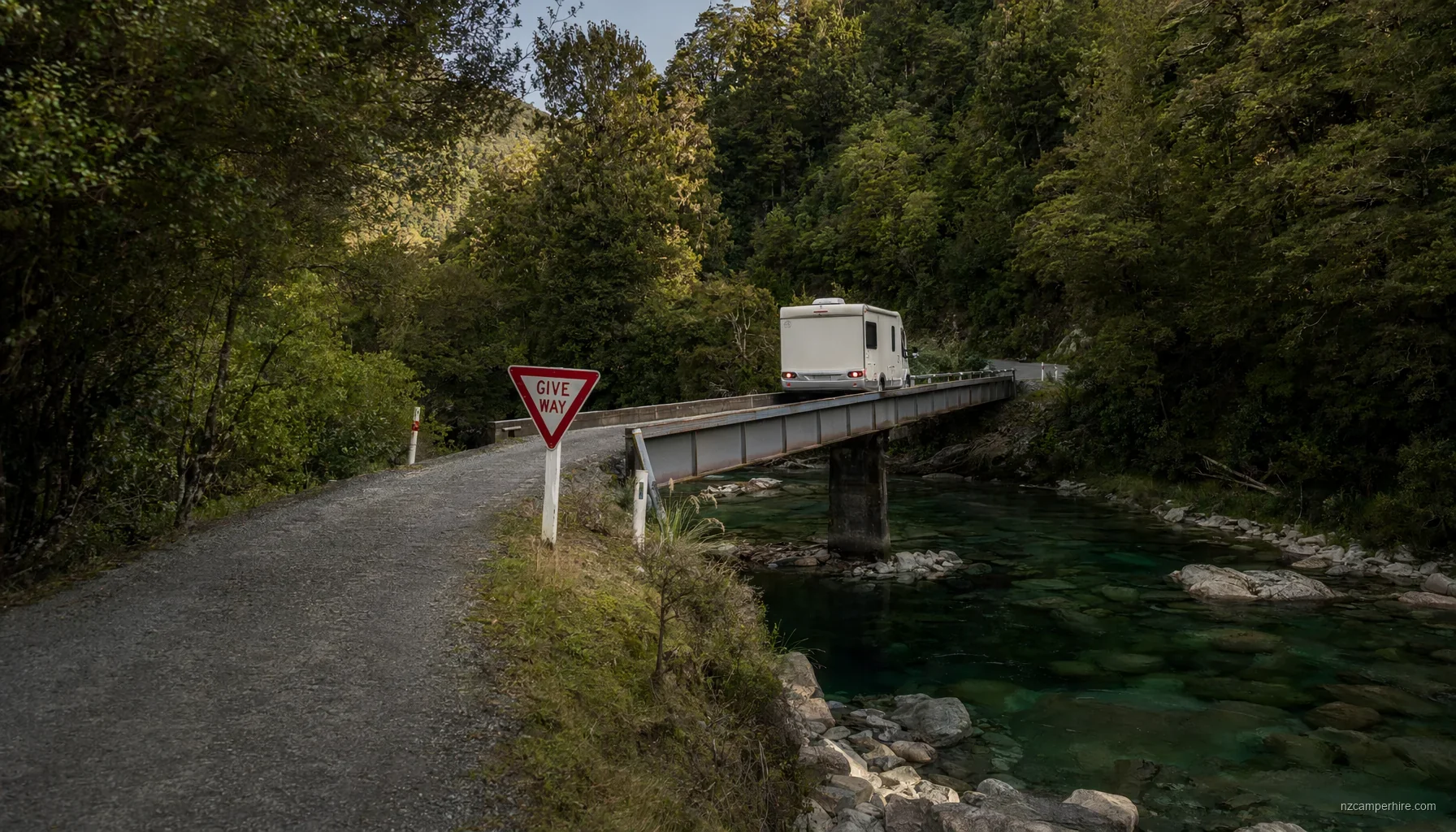 PRACTICAL GUIDE
 First time driving a motorhome
Height awareness, swing on turns, parking, reversing — short briefing before pickup.
Read the guideAuckland FAQ
How long should we stay in Auckland with a motorhome?
When is the best month to start a road trip in Auckland?
Where should we buy groceries before leaving Auckland?
Where can we dump grey water and toilet waste in Auckland?
Have a planner shape a trip around this region
Tell us roughly when you're coming and how long you have. We'll come back with a route that gives this region the time it deserves.