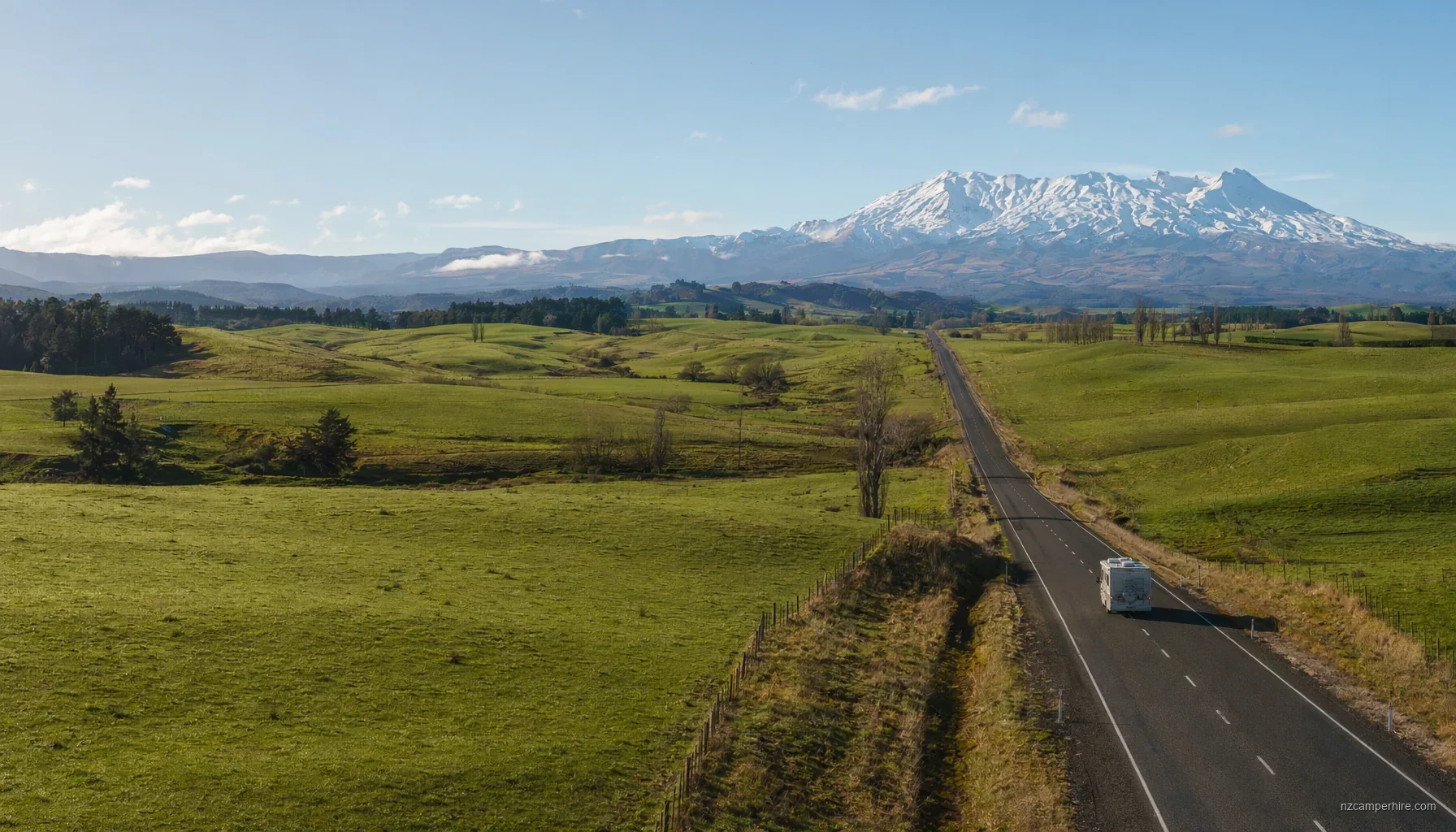
Auckland to Wellington drive by motorhome
1 days · Auckland → Wellington Drive
- full-day-drive
- lake-stage
- volcanic-stage
- ferry-stage
- bring-warm-layers
On a clear Auckland morning, the kettle seems louder than the motorway until the motorhome rolls south and the city thins into Waikato light. The Auckland to Wellington drive looks simple on a map. It is mostly SH1, sealed all the way, and the pure driving time is about 8 hours 45 minutes to 9 hours 30 minutes in a motorhome. With fuel, food, lake stops and the slower pull through Wellington, plan on 11 to 12 hours.
For most first-time visitors, this is a 2-day leg, not a heroic same-day run. It fits neatly inside North Island in 10 days, North to South in 21 days, and any Auckland to Queenstown one-way plan where the Cook Strait ferry comes next. March is a good month for this drive because daylight is still useful and the Central Plateau is usually calmer than mid-winter.
Get the printable drive note with the three stops timed out, or reply with your dates if you'd like a planner to fit this leg into the wider week.
The drive at a glance: distance, time, fuel
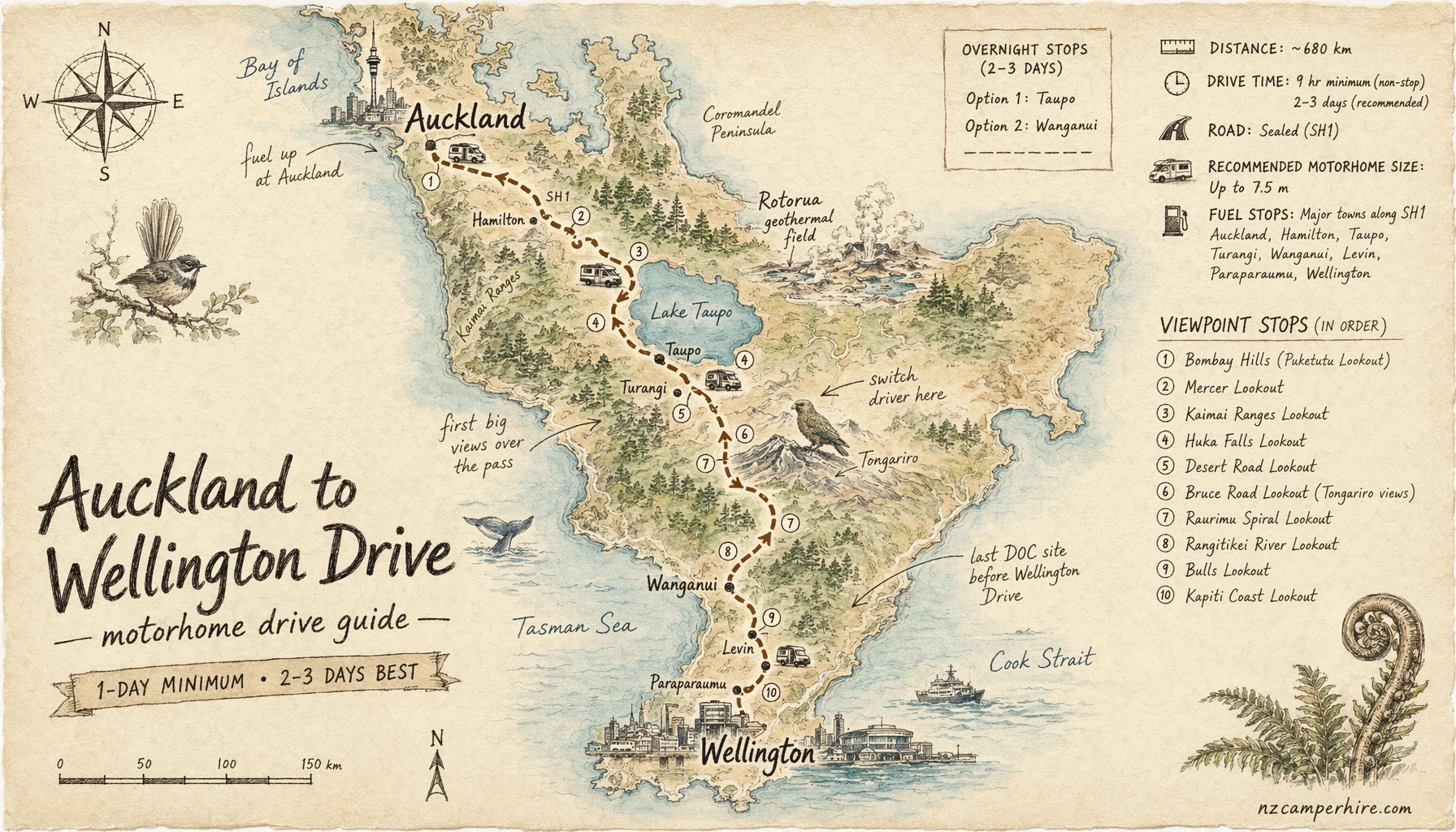
Auckland to Wellington via SH1 is about 650 km. In a car you may see a 8.5 to 9 hour estimate. In a 6 m to 7.5 m motorhome, use 8 hours 45 minutes to 9 hours 30 minutes as pure driving, and 11 to 12 hours with normal stops.
The road is sealed throughout. You use SH1 south from Auckland, the Waikato Expressway past Hamilton, SH1 around Lake Taupō, the Desert Road across the Central Plateau, then Taihape, Bulls, Levin, Kāpiti and into the Wellington region. There is no named alpine pass, but the Desert Road section reaches about 1,074 m near Waiouru, so it behaves like a high-country road in winter.
Fuel is easy if you do not run the tank low. Good stops include BP Bombay before leaving Auckland, Z or Mobil in Taupō, BP Tūrangi, Z Waiouru, Caltex Bulls and BP Levin. NZ drives on the left. Foreign licences in English are normally valid for 12 months; if yours is not in English, carry an IDP or approved translation. Hire age rules vary from 18 to 25 depending on operator and vehicle class.
The two recommended pace options
Fast same-day: leave Auckland before 7 am, keep stops short, and do not plan a fixed dinner or ferry connection in Wellington that night. This is only sensible if you are already rested, confident driving on the left, and have picked up the motorhome the day before.
The same-day run saves a night, but it spends most of your patience, so it is a poor trade if anyone is new to the vehicle.
One overnight: Auckland to Taupō is about 280 km and 4 to 4.5 hours pure driving, closer to 5.5 hours with stops. Taupō to Wellington is about 370 km and 5.5 to 6 hours pure driving, around 7.5 hours with pauses. Taupō TOP 10 Holiday Park and other Taupō holiday parks make this the easiest split.
Long first day, short final day: Whanganui works if you want less pressure entering Wellington. It is usually reached by staying on SH1 to Bulls, then taking SH3 west into town. Auckland to Whanganui is a long 450 km day. Whanganui River TOP 10 Holiday Park gives you a calmer final run of about 200 km to Wellington.
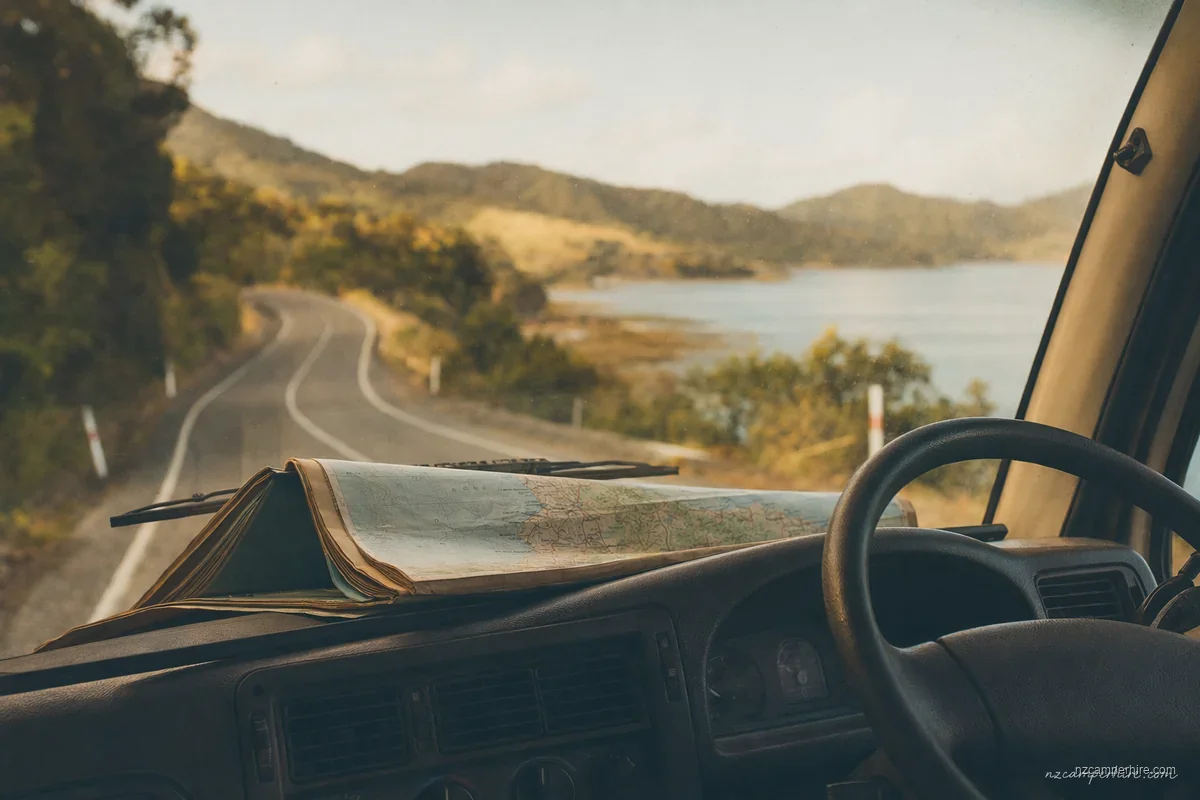
The slow part of this route is the part you'll remember. Build in at least one short evening where the kettle is the only sound — no driving, no plan, just the awning open and the day unwinding.
Three stops worth making
- Huka Falls, Taupō: a short, high-value stop just off SH1. Use the main car park, walk to the bridge, and give it 25 to 40 minutes. It is much easier than trying to park a motorhome in the busiest lakefront spaces.
- Lake Taupō lookout and Tūrangi fuel: top up fuel before the Desert Road if the gauge is under half. The lake views south of Taupō are your best clean photo stops before the volcanic plateau.
- Desert Road views of Ruapehu and Ngauruhoe: stop only in formed pull-offs. Do not drift onto the shoulder for photos. In clear weather this is the section people remember. In cloud, it is just a high, exposed road where you keep both hands on the wheel.
The best version of this route is often a quiet five minutes beside the lake, steam lifting off a takeaway coffee while Ruapehu waits somewhere ahead.
If you have extra time near the bottom of the island, Queen Elizabeth Park on the Kāpiti Coast is a gentler break than trying to take a large motorhome over Paekākāriki Hill Road. That hill road is scenic, narrow and not worth the stress in a bigger vehicle.
When not to do this drive in one day
Do not make this a one-day drive on pickup day. Motorhome handover, supermarket shopping, learning the controls and getting out of Auckland traffic all take longer than expected. Use the First time driving a motorhome guide before you commit to a long first leg.
Be cautious from June to August, and sometimes into September, on the Desert Road. Snow, black ice, strong wind and full closures do happen. Chains are not commonly used by visitors on SH1, because the road is more often closed until safe, but you still need to check Waka Kotahi NZTA road conditions before leaving Taupō or Tūrangi.
If you are continuing to the South Island, do not cut it fine for the Cook Strait ferry. Interislander and Bluebridge sail Wellington to Picton in about 3 hours 20 minutes, but allow 3.5 hours with loading and a proper check-in margin. In peak season, book the ferry around 4 months out, not 2 weeks before travel.
9-hr SH1 minimum, but the motorhome version is 2-3 days.
What to do once you get to Wellington
Wellington is not a relaxing city for a large motorhome. Stay outside the tightest central streets if you can. Wellington TOP 10 Holiday Park in Lower Hutt is the practical choice for power, laundry and public transport links. If you are catching the ferry next morning, check your terminal approach before you drive into the city.
For a short stay, park once and use feet, bus, taxi or ride-share. Te Papa, the waterfront, Cuba Street, Zealandia and the Mount Victoria lookout are better without trying to thread a 6-berth through inner-city car parks. A compact 2-berth or 4-berth is easier here, but a 6-berth is fine if you treat Wellington as a park-and-walk stop.
Wellington’s wind is rarely subtle; it can make a van door feel like it has an opinion, so park thoughtfully and keep warm layers handy.
This leg connects naturally with the Wellington region guide, the Wellington to Picton ferry crossing drive note, and practical guides on Driving on the left in NZ and Fuel economy and prices in NZ.
Related reading
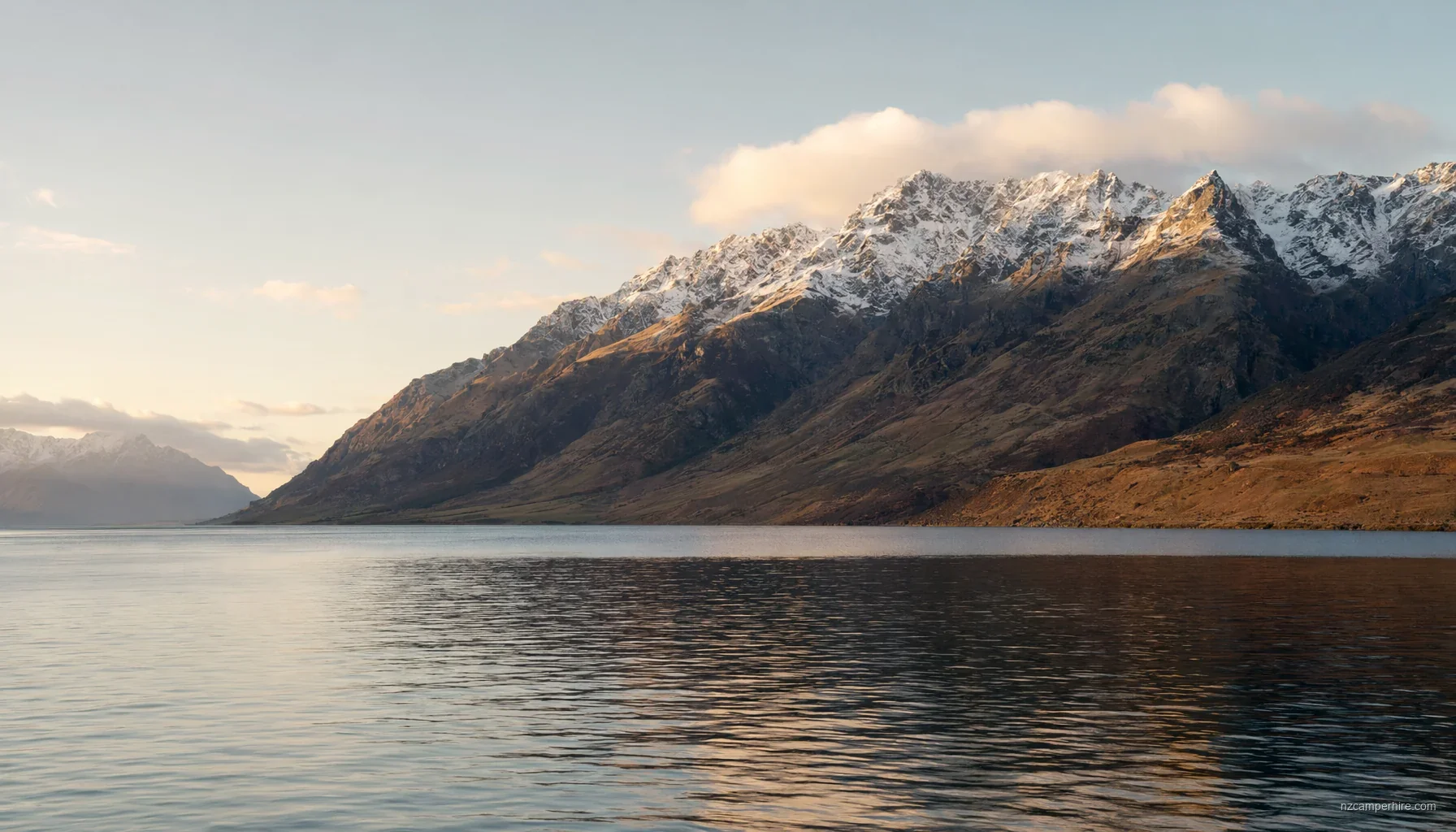 REGION
 Queenstown
Southern Lakes depot. Closest pickup for Milford Sound, Wanaka, Glenorchy, and the Southern Scenic Route.
See the region WHEN TO GO
 Best time of year for a NZ campervan trip
Month-by-month — weather, demand, school holidays, peak ferry windows.
Read the timing notes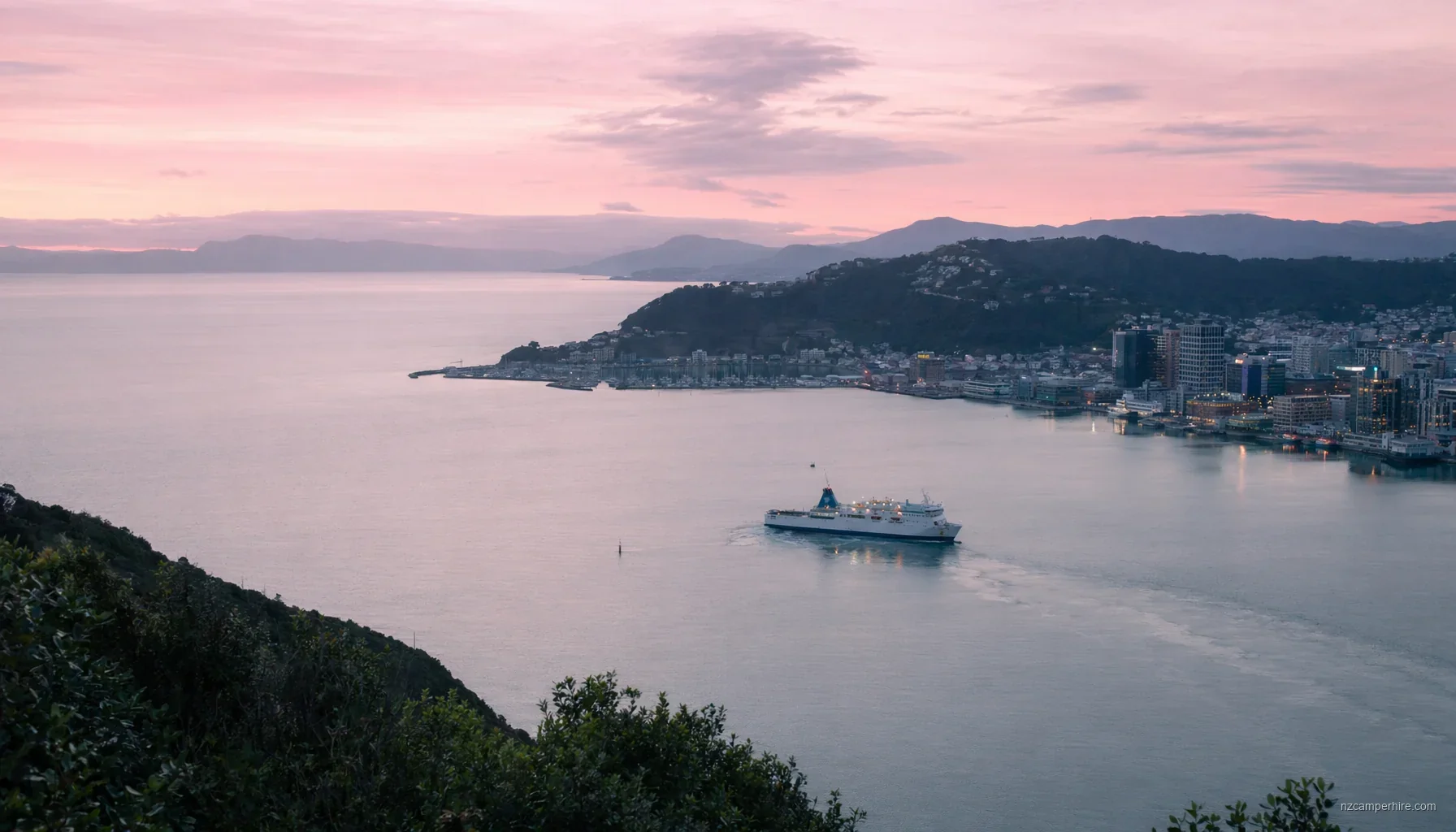 PRACTICAL GUIDE
 Cook Strait ferry with a campervan
Interislander vs Bluebridge, booking tips, what to expect, height/length limits.
Read the guideAuckland to Wellington drive — motorhome drive guide FAQ
Can a 6-berth motorhome do Auckland to Wellington in one day?
Should we overnight at Taupō or Whanganui?
Is fuel cheaper in Taupō, Levin or Wellington?
Have a planner check this route for your dates
Send us a quick outline — dates, party size, must-sees. We come back with a vehicle recommendation and a paced route.