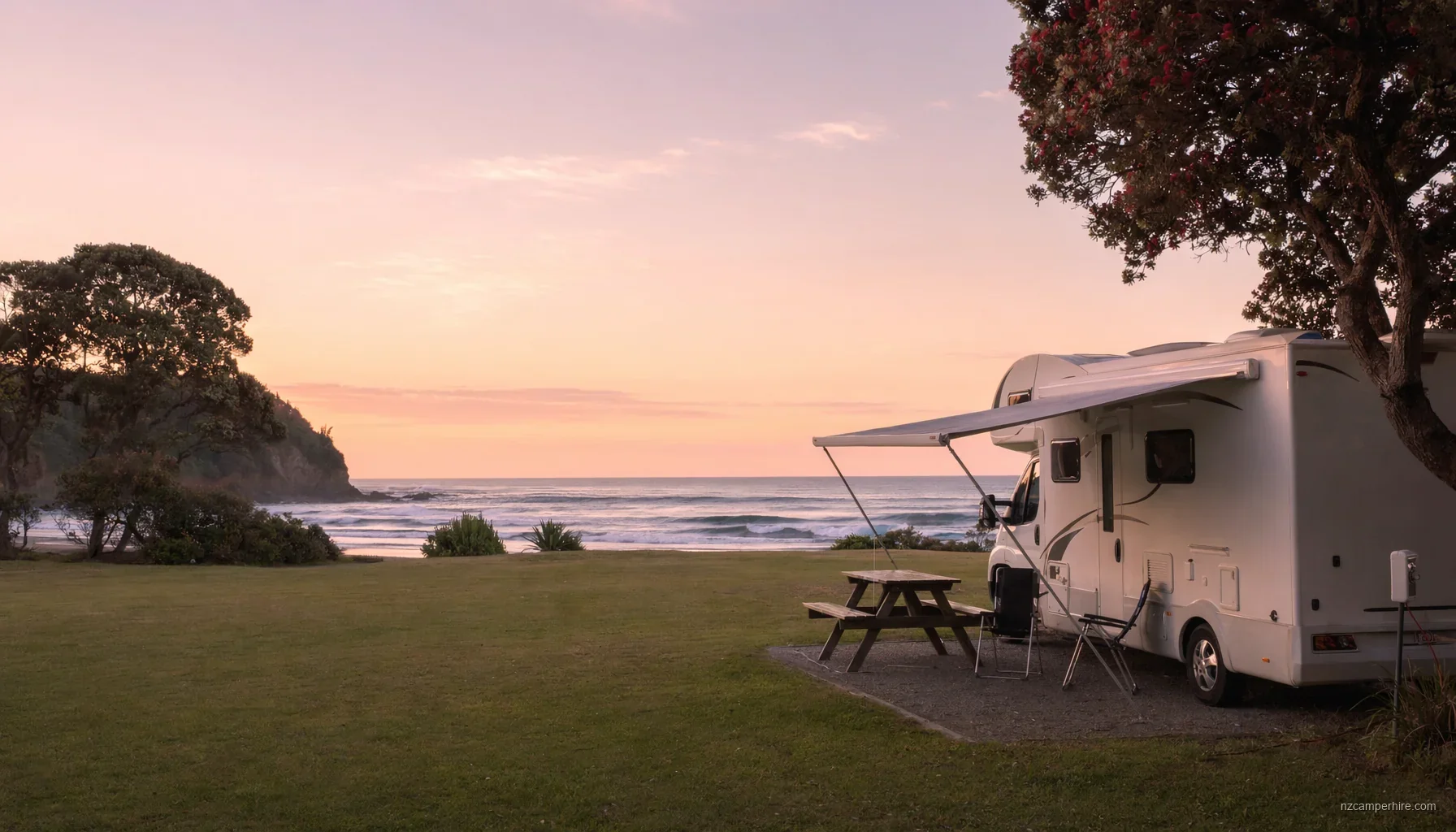
Gisborne holiday park motorhome stay guide
gisborne holiday park
- holiday-park
- drive-in
- powered-sites
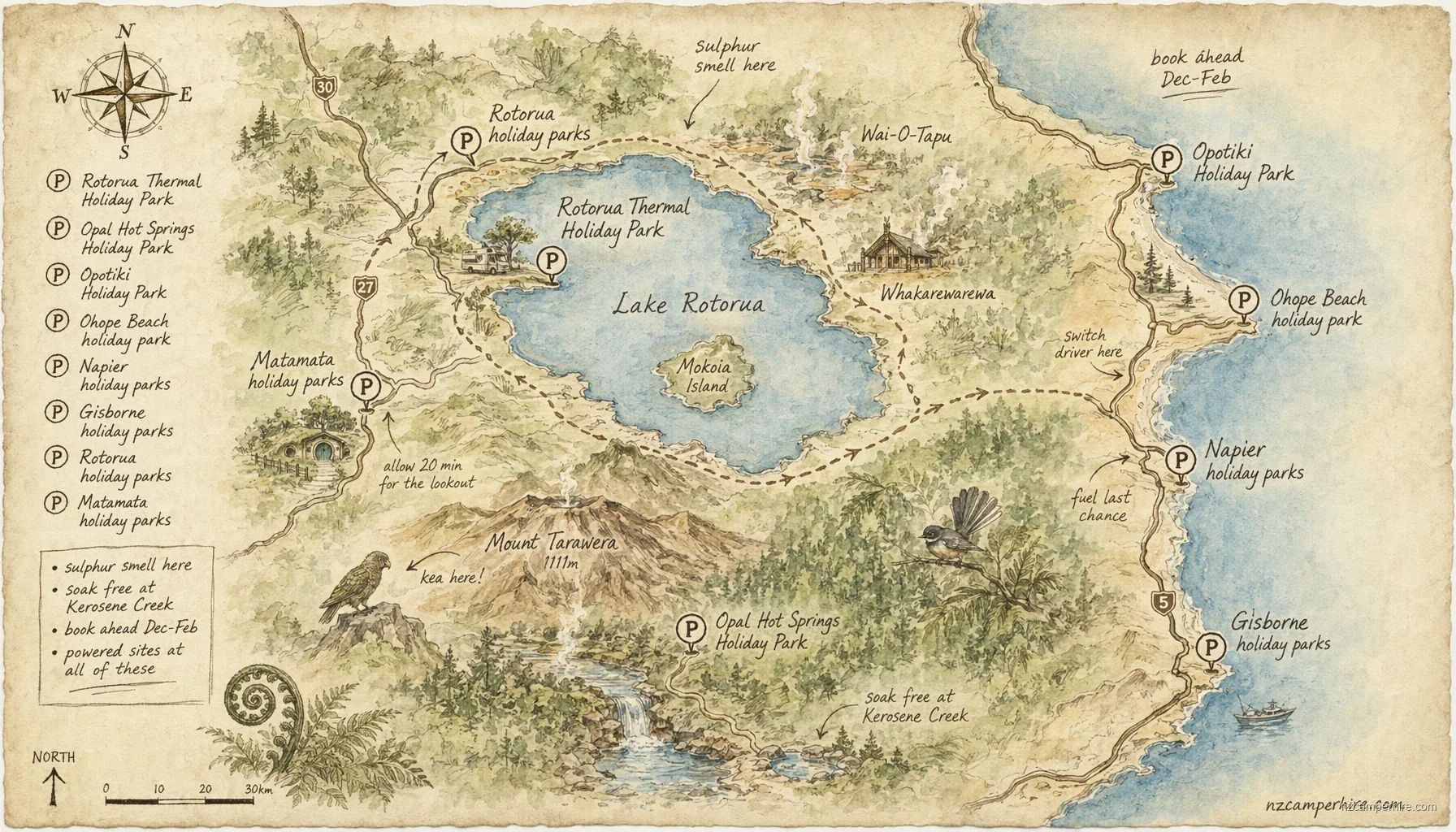
Gisborne Holiday Park suits travellers who want a beach-side reset without being far from fuel, groceries and the town centre. It is a practical East Coast stop on a North Island in 10 days route, especially after Rotorua or before the longer SH35 East Cape drive.
Expect a straightforward independent-style holiday park rather than a resort. The value is the location: Waikanae Beach is close, town is walkable, and your tanks, laundry and batteries can all be sorted before the next rural section.
Get the regional plan that pairs Gisborne Holiday Park with the nearest realistic low-cost backups (there are no true DOC vehicle campsites within 30 minutes), or send your dates if you'd like a planner to sense-check the booking window for your week.
Where it sits in a North Island plan
Gisborne sits on the east coast of the North Island, about 220 km from Rotorua via SH2 and SH30, which is 3 hours 15 minutes to 4 hours in a motorhome with one proper stop. From Napier it is about 215 km and 3 hours 30 minutes on SH2, longer if roadworks are active.
The park is close to Waikanae Beach and roughly 1.5 km from central Gisborne, around 20 minutes on foot if you are comfortable walking after dark. It works well for one night as a service stop, or two nights if you want surf, sunrise and a slower laundry day.
For route planning, cross-check this stop with the Rotorua region page and the North Island in 10 days route. January is the pressure month here, while November is usually easier and still pleasant for beach weather.
What you get for the price
Gisborne Holiday Park is best treated as an independent town-and-beach base. Powered sites for two adults are typically around NZ$55-75 in peak summer, sometimes higher for premium dates and noticeably lower in winter or midweek shoulder season. Do not treat that as a fixed tariff. East Coast parks move rates around school holidays, public holidays and local events.
On site, expect the core motorhome facilities: communal kitchen, shared lounge or TV space, laundry, toilets and showers, Wi-Fi that is usually fine for messages and maps but not something I would rely on for work calls at 8 pm in January. There is normally a dump station for guests. If pool or hot-pool access matters, check directly before you choose; Gisborne is more a beach-swim stop than a thermal pool stop.
Powered sites, dump point and vehicle size
A powered site is worth it here if you have been freedom camping or using basic sites for a couple of nights. You can run the fridge properly, charge devices, use the communal kitchen, refill fresh water and empty grey and toilet tanks before heading north toward Tolaga Bay and the East Cape.
For larger motorhomes, ask for a suitable bay when you enquire. A 6 m camper is usually straightforward. At 7 m or more, or if you are towing, you want confirmation before arrival rather than trying to turn around between parked cars and beach gear. The nearest dump station for guests is the park’s own dump point. Public dump points in Gisborne can change access rules, so check the dump stations and water fills guide before relying on one after hours.
Walkable Gisborne and short drives
The beach is the main easy win. Waikanae Beach is close enough for a morning swim or first-light walk without packing the van. Central Gisborne cafes and supermarkets are about 1.5-2 km away, or 5 minutes by vehicle. Fuel is also close, with service stations around the town centre and Gladstone Road area, usually within 2 km.
For a 1-2 night stay, drive up to Titirangi/Kaiti Hill for the harbour view, about 3-4 km and 10 minutes depending on where you start. Wainui Beach is about 7 km and 12 minutes. Tolaga Bay Wharf is a bigger half-day outing at about 55 km north, allow 50-60 minutes each way on SH35. That road is scenic but slower than it looks on a map.
Booking pressure and first-timer gotchas
Book ahead for late December and January, especially if you need power. Gisborne gets domestic summer traffic, surf travellers and families returning to the coast. Two weeks out can be too late for a powered site in the school-holiday peak. February is still busy on fine weekends, but usually less frantic.
The first-timer trap is assuming the East Cape has plenty of easy fallback camping. It does not. The holiday parks vs DOC campsites guide is worth reading before you leave Rotorua, because there are no convenient DOC vehicle campsites within 30 km of Gisborne. Local low-cost alternatives may include council or privately run areas such as Waihirere Domain or coastal stops near Pouawa, but rules and access can change. Dogs are usually by prior approval rather than automatic, and peak holiday weeks may have stricter pet rules.

Related reading
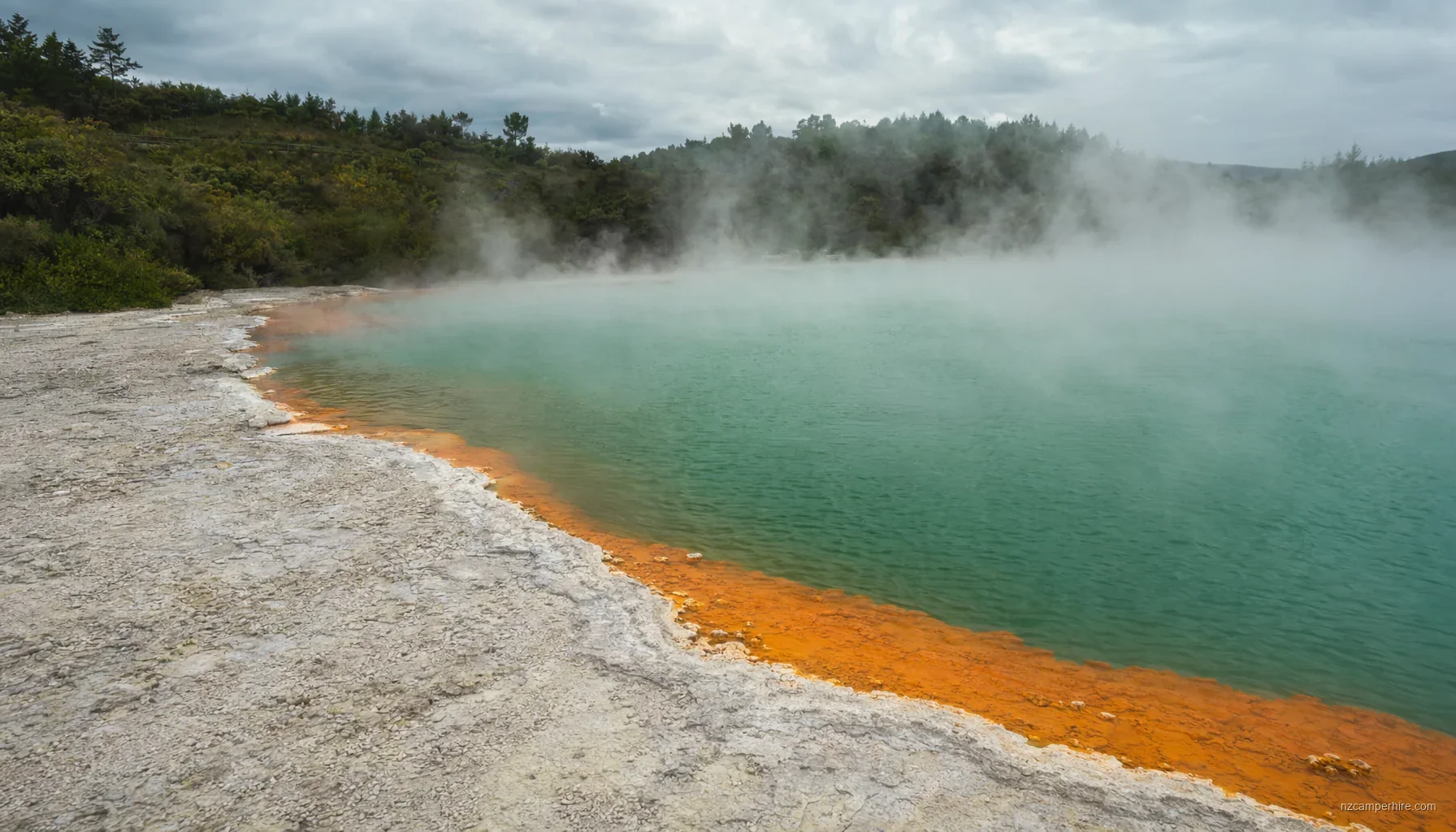 REGION
 Rotorua
Geothermal heartland — geysers, hot pools, Māori cultural experiences. 2.5 hours from Auckland.
See the region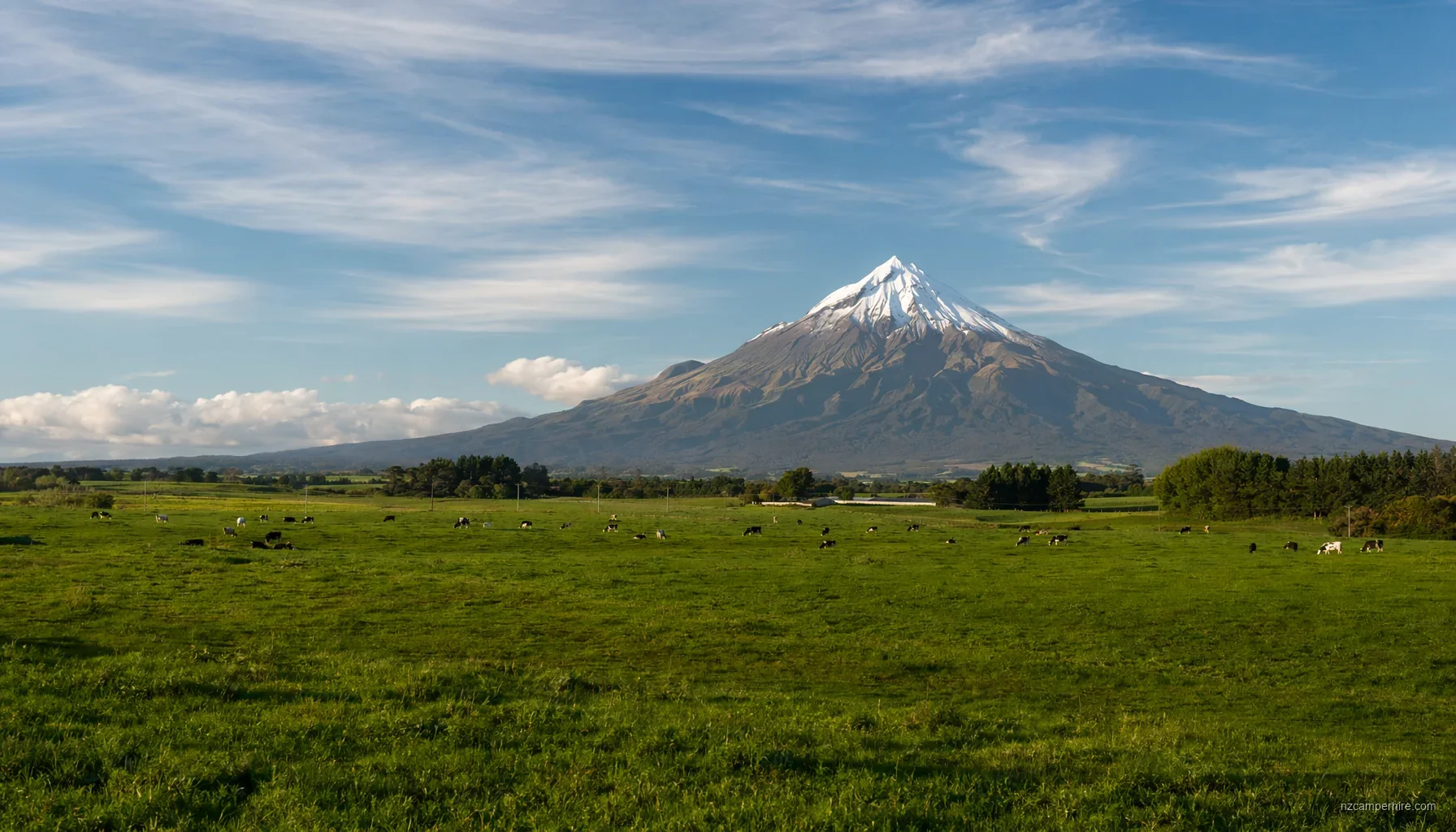 ROUTE
ROUTE North Island in 10 days
Auckland to Wellington via Bay of Islands, Coromandel, Rotorua, Hobbiton, and Tongariro.
See the route PRACTICAL GUIDE
 Holiday parks vs DOC campsites
Powered vs unpowered, facilities, booking, costs, and when each makes sense.
Read the guideGisborne holiday parks — motorhome stay guide FAQ
Do I need to book in January?
Are powered sites really worth it here?
Can I dump tanks here without staying?
Talk to a planner about gisborne holiday parks — motorhome stay guide
Holiday parks book up fast in peak season and vary widely in what they offer. Send your dates and we'll come back with whether this one fits your trip and the right time to book it.