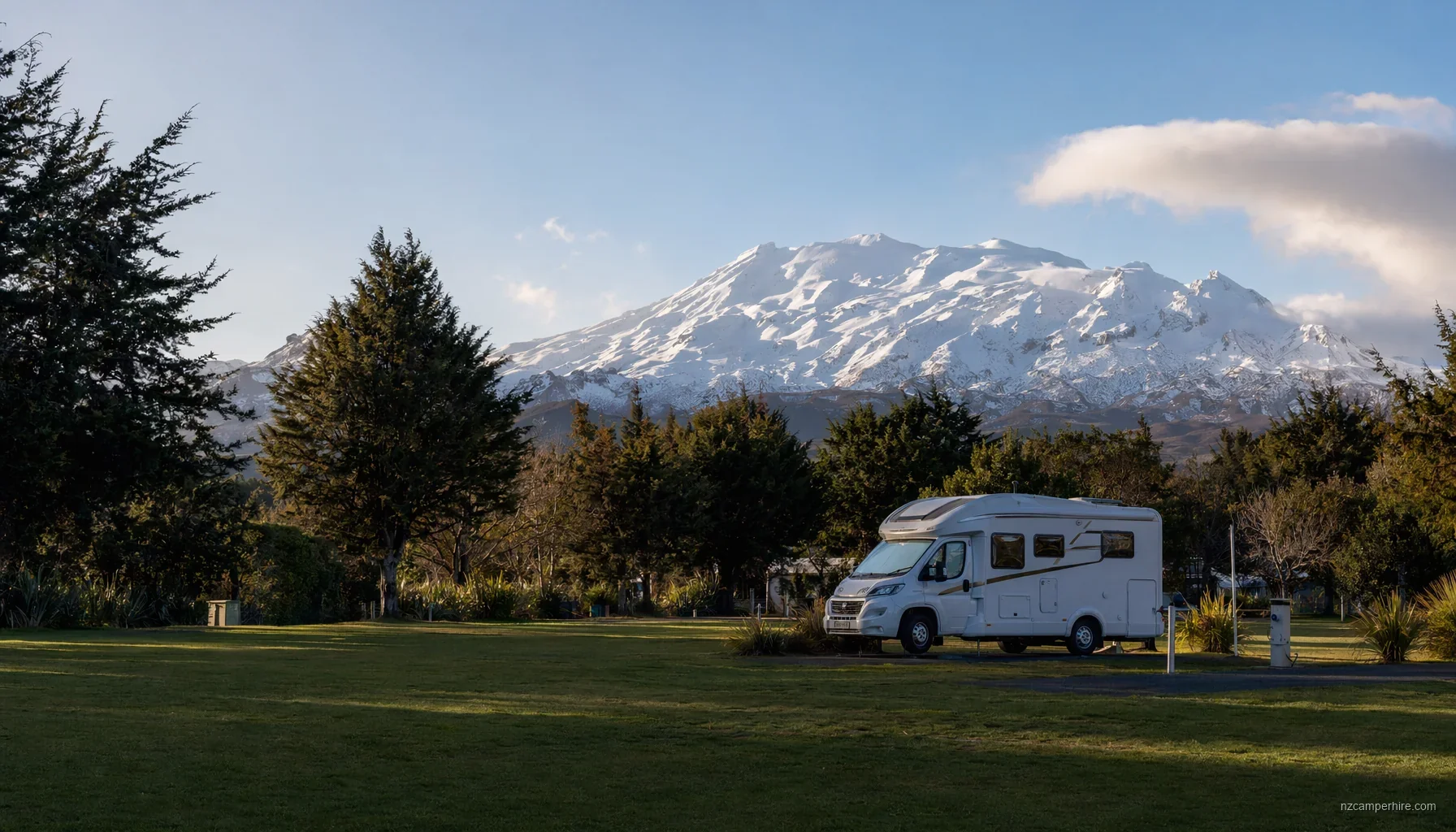
Ohakune Holiday Park motorhome stay guide
ohakune holiday park
- holiday-park
- drive-in
- powered-sites
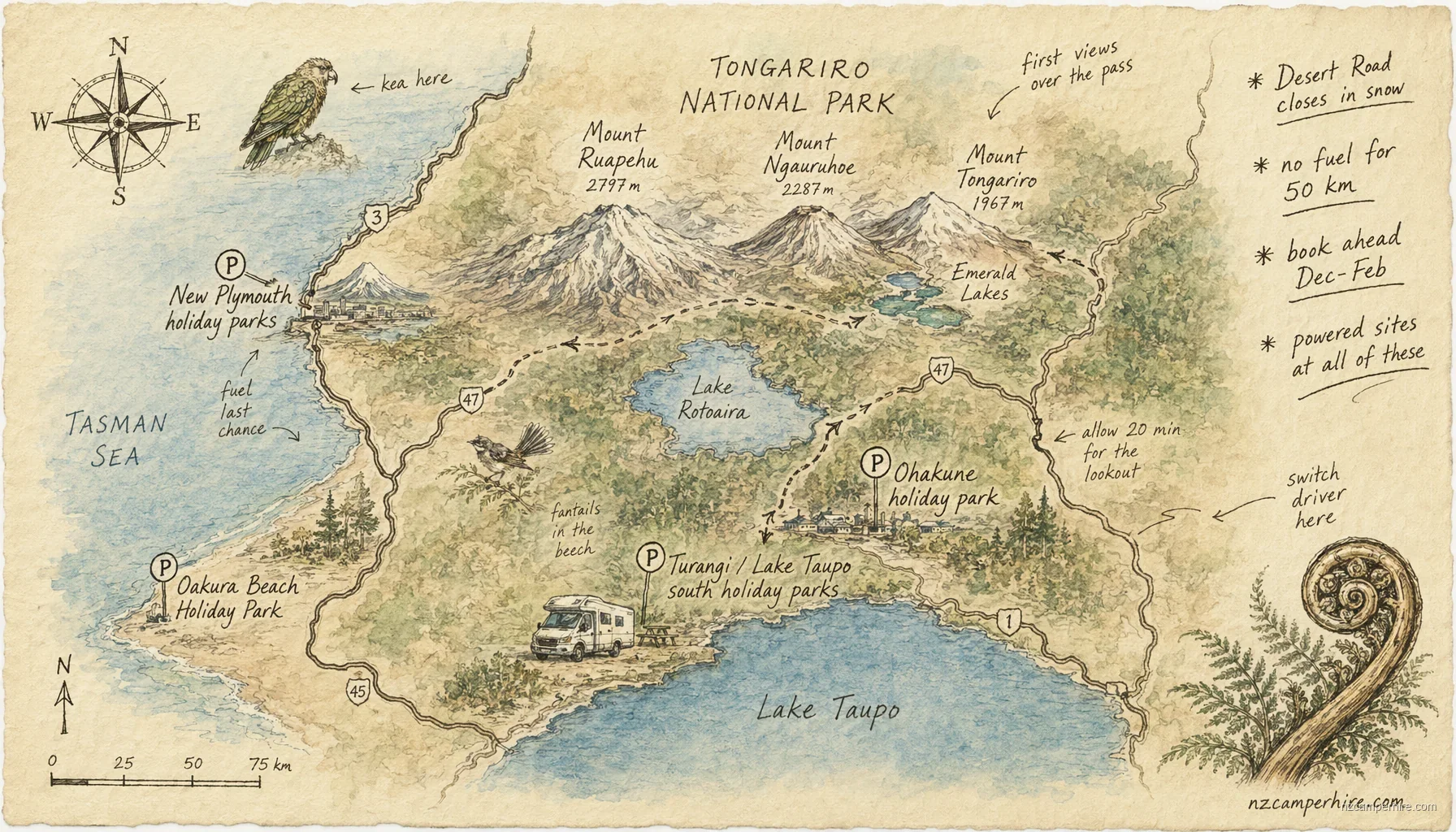
Ohakune Holiday Park suits travellers using the south side of Tongariro National Park: ski days on Turoa, the Old Coach Road cycle trail, or a one-night pause on the North Island in 10 days route.
It is a TOP 10 Holiday Park, so expect a serviced base rather than a quiet DOC paddock. That means kitchen, laundry, dump point, Wi-Fi of the normal holiday-park kind, and neighbours close enough to hear in January.
Get the regional plan that pairs Ohakune Holiday Park with Mangawhero and Mangahuia DOC campsites within 30 to 35 minutes, or send your dates if you'd like a planner to sense-check the booking window for your week.
Where it is, and who it suits
The park sits on Moore Street, about 700 m from Ohakune town centre, usually 8 to 10 minutes on foot. The Big Carrot and playground are about 1.4 km away, around 18 minutes walking. Ohakune Junction and the railway station area, useful for Old Coach Road shuttles, are about 1.6 km away.
It suits motorhome travellers who want power, showers, and an easy reset before or after Tongariro National Park. Turoa ski area is roughly 17 km up Ohakune Mountain Road, but allow 25 to 30 minutes in winter because ice, chains, and shuttle traffic slow the climb.
What you get for the price
Powered sites for two adults are typically around NZ$55-75 in peak summer and busy ski periods. Winter is not automatically cheap here, because Ruapehu ski weekends can behave like a second peak. Midweek shoulder-season nights are usually noticeably lower.
On site, expect a communal kitchen, TV lounge or shared indoor space, laundry, showers, children’s play areas, and a dump station for guests. There is no resort-style pool to plan around. If a spa or hot tub matters to you, check current availability before building the evening around it. Wi-Fi is useful for messages and weather checks, not something I would rely on for heavy video calls.
Powered vs unpowered sites
Take power if you are here in winter, travelling with kids, or running camera batteries, laptops, or ski-gear drying plans. Ohakune nights can be cold even outside ski season, and a powered site lets you use the heater without watching the house battery every hour.
Unpowered can work for one mild night if your motorhome is properly self-contained and you are moving again next morning. Larger vans should ask for a longer bay when they contact the park. A 7 m plus motorhome is manageable in town, but it is not something to assume will fit every site without checking.
What's nearby for one or two nights
For a short stay, spend one day on the Old Coach Road, a historic rail and viaduct cycle route between Ohakune and Horopito. If the weather is clear, drive part way up Ohakune Mountain Road for forest and alpine views, then turn back before conditions get awkward.
Fuel and basic groceries are in Ohakune, about 1 km from the park depending on which forecourt or supermarket you use. For route planning, pair this stop with the Tongariro National Park region page, the North Island in 10 days route, and the Holiday parks vs DOC campsites guide. January needs earlier planning than most first-timers expect.
Common gotchas first-timers don't expect
Ruapehu weather changes fast. A sunny town morning does not mean an easy ski-road drive 900 m higher up the mountain. In winter, check chain rules before leaving the park, and do not treat a large motorhome like a rental car on icy corners.
Dogs are not something to assume at a TOP 10 park. Some stays may be possible only by prior arrangement, and rules tighten around school holidays, summer peak, and ski weekends. If you are comparing with a DOC option, Mangawhero Campsite is the closest DOC fallback at roughly 13 km and 20 minutes. Mangahuia Campsite near National Park is farther, about 35 km and 30 to 35 minutes.
Related reading
 REGION
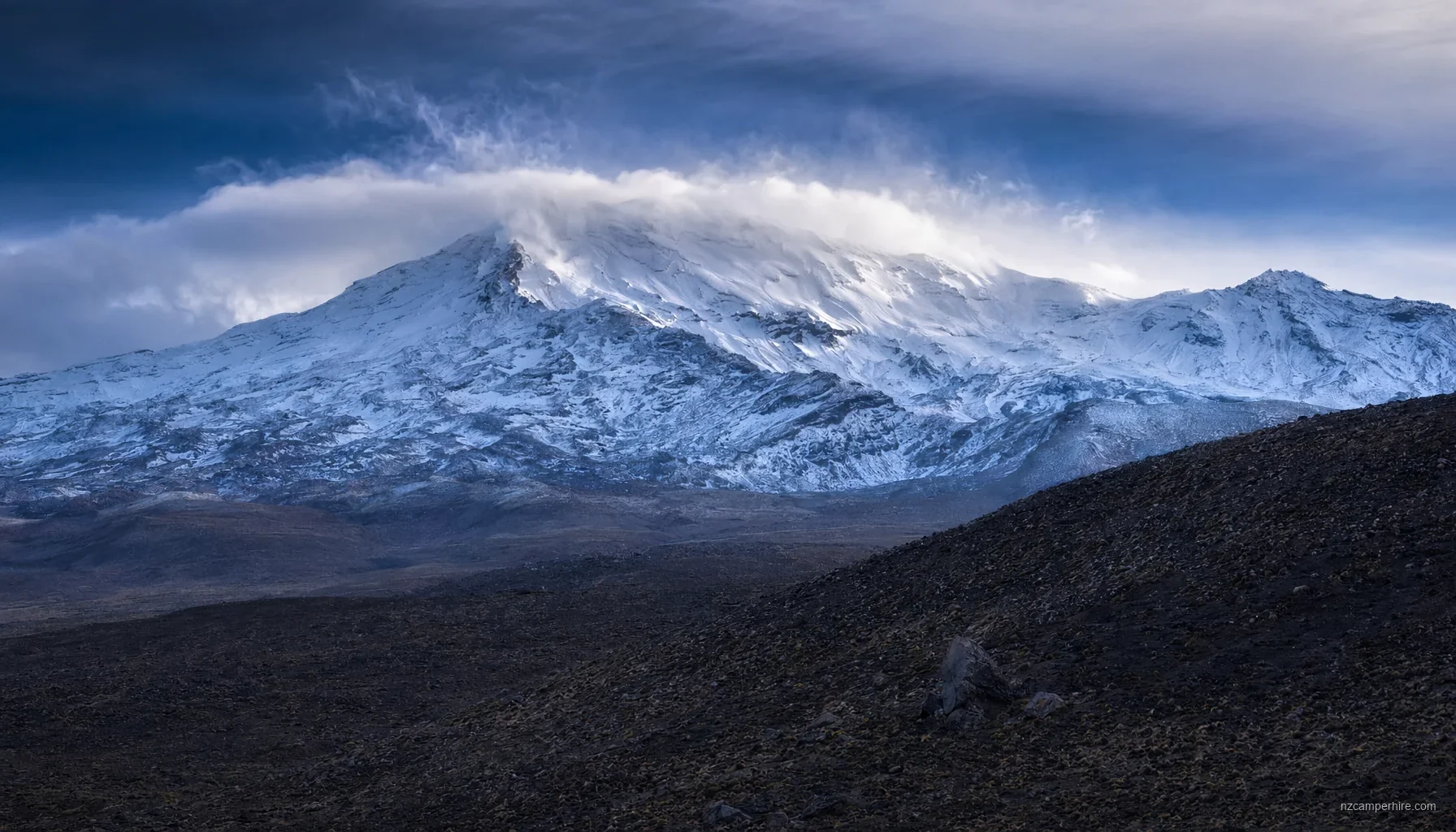
 Tongariro National Park
Three active volcanoes and the Tongariro Alpine Crossing — NZ's most famous day hike.
See the region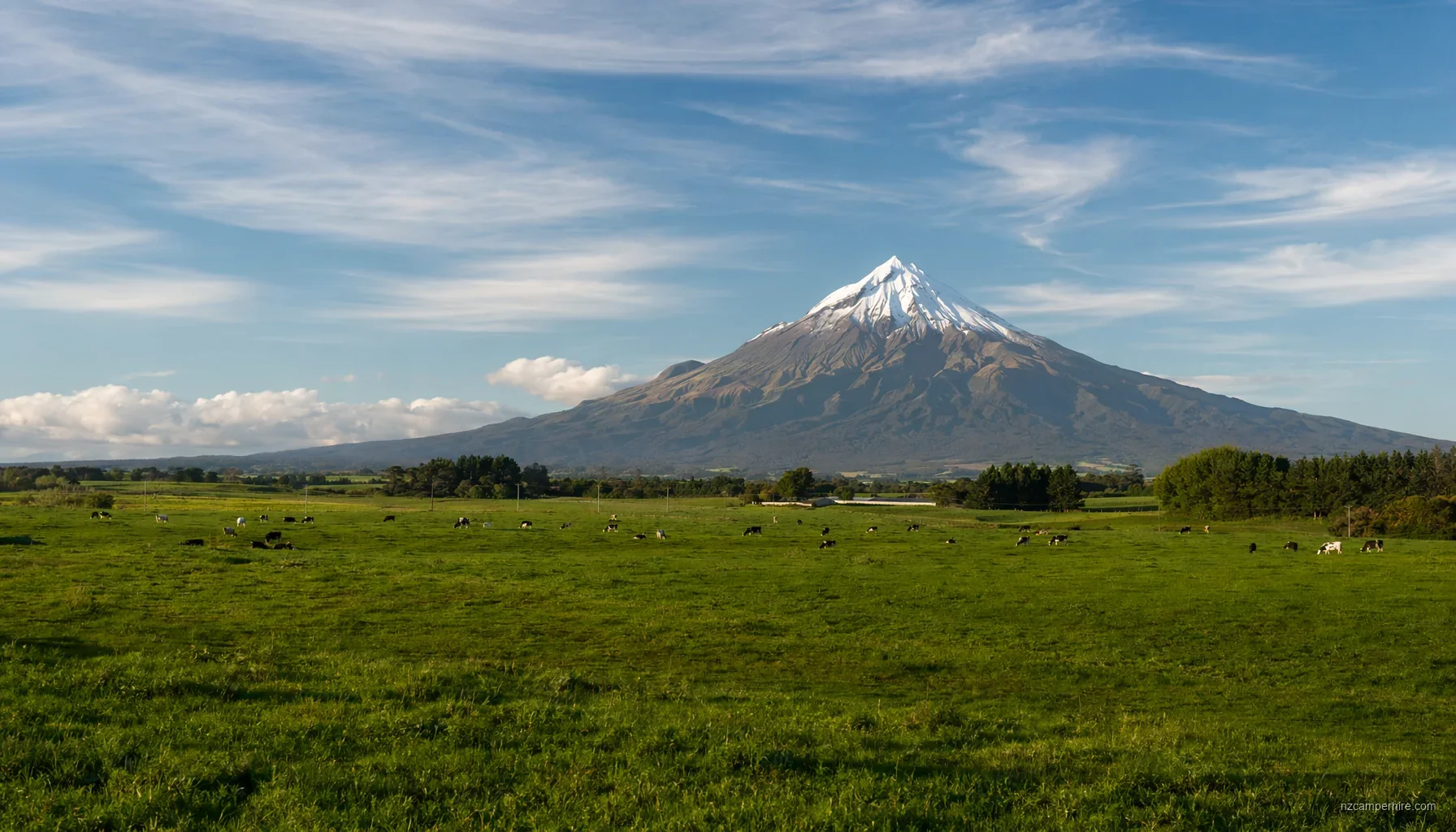 ROUTE
ROUTE North Island in 10 days
Auckland to Wellington via Bay of Islands, Coromandel, Rotorua, Hobbiton, and Tongariro.
See the route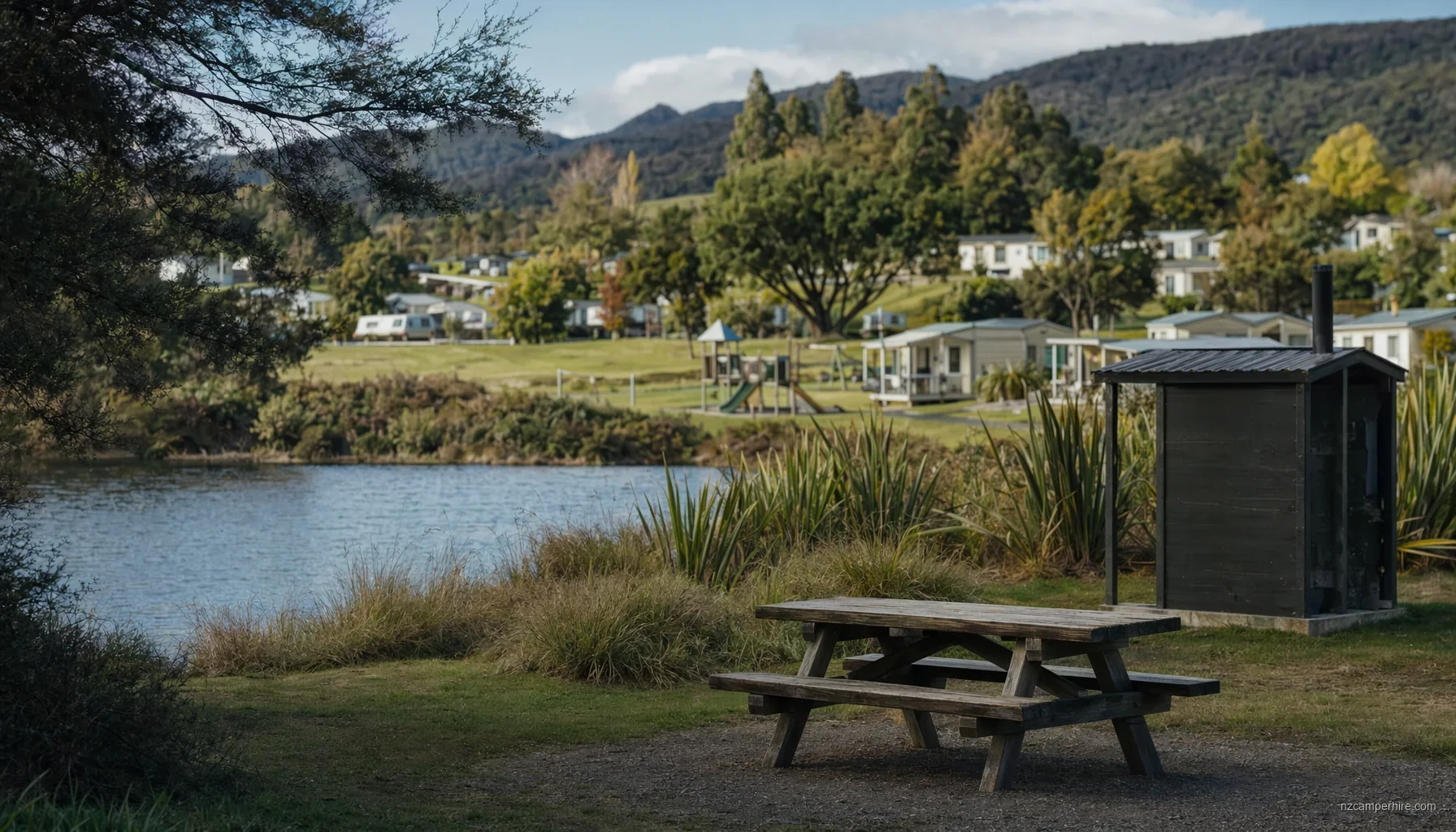 PRACTICAL GUIDE
 Holiday parks vs DOC campsites
Powered vs unpowered, facilities, booking, costs, and when each makes sense.
Read the guideOhakune holiday park — motorhome stay guide FAQ
Do I need to book in January?
Are powered sites really worth it here?
Can I dump tanks here without staying?
Talk to a planner about ohakune holiday park — motorhome stay guide
Holiday parks book up fast in peak season and vary widely in what they offer. Send your dates and we'll come back with whether this one fits your trip and the right time to book it.