Vehicle choice for a 3-week full NZ loop
3-week full-nz loop — best vehicle choice
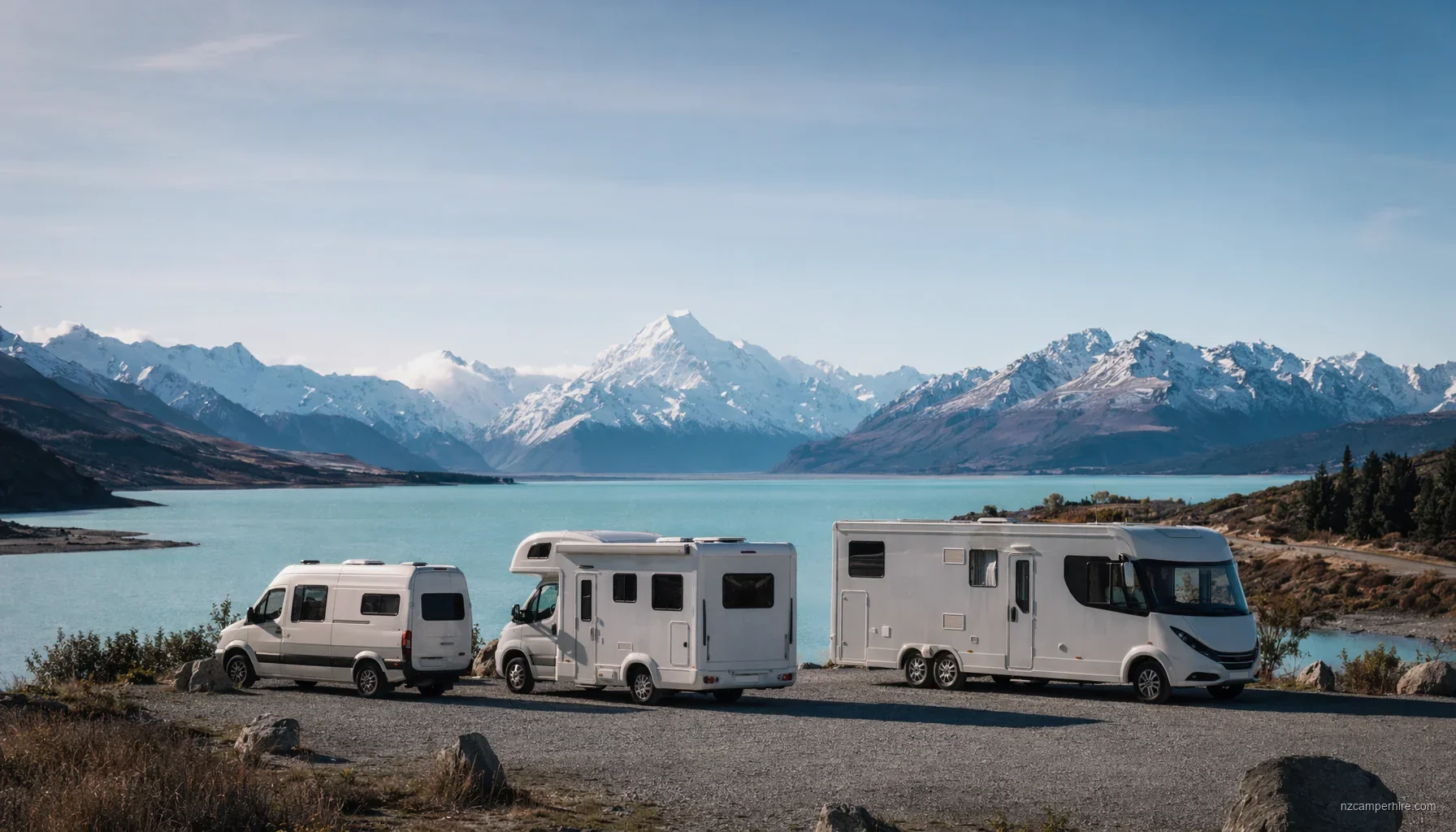
Three weeks is enough for both islands, but only if the vehicle does not fight the route. A couple in a 2-berth, a family in a 4-berth, and two couples in a 6-berth will have very different days on SH1, SH6, SH8 and the Cook Strait ferry.
The right call is less about glossy photos and more about beds, luggage, wet-weather living space, ferry length bands, insurance excess, and who is comfortable driving on the left.
Have a planner sense-check whether this configuration fits the route and dates you've got in mind — reply below with the rough shape of your trip.
Why this configuration suits a 3-week full NZ loop
For the North to South in 21 days route, the usual winners are simple. A couple normally does well in a self-contained 2-berth with an ensuite if they value easy parking and lower ferry size exposure. A family of four usually needs a 4-berth with proper seatbelts, not just sleeping space. Two couples can make a 6-berth work, but only if everyone accepts shared storage, shared bathroom timing, and slower town parking.
A sensible 21-day shape is Auckland to Rotorua, Tongariro, Wellington, Picton, Kaikoura, Christchurch, Lake Tekapo, Queenstown, Fiordland, Wanaka and the West Coast. Do not add every side road. Auckland to Rotorua is about 230 km and 3 hours. Franz Josef to Wanaka is 285 km and 4.5 hours over Haast Pass at 564 m. Queenstown to Christchurch via SH8 crosses Lindis Pass at 965 m.
What to look for when you scan the rental sites
Start with the Vehicle-choice hub, then read the 4-berth vs 6-berth motorhome comparison if you are travelling as a family or group. Couples debating extra space should also look at the 2-berth vs 4-berth logic before paying for length they may not need.
- Bed setup: a fixed rear bed saves ten minutes every night. A dinette bed is fine for seven days, less fun on day 18.
- Ferry impact: Cook Strait with Interislander or Bluebridge is 3 hours 20 minutes Picton to Wellington, closer to 3.5 hours with loading. Peak summer sailings can need booking around 4 months out. Longer vehicles and extra passengers affect the fare.
- Driving basics: New Zealand drives on the left. Foreign licences in English are valid for up to 12 months. If the licence is not in English, bring an IDP. Minimum hire age sits roughly 18 to 25 depending on operator and vehicle class.
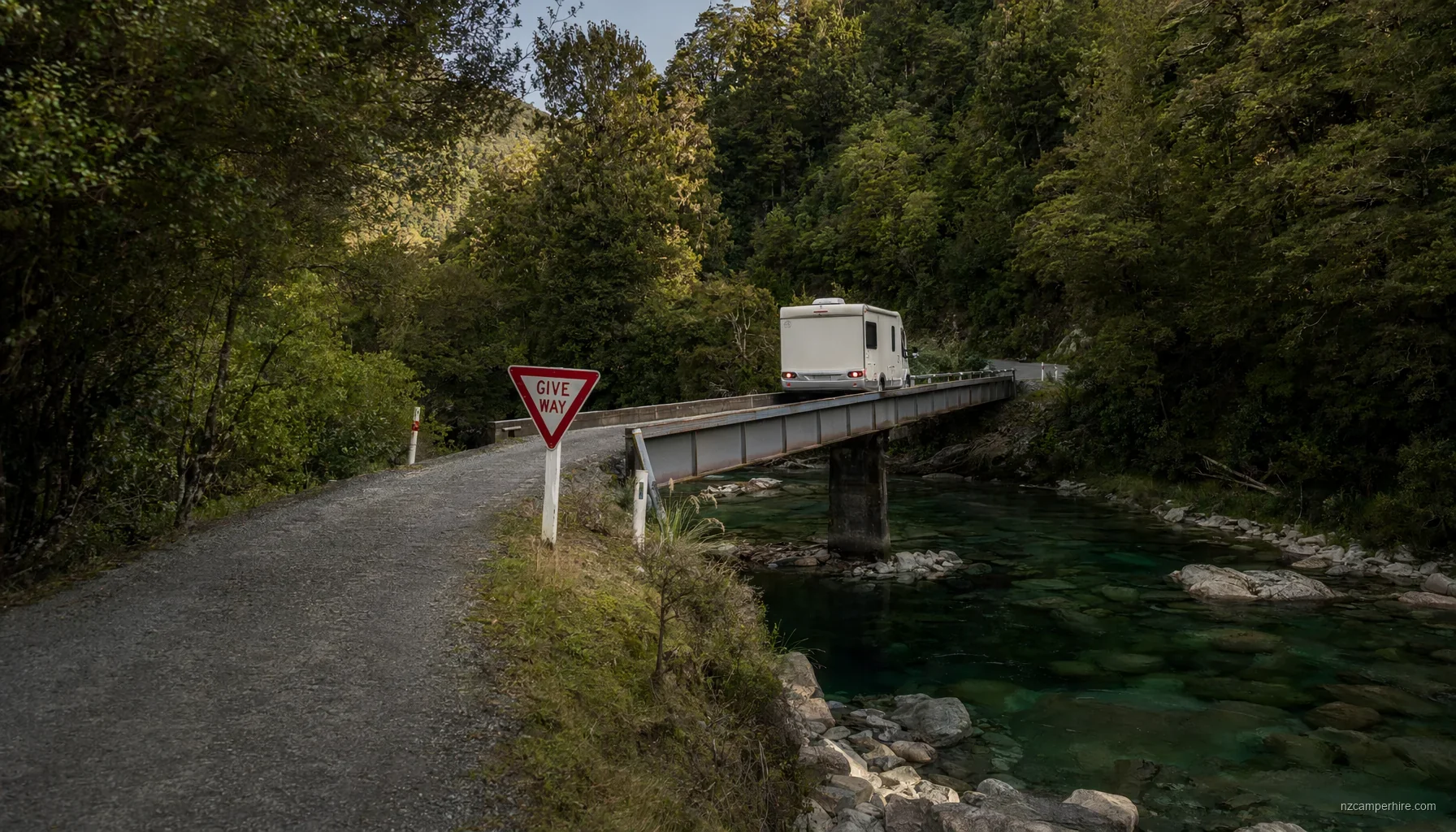
- Insurance: read the excess, windscreen, tyre, underbody and single-vehicle incident wording. Big loops mean gravel car parks, narrow bridges and supermarket corners.
The practical guide First time driving a motorhome is worth reading before you decide that a 7 m vehicle sounds easy.
Trade-offs you find out about on day 5
The 2-berth is calm on the Crown Range Road at 1,121 m and easier around Queenstown, Wellington and supermarket car parks. The trade-off is cabin discipline. Two large suitcases, wet jackets and groceries need a system.
The 4-berth gives a family breathing room, especially on rain days at Rotorua Thermal Holiday Park, North South Holiday Park in Christchurch, or Creeksyde Queenstown. It also needs more planning at dump stations and water fills.
The 6-berth is cheaper per person when shared well, but it is not just a bigger lounge. It is a longer vehicle on SH94 to Milford Sound, tighter at Lake Pukaki freedom spots, and slower through one-lane bridge country on the West Coast. If you plan DOC nights such as White Horse Hill near Aoraki/Mount Cook, check length and arrival timing.
Real options on the market
When international travellers research the larger rental market, they will see layouts such as the Maui Cascade, Britz Voyager and Apollo Euro Tourer. Treat those names as examples of layouts to inspect, not as a ranking. Look at the floor plan first: where the beds are, whether the bathroom is usable after someone is asleep, and how many belted seats face forward.
A 21-day full-country route also makes running costs visible. Read What a NZ campervan trip actually costs alongside the Cook Strait ferry with a campervan guide. Fuel, ferry size, insurance reduction and holiday park nights can change the sensible vehicle choice more than the daily hire rate shown on the first search screen.
If you want a shorter version of this style, compare it with Auckland to Queenstown one-way or a compressed South Island in 14 days.
3-week full-NZ loop — best vehicle choice FAQ
Will the ensuite still feel cramped on day 14?
Can two couples really survive a 6-berth for three weeks?
Is the 6-berth ferry cost a reason to avoid it?
Talk to a planner about 3-week full-nz loop — best vehicle choice
Vehicle pick depends on dates, party size, and route. Send us a short outline and we'll come back with a model recommendation and a paced trip to match.