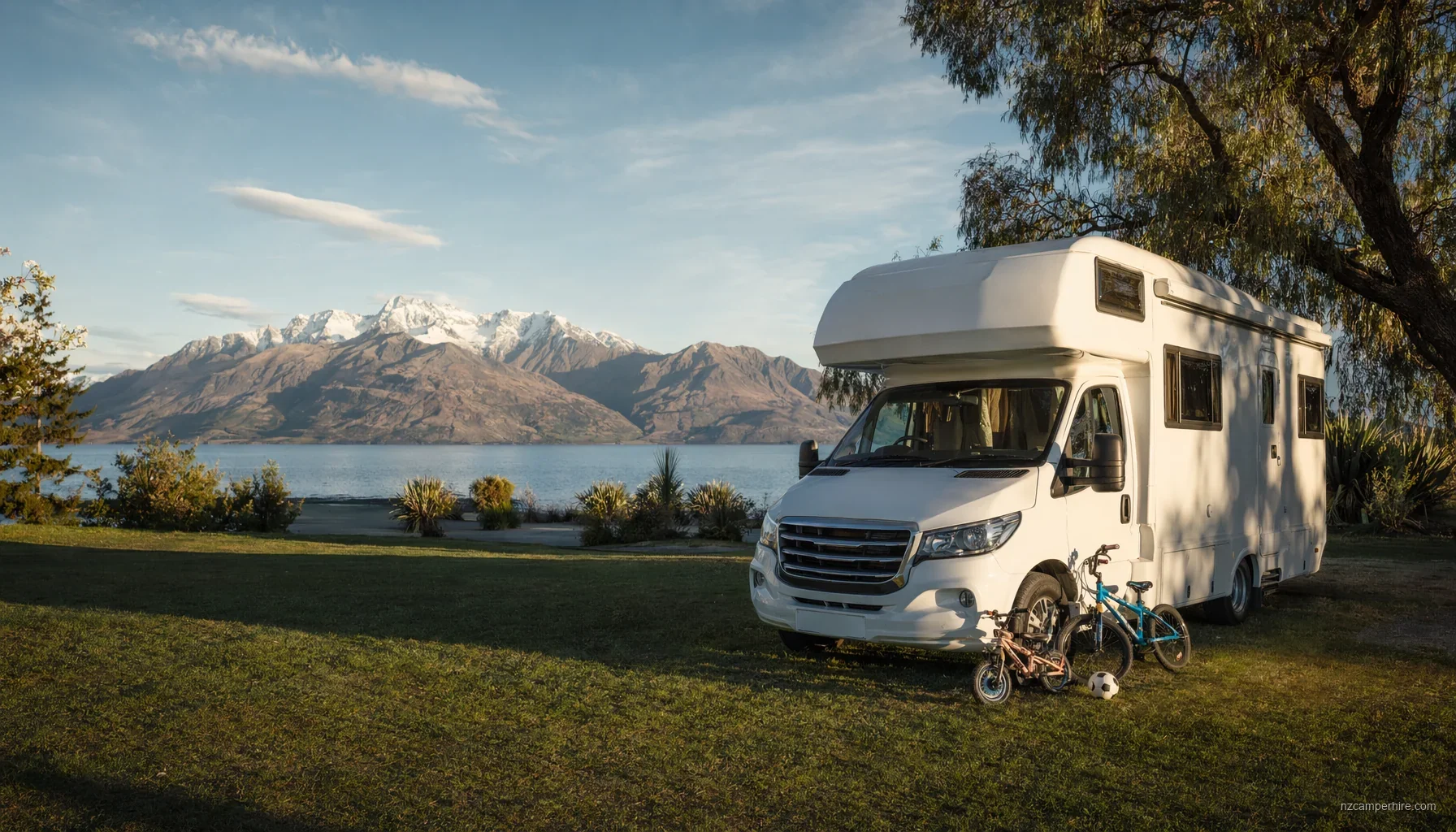
4-berth with school-age kids (5-12) in NZ
4-berth with school-age kids (5-12)
A 4-berth motorhome usually fits two adults and two school-age kids well, but the layout matters more than the label. A fixed rear bed plus a converted dinette feels different from bunks and a front lounge, especially after wet shoes, backpacks, and bedtime negotiations arrive.
This is the family configuration to sense-check against the Vehicle choice hub, the 4-berth vs 6-berth size comparison, and What a NZ campervan trip actually costs before you commit to a route shape.
Have a planner sense-check whether this configuration fits the route and dates you've got in mind — reply below with the rough shape of your trip.
Why this configuration suits families with 5-12 year olds
At this age, kids can climb into bunks, manage campsite showers, and sit through 2 to 3 hour driving blocks if you break the day properly. A 4-berth keeps the vehicle short enough for supermarket parking in Wanaka or Rotorua, but gives more weather shelter than a compact van.
It suits routes with frequent powered sites and short activity days. South Island in 14 days works well if you slow the Christchurch, Lake Tekapo, Mount Cook, Wanaka, Queenstown shape. Christchurch to Queenstown is also sensible: Christchurch to Lake Tekapo via SH1, SH79 and SH8 is 225 km, allow 3 to 3.5 hours with lunch; Tekapo to White Horse Hill near Aoraki/Mount Cook is 105 km, about 1.25 hours before stops.
For North Island families, North Island in 10 days gives easier distances around Auckland, Rotorua, Taupo, Tongariro and Wellington. Add the Travelling with kids guide if this is your first campervan trip with children.
What to look for when you scan the rental sites
Start with the beds. Bunks save nightly setup time. A dinette bed gives more daytime living space, but somebody has to rebuild it every evening. That feels fine on night 2. It can feel less fine on night 11 in rain at Hokitika Holiday Park.
- Bed access: check ladder height, guard rails, and whether each child gets a separate sleeping surface.
- Seats: all travelling seats need proper belts. Booster-seat rules depend on the child's age and size, so confirm anchor points before you plan.
- Toilet and shower: useful for night-time wees, but many families still use holiday park facilities at Creeksyde Queenstown, Oamaru Top 10, Rotorua Thermal Holiday Park, or Akaroa Top 10.
- Storage: four soft bags fit better than hard suitcases. Put wet gear in a crate.
- Certification: look for current self-containment certification if you plan any legal freedom camping.
New Zealand drives on the left. Licences in English are valid for up to 12 months; if yours is not in English, bring an IDP or approved translation.
Trade-offs you find out about on day 5
The 4-berth is easier than a 6-berth on tight roads, but it still needs family systems. Shoes live outside or in one crate. Pyjamas come out before the table becomes a bed. One adult handles dinner while the other takes the kids to the playground or laundry.
School holidays change the equation. January gives long evenings and swimming, but holiday parks around Queenstown, Wanaka, Lake Tekapo and the Coromandel fill early. April and October school holidays are calmer for driving, with cooler nights. July works if you want snow, but condensation, drying clothes, and shorter daylight make an ensuite more useful.
Insurance is worth reading properly. Children do not change the excess, but family trips create more small risks: reversing near bollards, cracked windscreens on SH6, and campsite scrapes. Read Campervan insurance options before deciding how much excess you can sleep with.
Real options on the market
On rental sites you will see several ways a 4-berth is built. A Maui Cascade may appear with a more spacious rear layout, while a Britz Discovery can show the common family format with belted rear seats and a convertible bed. An Apollo Euro Camper is another name travellers often come across when comparing four-sleeper layouts.
Treat those names as examples, not instructions. The better question is whether the beds suit your children, whether the vehicle length feels manageable on SH73 over Arthur's Pass at 920 m, and whether your route needs freedom camping flexibility or mostly powered holiday parks.
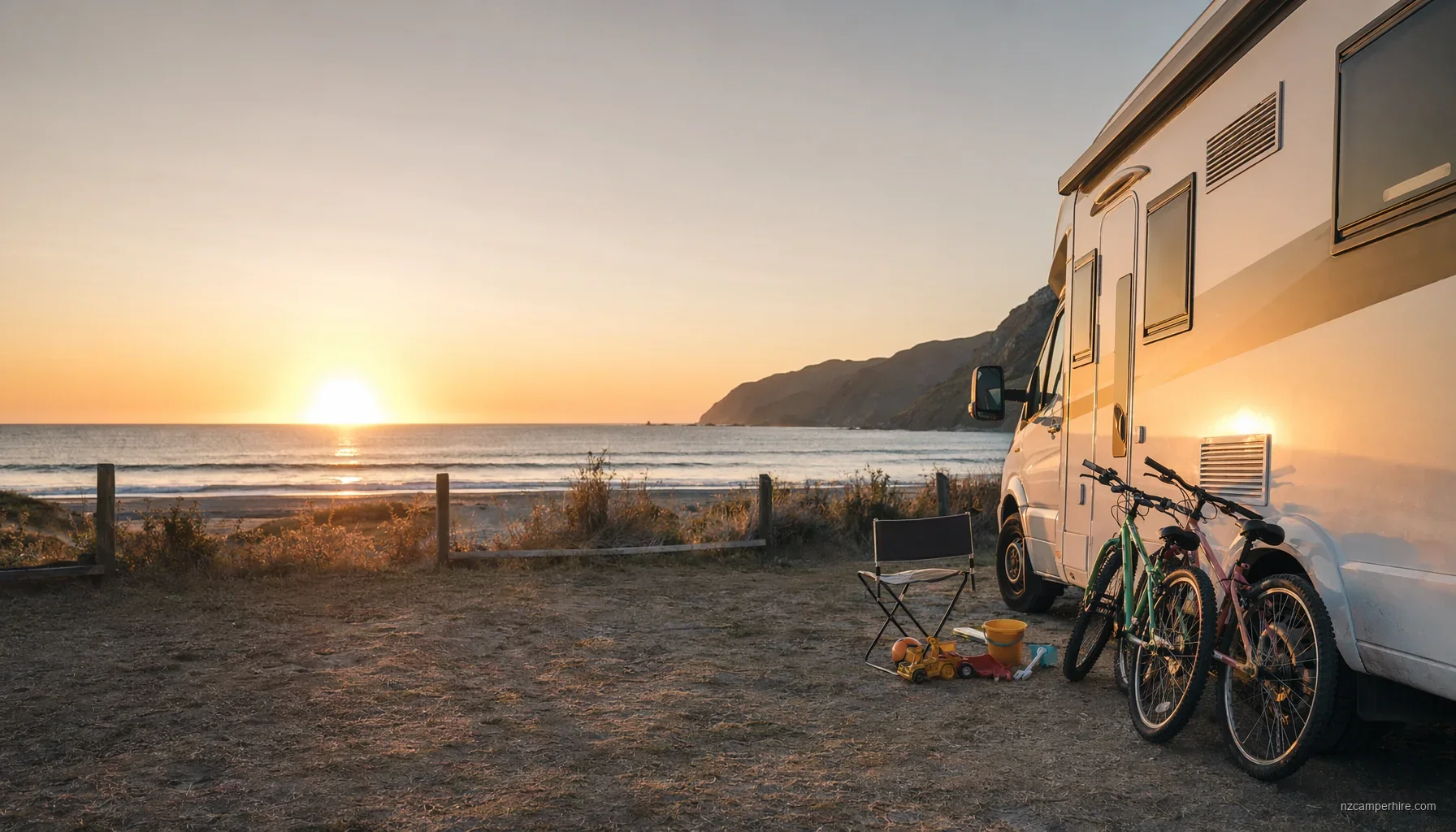
4-berth with school-age kids (5-12) FAQ
Will the beds still feel workable on day 14?
Should we size up to a 6-berth for school holidays?
Which route shape suits this family setup?
Talk to a planner about 4-berth with school-age kids (5-12)
Vehicle pick depends on dates, party size, and route. Send us a short outline and we'll come back with a model recommendation and a paced trip to match.