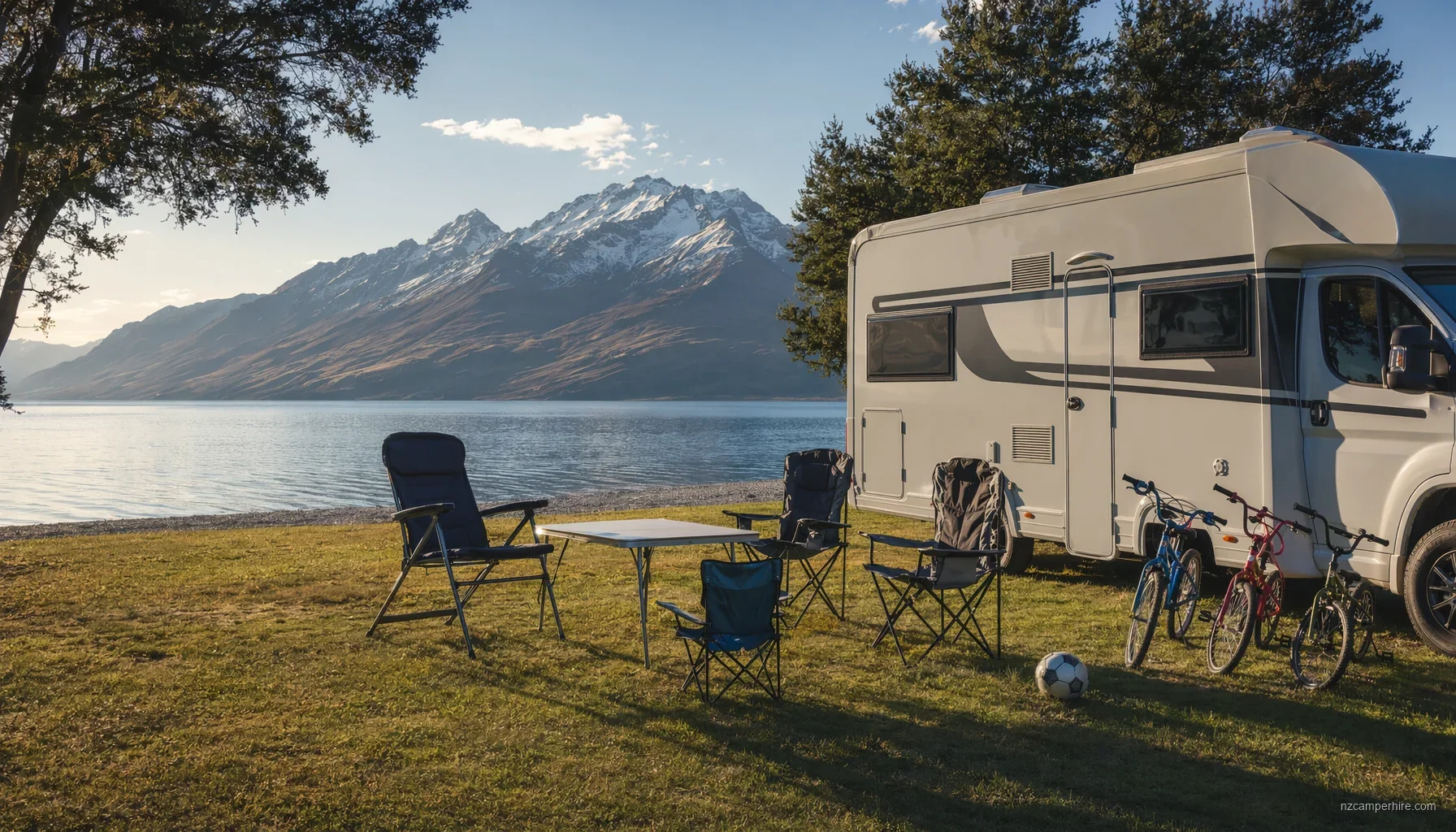
6-berth for a family of 5 in New Zealand
6-berth for a family of 5
A 4-berth can work for two adults and small children. Once the kids are 12 or older, a 6-berth usually becomes the calmer choice. Not because you need luxury. Because you need separate beds, somewhere to sit when it rains, and less nightly furniture shuffling.
This page sits under our Motorhome vehicle choice hub and pairs with the 4-berth vs 6-berth motorhome guide, Travelling with kids, and What a NZ campervan trip actually costs. Have a planner sense-check whether this configuration fits the route and dates you've got in mind — reply below with the rough shape of your trip.
Why this configuration suits a family of 5
For a family of five, the 6-berth is less about carrying six people and more about living space. Two adults can take the rear double or the over-cab bed. Two kids can share one double. The fifth child gets a separate bed without turning the whole van into a puzzle every night.
The big win is the dinette. In many 4-berths, the table becomes a bed, so breakfast starts with packing up sleeping bags. In a 6-berth, one dining area can often stay as a lounge. On a wet West Coast afternoon, that matters.
This setup suits longer routes with more than one weather zone. South Island in 14 days works well if you keep driving days sensible: Christchurch to Lake Tekapo is about 225 km and 3 hours via SH1 and SH79, then Lake Tekapo to Queenstown is about 255 km and 3.5 to 4 hours via SH8 over Lindis Pass at 965 m. North to South in 21 days also suits a 6-berth, especially if you use the Cook Strait ferry and avoid changing beds every second night.
What to look for when you scan the rental sites
Start with the bed plan, not the number on the door. A 6-berth can mean three doubles, a rear lounge plus over-cab bed, or bunks in some layouts. For teenagers, two narrow doubles may be a problem. For younger children, the over-cab bed can feel fun on night one and less fun when someone needs the toilet at 2 am.
- Seatbelts: check there are five belted seats, not just five sleeping spaces.
- Storage: five soft bags are easier than five hard suitcases.
- Toilet and shower: useful for late nights, but not a replacement for holiday park bathrooms.
- Heating: important outside December to February, especially Lake Tekapo, Mount Cook, Tongariro, and inland Otago.
- Self-containment: check the vehicle has current certification if you plan any legal freedom camping.
NZ drives on the left. Foreign licences in English are generally valid for up to 12 months, and you need an IDP or certified translation if your licence is not in English. Minimum hire age varies by operator and vehicle class, often 18 to 25, so check this early if an older child is hoping to share driving.
Trade-offs you find out about on day 5
A 6-berth is easier inside and harder outside. It takes more attention in supermarket car parks, fuel stops, and older holiday park sites. In Queenstown, Creeksyde Queenstown is central but tight in places. In Christchurch, North South Holiday Park is easier for first and last nights because it is close to the airport roads.
On the road, length matters. The Crown Range Road between Queenstown and Wanaka reaches 1,121 m and has tight bends. Many families take SH6 through Cromwell instead. It is longer at about 115 km and 1 hour 45 minutes, but calmer in a large vehicle. Te Anau to Milford Sound on SH94 is 118 km each way and can take 2.5 hours before photo stops, tunnel delays, and summer traffic.
Insurance is not the place to be casual. Bigger vehicles carry higher excesses, and windscreens, tyres, underbody damage, and single-vehicle incidents may be treated differently. Read Campervan insurance options before choosing cover. If you are nervous about left-side driving, make the first day short rather than collecting the van and heading straight for a mountain pass.
Real options on the market
When international travellers research this size, they will see names such as Maui River, Britz Frontier, and Apollo Euro Deluxe attached to 6-berth layouts. Treat those names as examples of what appears on rental sites, not as a ranking. The useful comparison is the floor plan: where the beds are, whether the table stays usable, how the bathroom is placed, and how much gear space sits under the rear bed.
If your trip is mostly Auckland, Rotorua, and the Bay of Islands, the 6-berth still works, but city parking and beach-road access need patience. If your plan is Christchurch, Lake Tekapo, Mount Cook, Wanaka, Queenstown, and Te Anau, it makes more sense. Holiday parks such as Oamaru Top 10, Rotorua Thermal Holiday Park, and Hokitika Holiday Park are easier with children because showers, laundry, kitchens, and powered sites reduce pressure inside the van.
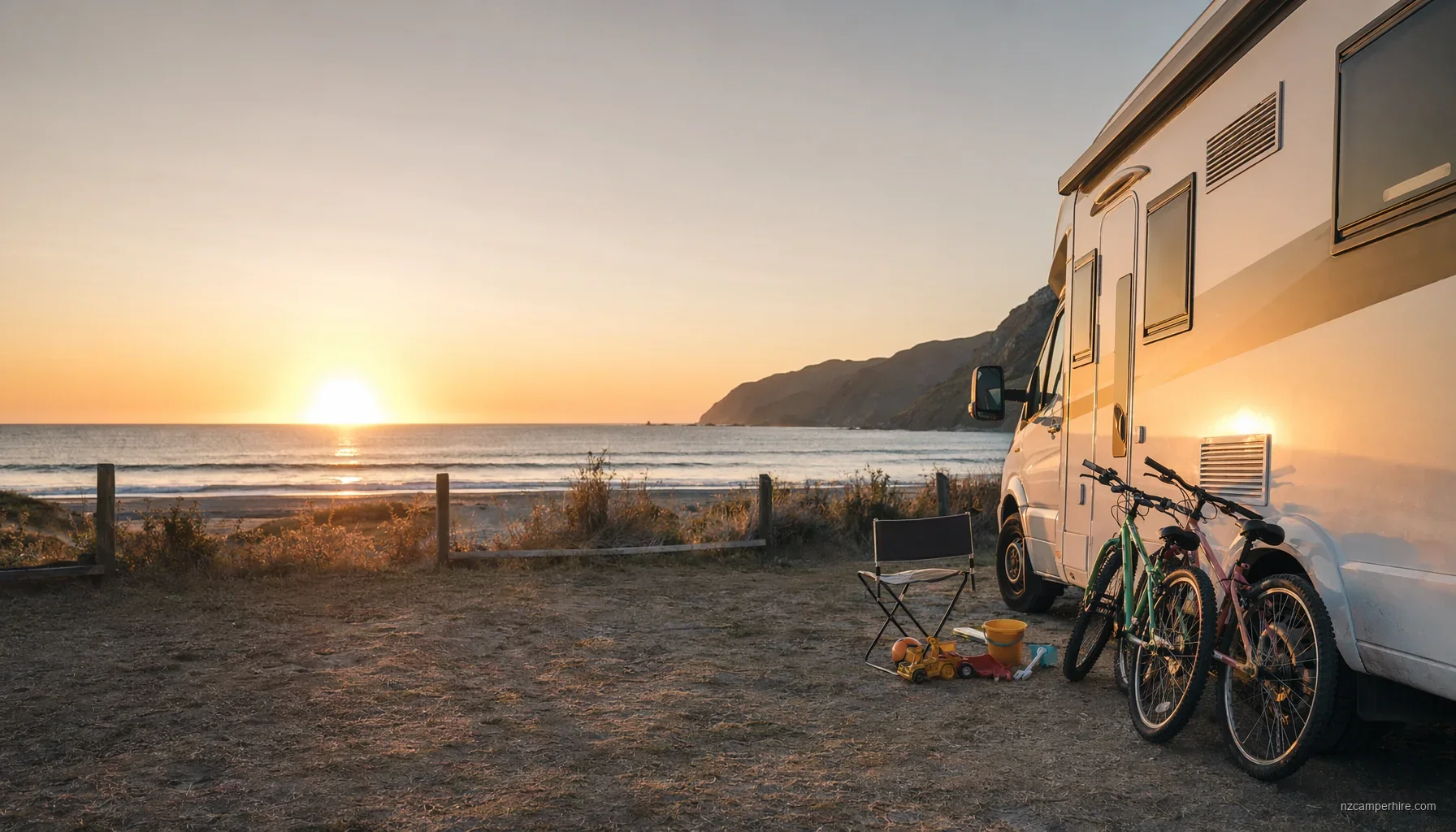
6-berth for a family of 5 FAQ
Is a 6-berth too big for a family of 5 on South Island roads?
Will the 6-berth still feel cramped on day 14?
Can we use DOC campsites with a 6-berth family motorhome?
Talk to a planner about 6-berth for a family of 5
Vehicle pick depends on dates, party size, and route. Send us a short outline and we'll come back with a model recommendation and a paced trip to match.