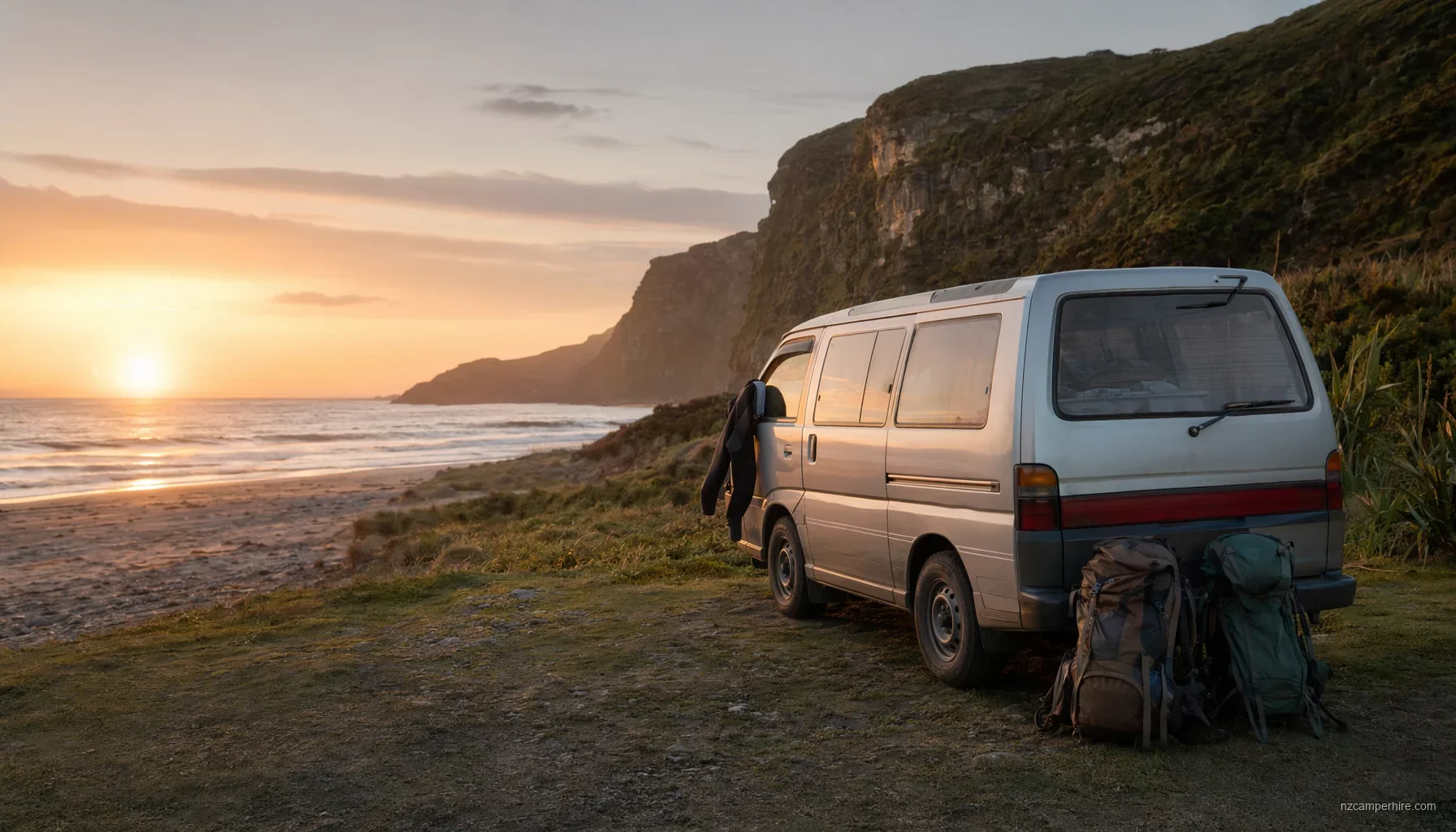
Backpacker couple on a budget 2-berth campervan
backpacker couple on a budget 2-berth
A budget 2-berth for a backpacker couple is usually a small van or hi-top camper with a bed, basic cooking gear, and no onboard shower. It can work well in New Zealand, but only if you plan around holiday parks, public facilities, and shorter driving days.
This is not the same decision as choosing a compact motorhome with an ensuite. Start with the Vehicle Choice hub, then read the 2-berth vs 4-berth size comparison if you are unsure how much space you can live with.
Have a planner sense-check whether this configuration fits the route and dates you've got in mind — reply below with the rough shape of your trip.
Why this configuration suits a backpacker couple
The case for this setup is simple. You get a smaller vehicle, lower fuel use, easier parking, and less stress on narrow roads. That helps on the South Island in 14 days, especially around SH6 on the West Coast, SH8 through Lake Tekapo, and SH73 over Arthur's Pass at 920 m.
It also suits a North Island in 10 days route if you keep the loop tight: Auckland, Rotorua, Tongariro, Wellington, then back north or onto the Cook Strait ferry. New Zealand drives on the left, and a smaller van is kinder while you are learning roundabouts, one-lane bridges, and supermarket car parks.
The catch is the campsite strategy. Without a shower, and often without a proper toilet, you should budget for regular holiday park nights. North South Holiday Park near Christchurch airport, Hokitika Holiday Park on the West Coast, Oamaru Top 10, and Rotorua Thermal Holiday Park are the kind of practical stops that make this vehicle choice comfortable rather than miserable.
What to look for when you scan the rental sites
Look past the painted outside. The layout matters more. A side kitchen under a tailgate is fine in February. It is less fun in West Coast rain. A fixed bed is quick at night, but a dinette bed gives you somewhere to sit when it is dark at 5.30 pm in winter.
- Self-containment: check the current certificate, not just the word on the listing. The blue self-containment sticker matters for many freedom camping areas.
- Insurance excess: older, cheaper vehicles can still carry a large excess. Read Campervan insurance options before you assume the daily rate tells the full story.
- Road limits: some small campers have restrictions on gravel roads, ski-field roads, or beach access. That can affect places like Mavora Lakes or remote DOC sites.
- Licence and age: foreign licences in English are valid for 12 months. If your licence is not in English, bring an International Driving Permit. Minimum hire age varies from 18 to 25 depending on operator and vehicle class.
Real options on the market
On the rental market you will see two broad shapes. The first is the low-roof sleeper van: cheap to run, easy in cities, but cramped when you are cooking or changing clothes. The second is the hi-top 2-berth: still small, but you can often stand inside, which matters more than people think after a week.
Examples travellers may see while researching include a Britz Hi-Top or a Mighty Double Up, alongside many unbranded small vans from the wider rental market. Treat model names as clues, not answers. Check bed length, fridge size, internal standing height, and whether bedding, camp chairs, and cooking kit are included.
If your route includes Queenstown to Milford Sound, allow 287 km and 4.5 to 5.5 hours each way from Queenstown, or sleep in Te Anau first and drive SH94 early. A tiny van is easier than a 6-berth on that road, but it still needs a rested driver.
Trade-offs you find out about on day 5
Day 5 is when the romance of the little van meets wet towels. No onboard shower means you need a rhythm: holiday park every second or third night, laundry before it becomes urgent, and a proper supermarket stop before heading into DOC country.
Freedom camping in NZ is not a free-for-all. Many councils require certified self-containment, and some areas ban overnight camping altogether. A no-toilet sleeper van should be planned around paid sites, DOC campgrounds with facilities, and public showers where available.
Use What a NZ campervan trip actually costs to compare the lower daily rate against holiday park nights, fuel, insurance, and paid activities. Then read First time driving a motorhome before pickup day. A small van is forgiving, but SH1 traffic near Auckland, the Crown Range at 1,121 m, and tight town parking still deserve attention.
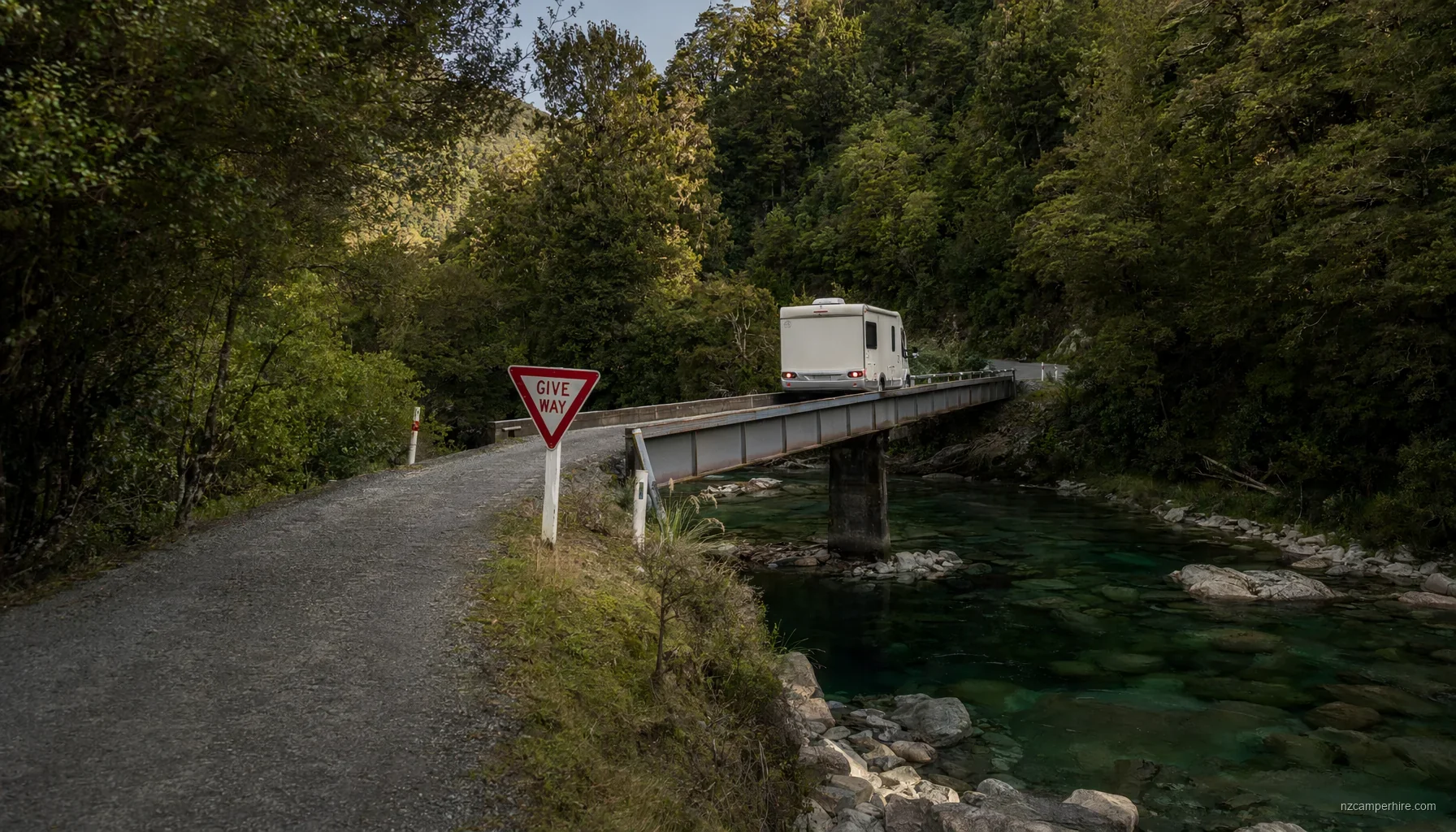
Backpacker couple on a budget 2-berth FAQ
Can we freedom camp in a budget 2-berth with no shower?
Will a no-shower 2-berth still feel okay after two weeks?
Should we size up to a 4-berth for comfort?
Talk to a planner about backpacker couple on a budget 2-berth
Vehicle pick depends on dates, party size, and route. Send us a short outline and we'll come back with a model recommendation and a paced trip to match.