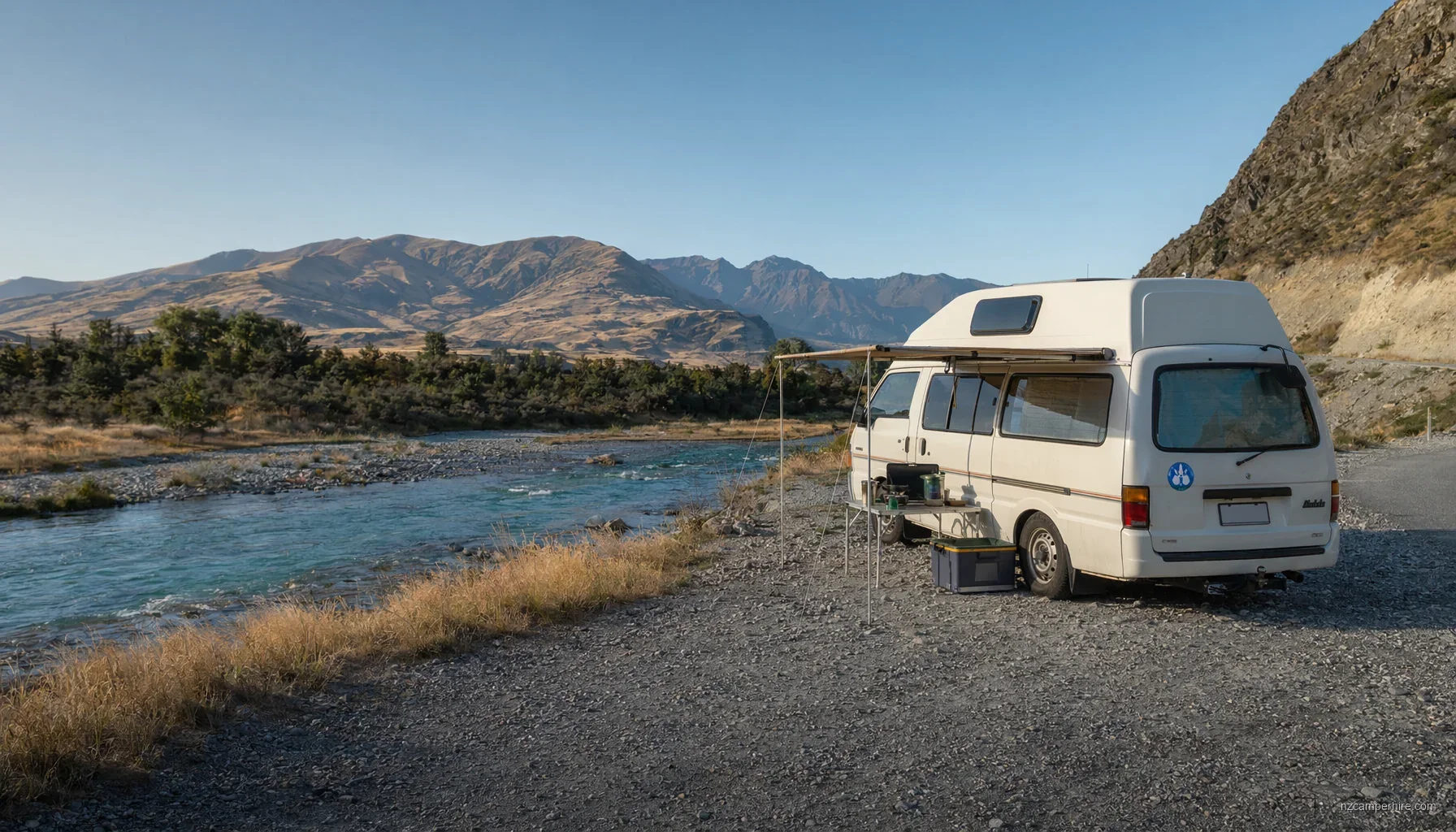
Budget vehicle that's still self-contained in New Zealand
budget vehicle that's still self-contained
A lower-cost self-contained camper can work well in New Zealand, but only if you understand what the certificate actually gives you. It does not automatically mean a roomy ensuite, a strong engine, or permission to sleep anywhere.
This page sits under our NZ motorhome vehicle choice hub and pairs well with the 2-berth vs 4-berth motorhome comparison, the First time driving a motorhome guide, and What a NZ campervan trip actually costs.
Have a planner sense-check whether this configuration fits the route and dates you've got in mind — reply below with the rough shape of your trip.
Why this configuration suits a lower-cost self-contained trip
The right buyer for this setup is usually a couple, two friends, or a solo traveller who wants campsite flexibility more than indoor space. A certified self-contained vehicle lets you consider some council freedom camping areas and basic DOC sites, but local signs still win. Read Freedom camping in NZ and Self-contained certification explained before assuming the blue sticker is a free pass.
It suits route shapes with short daily drives and regular service towns. South Island in 14 days works if you start in Christchurch, loop through Lake Tekapo, Mount Cook, Wanaka and Queenstown, then keep driving days near 2 to 4 hours. North Island in 10 days also fits, especially Auckland, Rotorua, Tongariro and Wellington, because dump stations and supermarkets are easier to find.
What to look for when you scan the rental sites
Check the self-containment status first, not the headline daily rate. Under the newer rules, the useful question is whether the vehicle has a fixed toilet, fresh-water storage, grey-water storage, and current certification. A portable toilet hidden under a seat may not be enough for some councils.
- Bed layout: a permanent rear bed saves effort, but steals daytime seating. A dinette bed gives more living space, but you rebuild it every night.
- Internal toilet: helpful in bad weather at Lake Pukaki or Mavora Lakes, less pleasant if it sits beside the bed.
- Kitchen: look for a proper fridge, two-burner hob, and enough bench space to cook when it rains.
- Insurance: lower daily rates often come with a higher excess, larger bond, and tighter exclusions for tyres, windscreen, overhead damage and underbody damage.
New Zealand drives on the left. A foreign licence in English is normally valid for 12 months. If it is not in English, bring an International Driving Permit or approved translation.
Trade-offs you find out about on day 5
Small self-contained campers are simple to park in Queenstown, Rotorua and Wellington, and they are less stressful on SH6 through the Kawarau Gorge or SH73 over Arthur's Pass at 920 m. The trade-off is living space. Wet jackets, hiking boots and food bags fill the floor fast.
The toilet cassette and grey-water tank drive your rhythm. Plan to dump and refill every 2 to 3 days. Holiday parks such as Creeksyde Queenstown, Rotorua Thermal Holiday Park and Hokitika Holiday Park are useful reset points, even if you use DOC campsites like White Horse Hill or Cascade Creek on other nights.
Winter changes the equation. A basic certified camper may be fine in March or April. In July, around Lake Tekapo, Mount Cook and the Lindis Pass at 965 m, you will care more about heating, insulation and drying space than the saved daily rate.
Real options on the market
On rental sites you will see older 2-berth and compact high-roof vehicles sitting toward the lower end of the market, plus a few small ensuite units that cost more but still undercut larger 4-berths. Model names change by season and depot, so treat them as examples, not a shopping list.
A Britz Hi-Top may appear in searches as a simple compact camper, but you must check whether the exact unit offered is certified under the current self-containment rules. A Mighty Double Up can suit travellers who want a lower-rate vehicle with more facilities than a basic sleeper. An Apollo Euro Tourer is roomier for two, though usually no longer the lowest-rate choice once insurance and fuel are counted.
If the trip includes the Cook Strait ferry between Wellington and Picton, allow about 3 hours 20 minutes on the water and about 3.5 hours with loading. In peak season, book the ferry months ahead, not a week before.
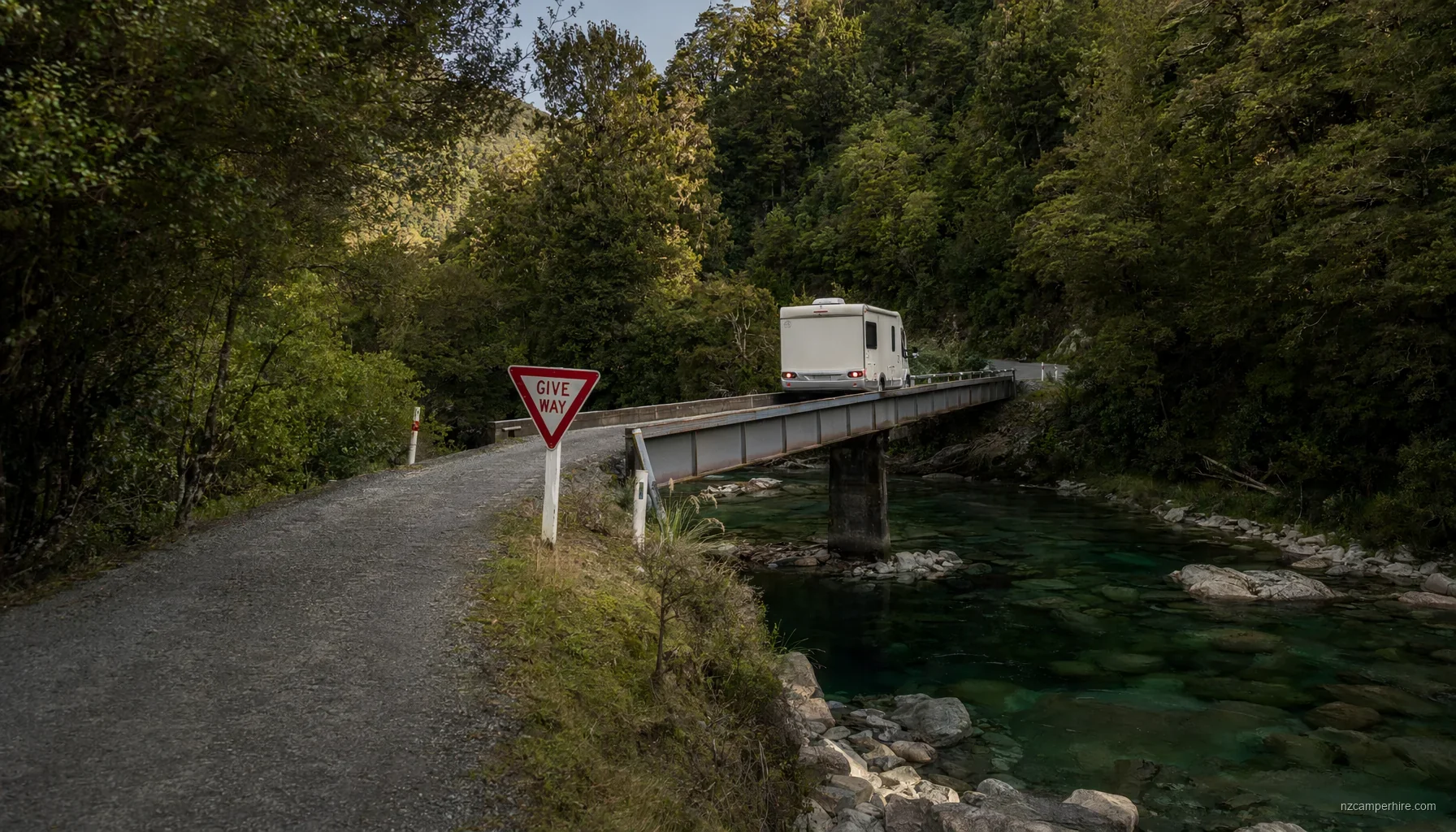
Budget vehicle that's still self-contained FAQ
Is the lowest-cost self-contained vehicle always legal for freedom camping?
Will a small self-contained camper feel cramped after two weeks?
Should I choose the lowest insurance option to keep the trip cheap?
Talk to a planner about budget vehicle that's still self-contained
Vehicle pick depends on dates, party size, and route. Send us a short outline and we'll come back with a model recommendation and a paced trip to match.