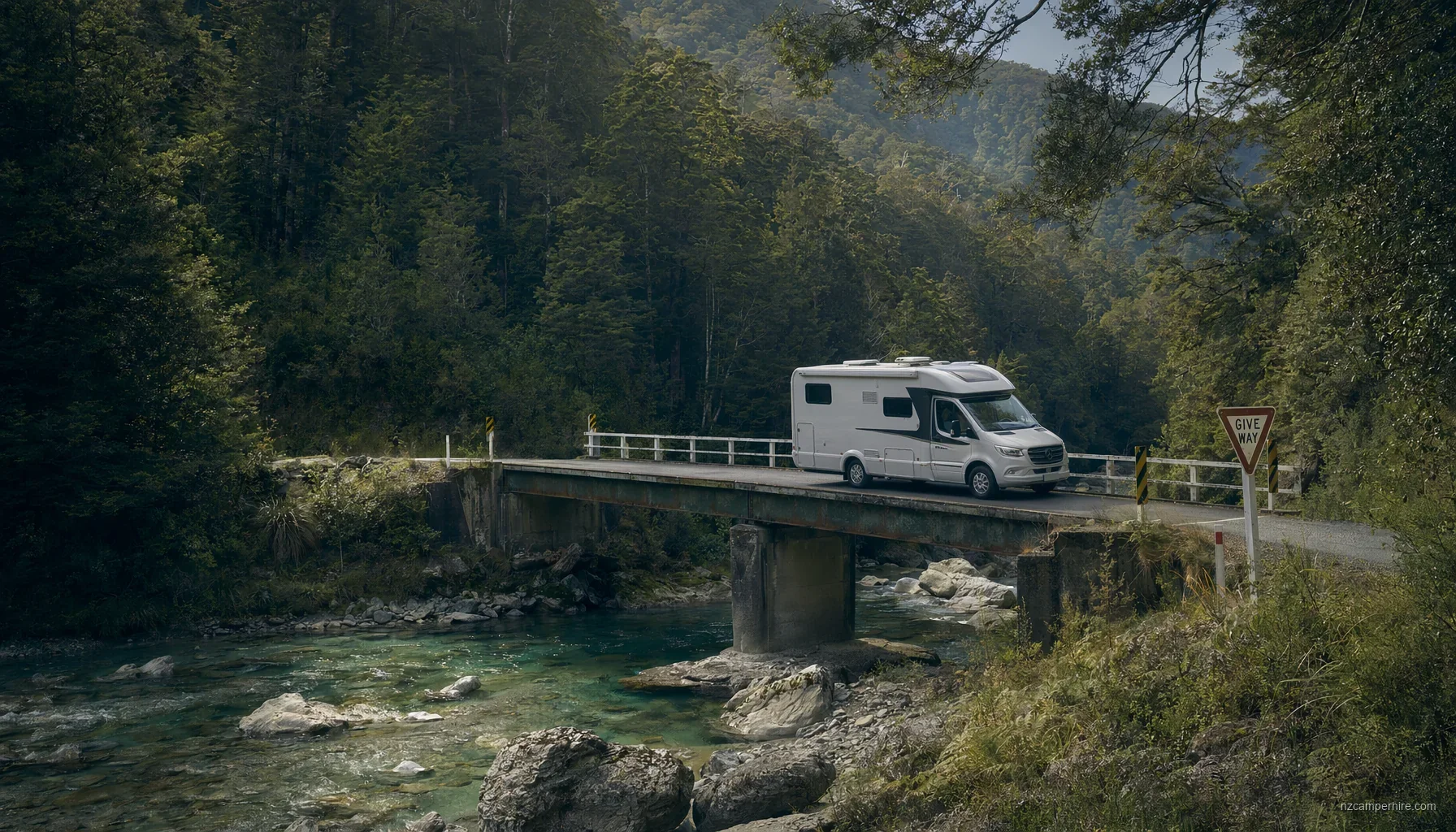
Compact motorhome for narrow NZ roads
compact motorhome for narrow nz roads
A compact motorhome in New Zealand usually means under 6 m long, often closer to a large van than a full coachbuilt motorhome. That size matters on roads like SH75 to Akaroa, the Russell approaches in the Bay of Islands, and SH94 into Milford Sound.
The trade-off is space. You gain easier parking, calmer passing on narrow bridges, and less stress on left-side roads, but you give up some bathroom, bed, and storage comfort.
Have a planner sense-check whether this configuration fits the route and dates you've got in mind — reply below with the rough shape of your trip.
Why this configuration suits narrow-road trips
Sub-6 m vehicles suit travellers who are more worried about road confidence than lounge space. Christchurch to Akaroa on SH75 is only 82 km, but allow 1 hour 30 minutes to 1 hour 45 minutes because the last section drops and bends above the harbour. A smaller vehicle feels less exposed there.
The same logic applies around Russell in the Bay of Islands, and on the Te Anau to Milford Sound drive. SH94 is 118 km from Te Anau to Milford Sound, but most motorhome travellers allow 2 hours 15 minutes to 2 hours 45 minutes, longer with photo stops, tunnel queues, rain, or buses.
This is why the setup works well for the Queenstown + Fiordland loop and the Bay of Islands round-trip. If you are still choosing the broad vehicle type, start with the Vehicle choice guide, then read the 2-berth vs 4-berth motorhome comparison if you are torn between compact comfort and extra living space.
What to look for when you scan the rental sites
Do not stop at the number of berths. Check total length, width, bed setup, bathroom, and where your bags go. A 5.4 m van with a rear bed and no internal shower feels very different from a 5.9 m compact motorhome with a small ensuite.
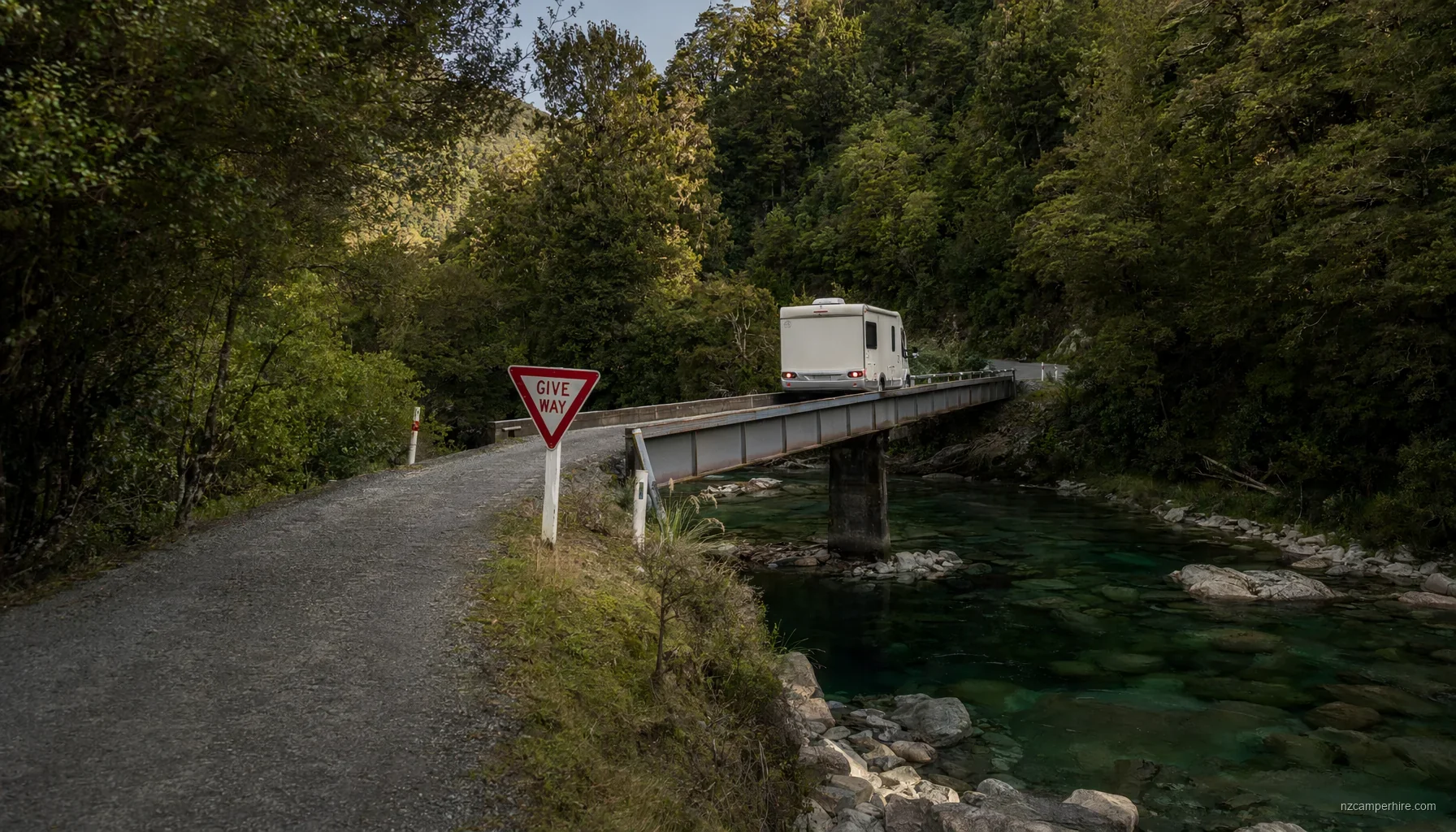
- Length: under 6 m is the useful line for tight car parks, ferry decks, and one-lane bridge approaches.
- Bed: fixed bed saves the nightly rebuild. Dinette beds give more daytime room.
- Bathroom: an ensuite adds freedom, but it also takes floor space.
- Certification: check current self-containment if you plan any legal freedom camping.
- Insurance: read the excess, windscreen, tyres, underbody, roof, and single-vehicle incident conditions.
New Zealand drives on the left. Foreign licences in English are valid for up to 12 months. If your licence is not in English, bring an International Driving Permit or approved translation. For route budgeting, pair this page with What a NZ campervan trip actually costs and First time driving a motorhome.
Trade-offs you find out about on day 5
The compact choice feels clever on the road. It can feel tight in bad weather. Two adults, wet jackets, hiking shoes, groceries, and open laptop bags fill the cabin quickly. If one person sleeps later than the other, a dinette-bed layout gets annoying by the fifth morning.
Tanks are smaller too. You may be filling fresh water and emptying grey water more often than friends in a larger vehicle. That is not a deal-breaker if your route uses proper stops like Akaroa Top 10, Russell Top 10, Creeksyde Queenstown, and DOC's Cascade Creek near Milford Sound. It is a problem if you imagined five nights off-grid without planning.
The other trade-off is height and wind. A compact van is easier than a 6-berth in gusty conditions, but it is still taller than a car. Slow down before exposed bridges and do not let following traffic rush you.
Real options on the market
When international travellers research the rental market, they will often see vehicles described in plain terms: hi-top van, compact 2-berth, or small ensuite motorhome. A Britz Hi-Top is an example of the simpler van-style end of that search, while an Apollo Euro Tourer is closer to the compact ensuite style. You may also see a Mighty Double Up when looking at older fleets that sit at a lower daily rate.
Those names are not recommendations. They are useful reference points for what layouts look like. The right call depends on your route, month, height, luggage, and appetite for shared campground bathrooms.
Compact motorhome for narrow NZ roads FAQ
Is a compact motorhome enough for two people for two weeks?
Can I take a compact motorhome to Milford Sound?
Should I size up if the compact has no ensuite?
Talk to a planner about compact motorhome for narrow nz roads
Vehicle pick depends on dates, party size, and route. Send us a short outline and we'll come back with a model recommendation and a paced trip to match.