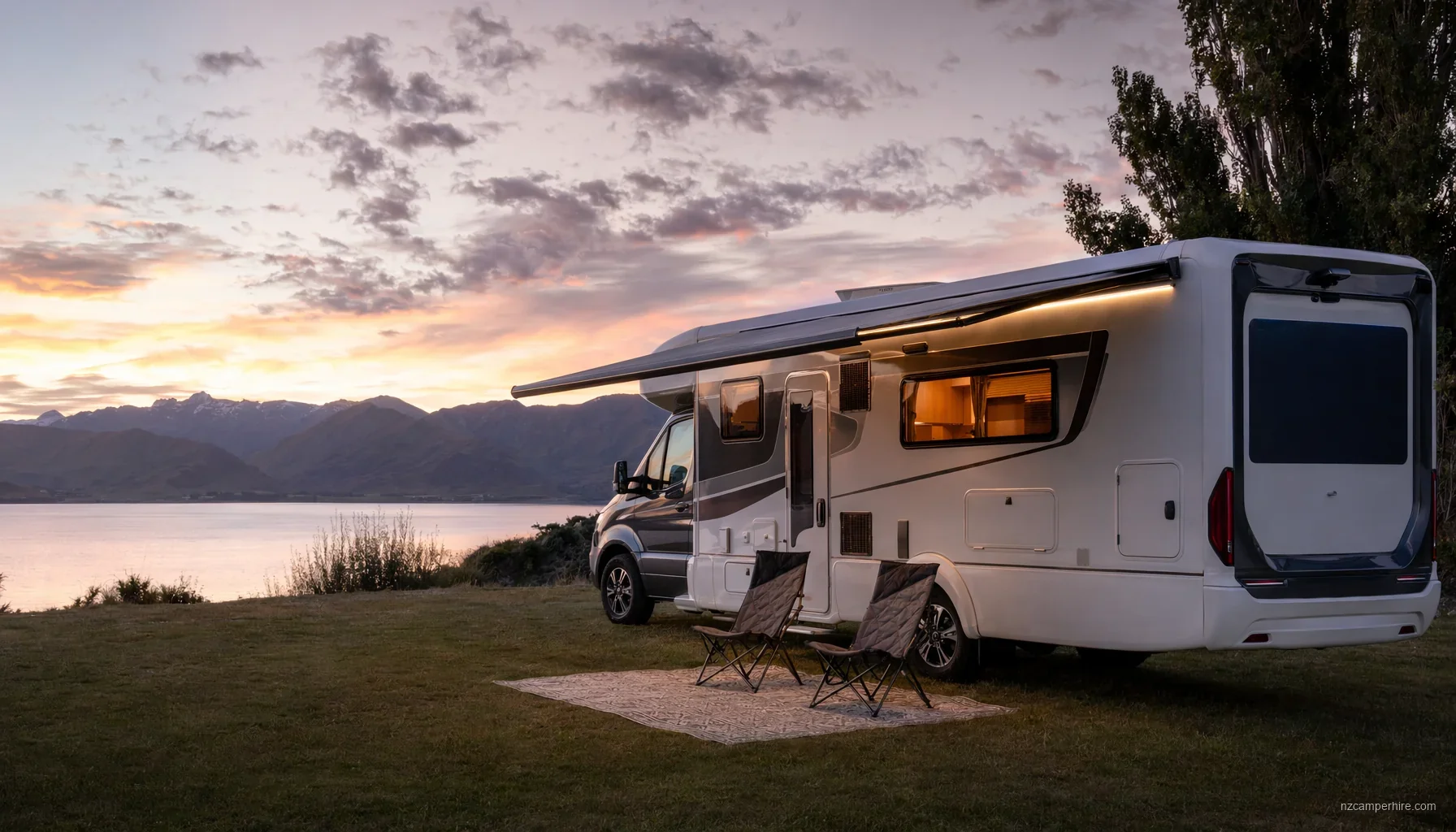
21 days in a higher-spec 4-berth motorhome
21-day luxury premium 4-berth trip
A 21-day higher-spec 4-berth trip usually suits two adults who want space, a proper bathroom, a made-up bed, and fewer compromises after a long day on SH6 or SH94. It can also work for a family of three or four, if everyone is realistic about storage and bedtime routines.
This is not the lowest-cost way to see New Zealand. The saving comes from controlling your own pace, using holiday parks well, cooking some nights, and choosing restaurant nights in the places where they really add to the trip.
Have a planner sense-check whether this configuration fits the route and dates you've got in mind — reply below with the rough shape of your trip.
Why this configuration suits a 21-day higher-spec trip
For three weeks, comfort matters more than it does on a 7-day dash. A 4-berth motorhome gives you a bigger lounge, more bench space, a usable fridge, and an internal shower and toilet. That matters on wet West Coast days, cold mornings at Lake Tekapo, and early starts from Te Anau to Milford Sound.
The sweet spot is usually a fixed rear bed or an island-style bed, plus a separate dining area. If you have to rebuild the main bed every night, the vehicle feels less comfortable by day 10. Check the bed length too. Tall travellers from the Netherlands, Germany, Canada, or the US should not assume every double bed is hotel-sized.
This page sits under the vehicle-choice hub. Read it beside the 4-berth vs 6-berth motorhome comparison if you are travelling as two couples, or with older children who need proper sleeping space.
What to look for when you scan the rental sites
Look past the glossy photos. You want the floor plan, vehicle length, heating type, bed dimensions, internal access to the cab, luggage storage, and whether the bathroom is a wet-room shower or a more separated layout. A 7 m to 7.5 m vehicle is comfortable at camp but slower through tight towns and mountain roads.
- Transmission: many larger motorhomes are automatic, which helps if you are also adjusting to driving on the left.
- Heating: diesel or gas heating is useful in March, April, October, and November, not just winter.
- Insurance: higher-spec vehicles can carry a large standard excess. Check windscreen, tyre, underbody, and single-vehicle accident wording.
- Holiday parks: plan powered sites every second or third night at places such as Creeksyde Queenstown, Rotorua Thermal Holiday Park, Hokitika Holiday Park, Oamaru Top 10, and North South Holiday Park in Christchurch.
If you are new to New Zealand roads, read First time driving a motorhome before you commit to a long vehicle. Foreign licences in English are generally valid for 12 months. If your licence is not in English, bring an International Driving Permit or approved translation.
Trade-offs you find out about on day 5
The higher-spec 4-berth feels relaxed at a powered site. It feels less relaxed in a tight supermarket car park in Queenstown, a narrow campground lane, or on the Crown Range Road at 1,121 m. You can drive it there, but you will work harder than you would in a compact 2-berth.
Fuel use is higher. Road User Charges may apply if the vehicle is diesel. Ferries cost more than a car, and the Cook Strait crossing between Wellington and Picton takes about 3 hours 20 minutes on Interislander or Bluebridge, closer to 3.5 hours once loading is included. In peak season, book that sailing months ahead, not in the final fortnight.
The cost reality is a mix of daily hire rate, excess-reduction insurance, powered sites, fuel, ferry, food, activities, and restaurant nights. Use What a NZ campervan trip actually costs as the companion article, because the vehicle is only one line in the total trip budget.
If your trip is borderline, when to size up or down
Stay with the 4-berth if you want proper indoor living space and your route has time built in. It suits North to South in 21 days, especially if you pause in Rotorua, Wellington, Picton, the West Coast, Wanaka, Queenstown, and Mount Cook / Aoraki rather than driving every day.
It also suits a slower Christchurch to Queenstown shape via Lake Tekapo, Aoraki/Mount Cook, Wanaka, and Te Anau. Christchurch to Lake Tekapo is about 230 km and 3 to 3.5 hours in a motorhome. Queenstown to Te Anau is about 170 km and 2.5 hours. Te Anau to Milford Sound on SH94 is 118 km each way and takes about 2.5 hours one way before stops.
Size down if you plan to move daily, freedom camp often, or spend lots of time in city streets. Size up only if four adults need separate sleeping zones and can accept slower driving, tighter parking, and a higher total cost.
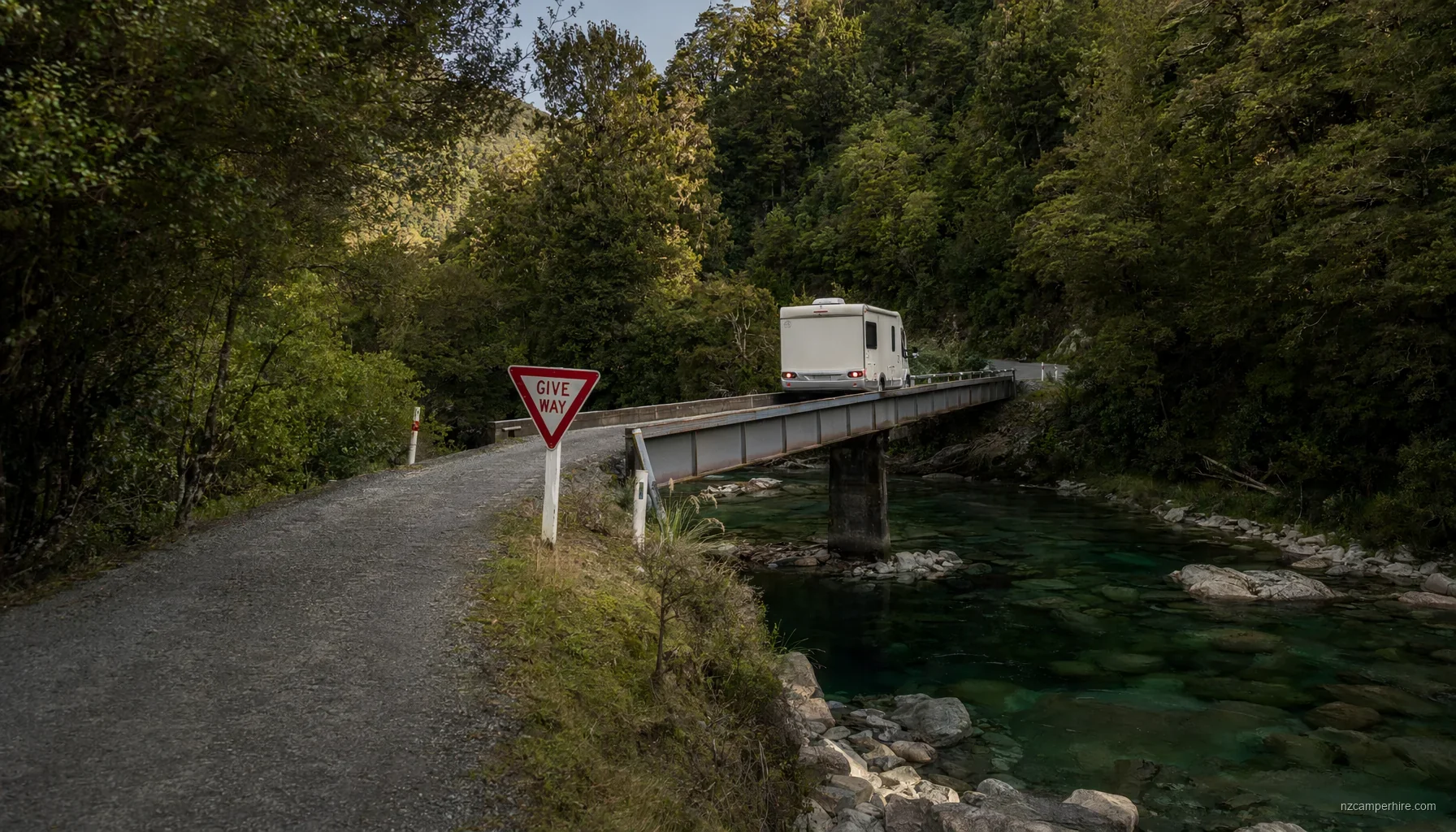
21-day luxury premium 4-berth trip FAQ
Will the ensuite still feel cramped on day 14?
Can two couples really do three weeks in a 4-berth?
Is this vehicle too large for Milford Sound or the West Coast?
Talk to a planner about 21-day luxury premium 4-berth trip
Vehicle pick depends on dates, party size, and route. Send us a short outline and we'll come back with a model recommendation and a paced trip to match.