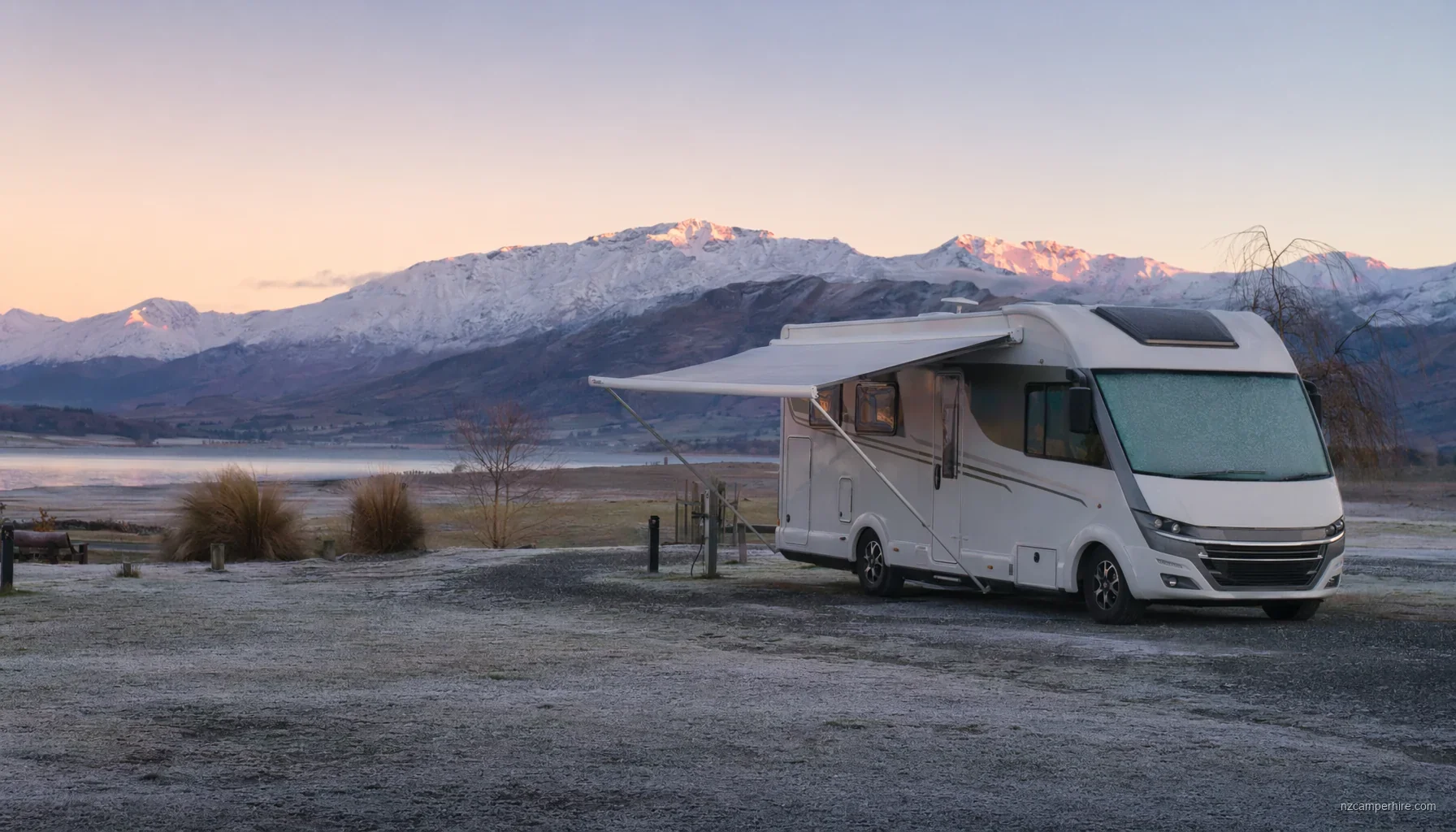
Motorhome for a winter cold-weather NZ trip
motorhome for a winter (cold-weather) nz trip
A winter motorhome trip in New Zealand is not just a summer trip with an extra jumper. June to August brings short daylight, frosty mornings, wet West Coast roads, and snow risk around Queenstown, Wanaka, Tongariro and the alpine passes.
The right setup is usually a compact or medium motorhome with a diesel heater, proper bedding, good ventilation, and a layout you can live in when it rains for two days. Have a planner sense-check whether this configuration fits the route and dates you've got in mind — reply below with the rough shape of your trip.
Why this configuration suits a cold-weather trip
For winter, heating matters more than floor space. A diesel cabin heater is the first thing to look for. It runs without plugging into mains power, though the fan still draws from the house battery. If you plan DOC nights at places like White Horse Hill near Aoraki/Mount Cook or Lake Pukaki, ask how long the heater can run before you need a powered site.
A fixed bed often beats a dining-bed conversion in winter. Making a bed at 9 pm with cold hands gets old quickly. Couples usually do well in a 2-berth with an internal toilet and shower. Families or two taller travellers may prefer a 4-berth layout for dry gear space, even if only two people are sleeping in it.
This is where the parent Vehicle choice hub and the 2-berth vs 4-berth motorhome size guide are useful. Winter does not always mean bigger. Bigger means more room for coats and boots, but it also means more fuel, harder parking in Queenstown, and more care on SH94 to Milford Sound.
What to look for when you scan the rental sites
- Diesel heater: ask whether it works when you are not plugged into 240V mains power.
- Insulated or protected wastewater tank: useful on frosty nights around Lake Tekapo, Mount Cook and Central Otago.
- House battery capacity: winter drains batteries faster because lights, heater fan and device charging all run longer.
- Ventilation: condensation is normal. Roof vents and window vents help stop wet bedding.
- Tyres and chains: snow chains may be required on alpine roads. Check the policy before you drive SH73 over Arthur's Pass at 920 m or the Crown Range at 1,121 m.
- Insurance wording: many policies exclude damage if you ignore road closures, chain requirements or drive on restricted roads.
New Zealand drives on the left. Foreign licences in English are generally valid for 12 months. If your licence is not in English, carry an International Driving Permit or approved translation. First-time driving a motorhome is worth reading before your pickup day, especially if your first leg is Christchurch to Lake Tekapo on SH1 and SH8, about 230 km and 3 to 3.5 hours in winter conditions.
Real options on the market
When you research winter-suitable rentals, you will see models such as the Apollo Euro Tourer, Maui Cascade and Britz Voyager described with heating, onboard bathroom and fixed-bed or semi-fixed-bed layouts. Treat those names as examples of what the larger rental market offers, not as a shopping list.
The important comparison is the build and equipment. Ask for the heater type, bedding included, tank setup, vehicle length, and whether chains are supplied or available. Also ask how the excess works if weather forces a change of route. The daily rate is only one line in the cost picture, so keep the What a NZ campervan trip actually costs article beside the vehicle notes.
If your trip is borderline — when to size up or down
Size down if your route is mainly holiday parks, towns and shorter drives. A compact ensuite motorhome is easier at Creeksyde Queenstown, Hokitika Holiday Park and Oamaru Top 10, and it uses less fuel on winding roads.
Size up if you are carrying ski gear, travelling with a child, or spending several nights away from powered sites. A Queenstown + Fiordland loop works well if you allow time: Queenstown to Te Anau is 170 km, around 2.5 hours, then Te Anau to Milford Sound is 118 km, usually 2 to 2.5 hours each way on SH94 before stops. The South Island in 14 days route is easier than trying to force the same winter ground into 7 days.
A safer winter shape is Christchurch, Lake Tekapo, Mount Cook, Wanaka, Queenstown and Fiordland, with rest days. Add the Cook Strait ferry only if you have time. Wellington to Picton takes about 3 hours 20 minutes on Interislander or Bluebridge, closer to 3.5 hours with loading, and winter sailings still need planning.
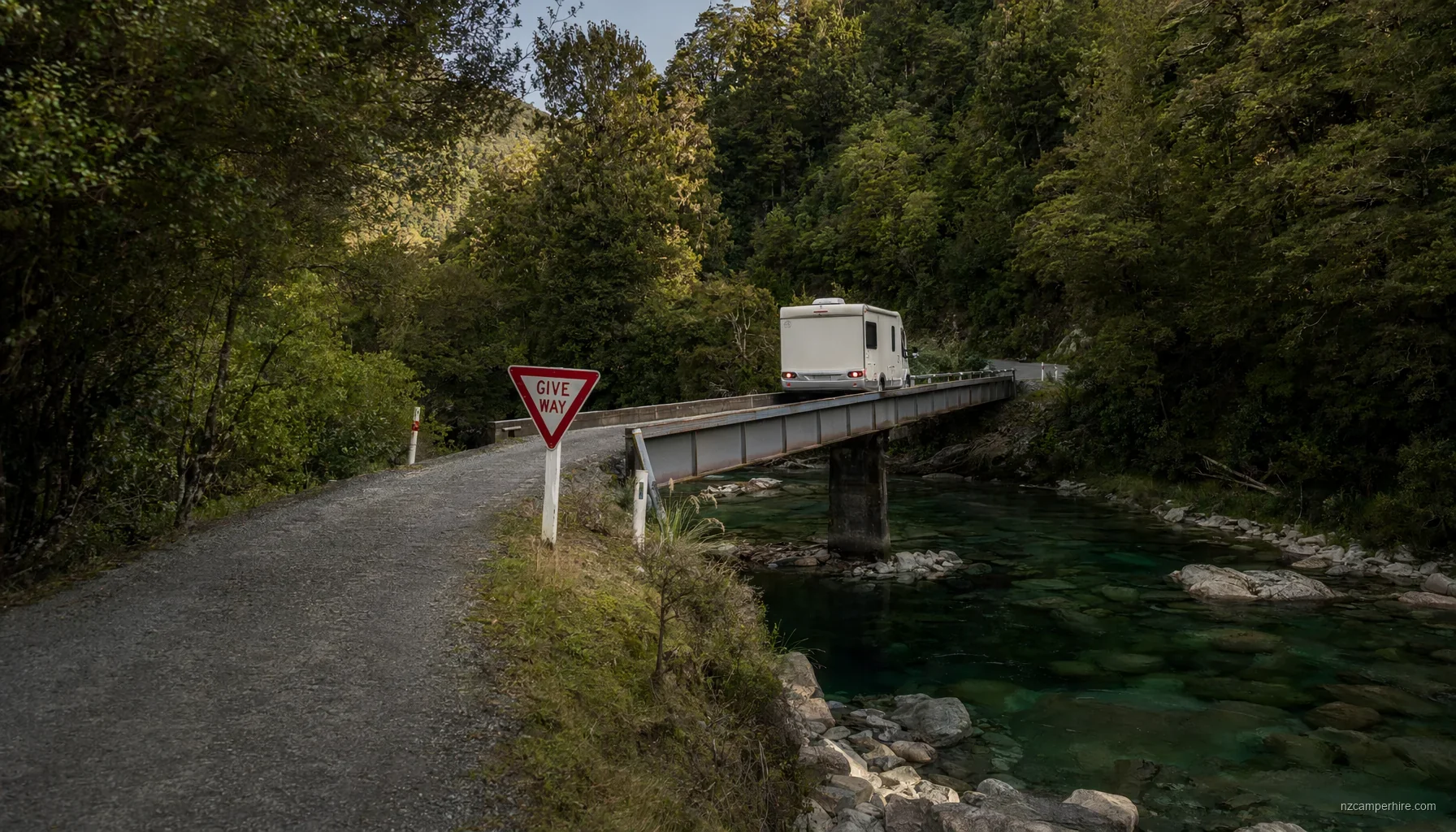
Motorhome for a winter (cold-weather) NZ trip FAQ
Will the ensuite still feel cramped on day 14?
Do I need snow chains for a winter motorhome trip?
Is a winter motorhome trip suitable for first-time NZ drivers?
Talk to a planner about motorhome for a winter (cold-weather) nz trip
Vehicle pick depends on dates, party size, and route. Send us a short outline and we'll come back with a model recommendation and a paced trip to match.