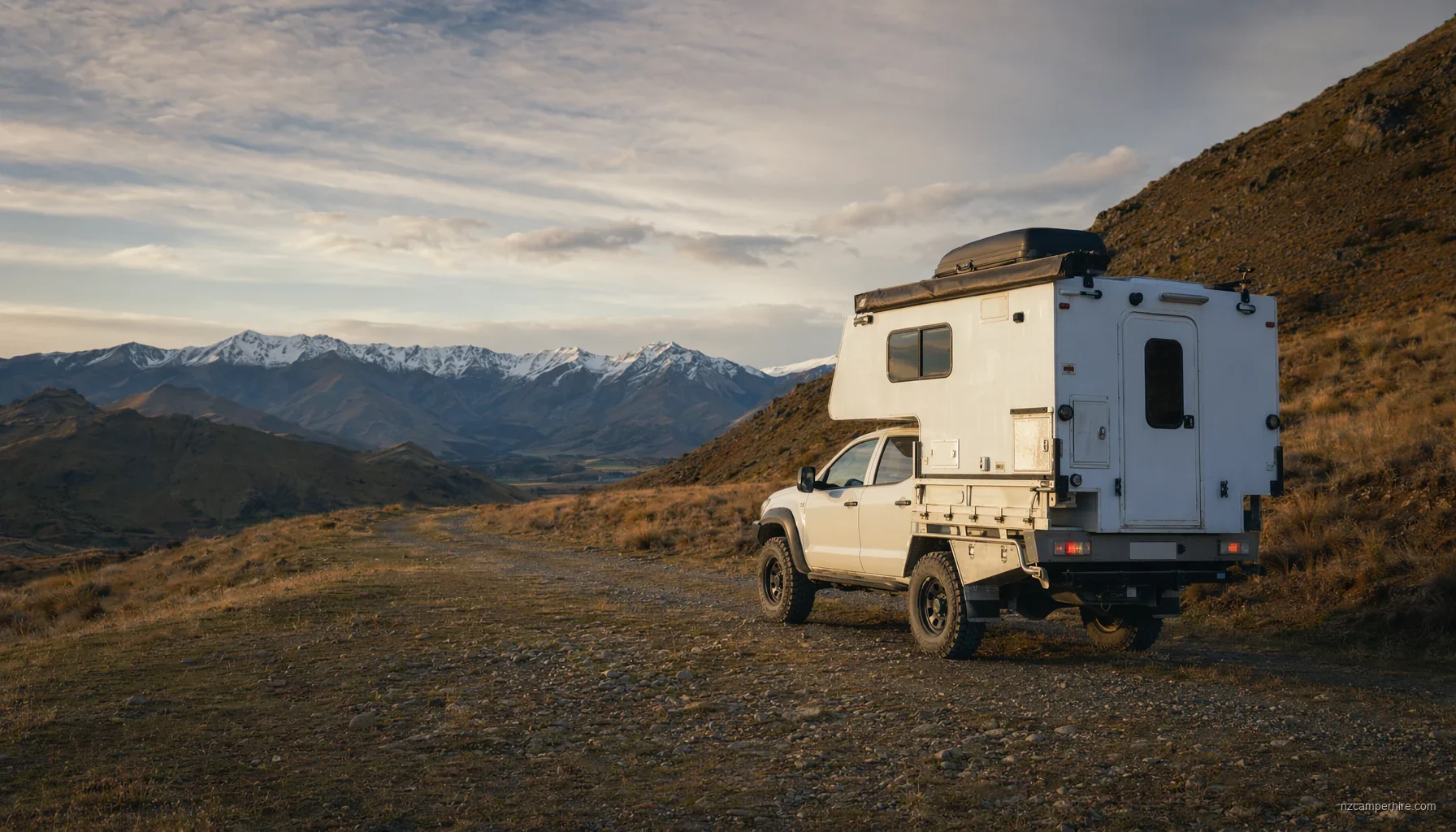
Pickup truck camper and 4WD camper NZ guide
pickup truck camper / 4wd camper nz
A pickup truck camper in NZ usually means a truck-back living unit on a ute or light 4WD base. It looks capable. It can be useful. It is not a magic pass for every gravel road in the country.
This setup suits travellers who want a smaller footprint for the West Coast, Fiordland edges, and Catlins side roads, not people who want a big indoor lounge. Have a planner sense-check whether this configuration fits the route and dates you've got in mind — reply below with the rough shape of your trip.
Why this configuration suits gravel-road touring
A 4WD camper makes the most sense when your route includes short gravel spurs, tight coastal roads, and DOC-style campgrounds where a long 6-berth feels clumsy. Think the Southern Scenic Route through Dunedin, the Catlins and Invercargill, or a South Island in 14 days plan with West Coast detours around Hokitika, Okarito or Gillespies Beach.
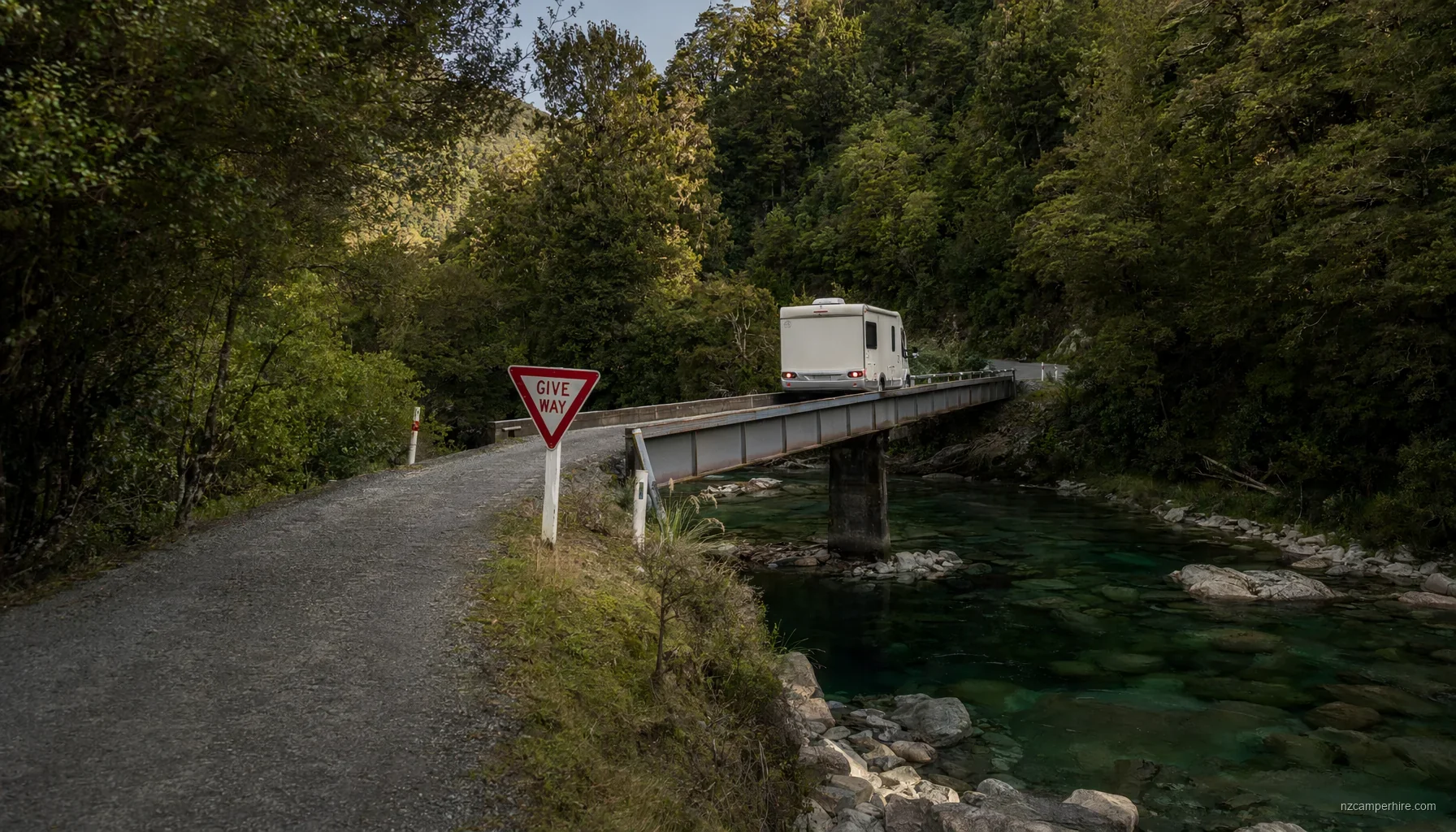
Most main highways are sealed. SH6 down the West Coast, SH94 to Milford Sound, SH8 through the Mackenzie Country, and SH73 over Arthur's Pass are normal roads. The advantage is not speed. It is manoeuvrability and traction on legal unsealed access roads, wet grass at basic camps, and narrow parking areas.
You still drive on the left. If your licence is in English it is generally valid for 12 months. If it is not in English, bring an International Driving Permit or approved translation. First-time visitors should read First time driving a motorhome before assuming a 4WD base will make New Zealand roads easy.
What to look for when you scan the rental sites
Start with the Vehicle choice guide, then compare this setup with the 2-berth vs 4-berth campervan guide. Most truck-back campers suit two adults. Some list extra beds, but the second bed is often small, high, or made from the dining area. For three weeks, that matters.
- Bed access: many have a raised bed over the cab. Fine at 32. Less fun with a sore knee on day 12.
- Toilet and shower: check whether it has a fixed ensuite, a cassette toilet only, or no bathroom. This affects freedom camping legality and comfort.
- Self-containment: look for current certification, not just old photos. The rules have tightened.
- Insurance wording: 4WD does not mean off-road. Rental agreements may exclude beaches, river crossings, ski field roads, private farm tracks, and named roads.
- Living space: a compact camper is easy to park in Queenstown or Wanaka, but wet evenings feel tight.
For costs, read What a NZ campervan trip actually costs alongside daily hire rates. Smaller does not always mean cheaper once insurance, diesel use, bedding, ferry length, and holiday park nights are counted.
Real options on the market
You will see three broad shapes on the NZ rental market. The first is a true truck-back camper on a 4WD ute base. It is compact, high-riding, and usually aimed at two people who pack lightly. The second is a small campervan that looks easier day to day but may not have 4WD. The third is a larger motorhome with more comfort but far less patience for tight gravel parking areas.
Truck-back campers tend to feel more like camping than apartment travel. Cooking space is modest. Storage is limited. The bed may be excellent once you are up there, but climbing in and out is part of the routine. In heavy rain on the West Coast, that small interior can become the whole trip for an evening.
If your trip is borderline, when to size up or down
Size down if your route is mostly sealed highways and towns. Auckland to Queenstown one-way, Christchurch to Queenstown, or Queenstown to Milford Sound can all work in a regular 2-berth or 4-berth if you avoid rough side trips. You will gain interior comfort, simpler insurance, and often a wider choice of vehicles.
Stay with the pickup or 4WD camper if your plan is slower and more rural: Catlins bays, West Coast back roads, DOC sites, and shoulder-season weather in March, April, October or November. A night at Hokitika Holiday Park after wet gravel travel can be a sensible reset. So can a powered site in Te Anau before driving SH94 to Milford Sound, about 118 km and 2 hours each way without long stops.
If you are crossing islands, remember the Cook Strait ferry takes about 3 hours 20 minutes between Wellington and Picton, closer to 3.5 hours with loading. In peak summer, book that crossing months ahead, especially with any camper over car length.
Pickup truck camper / 4WD camper NZ FAQ
Is a 4WD camper allowed on all gravel roads in NZ?
Will a pickup truck camper feel cramped after two weeks?
Is this a good choice for the Southern Scenic Route?
Talk to a planner about pickup truck camper / 4wd camper nz
Vehicle pick depends on dates, party size, and route. Send us a short outline and we'll come back with a model recommendation and a paced trip to match.