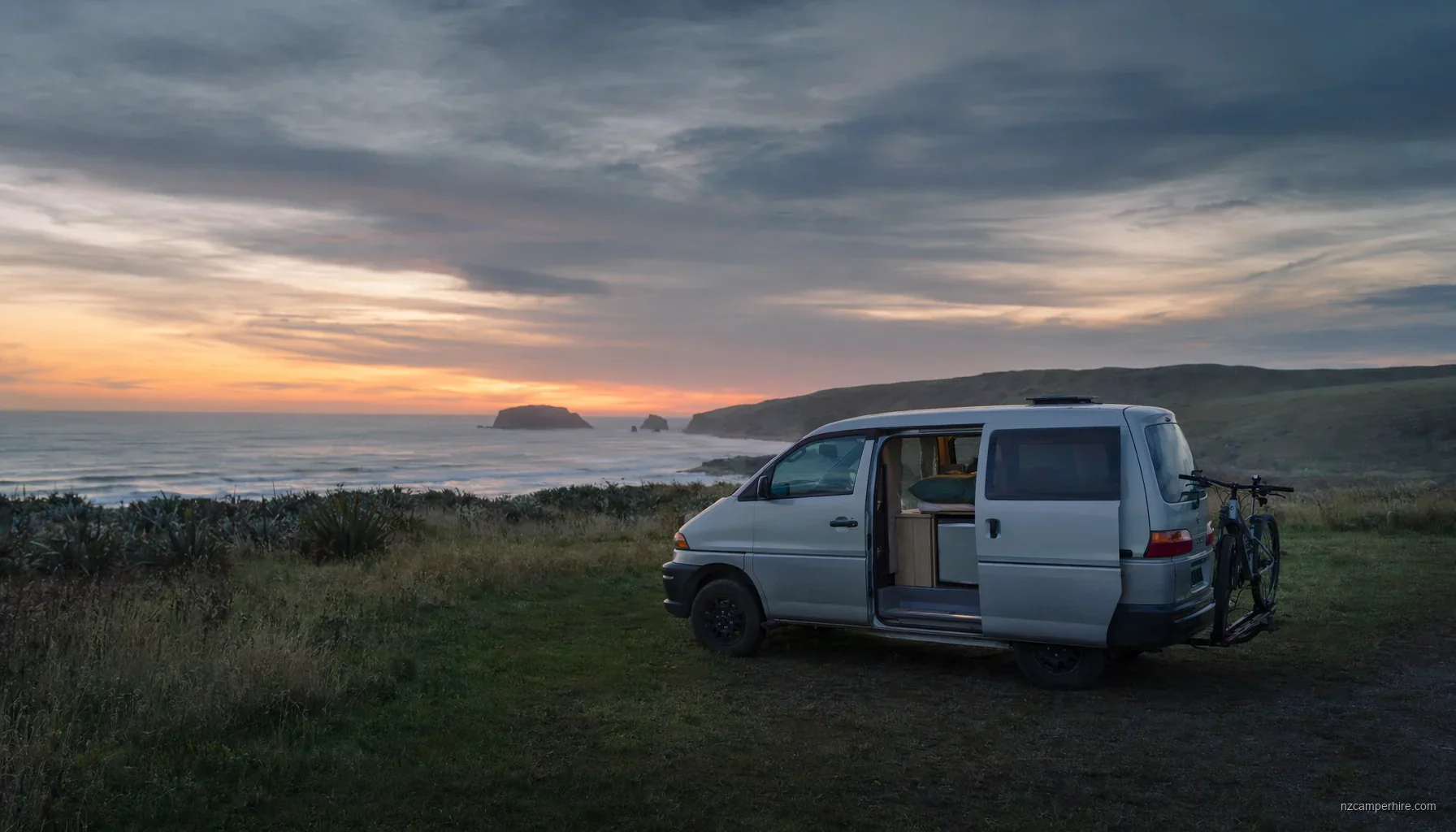
Solo traveller in a 2-berth motorhome
solo traveller in a 2-berth
A solo traveller in a 2-berth gets the easiest motorhome size for New Zealand roads, but not the easiest cost split. You are paying the whole daily hire, fuel, campsite fees and insurance excess yourself.
The upside is control. You can stop early, skip long wet drives, and choose safer overnight spots without negotiating with anyone. Have a planner sense-check whether this configuration fits the route and dates you've got in mind — reply below with the rough shape of your trip.
Why this configuration suits solo travel
A 2-berth suits one driver because it keeps the vehicle short, simple and less tiring on narrow roads. That matters on SH6 through the West Coast, SH8 over Lindis Pass at 965 m, and the Christchurch to Queenstown route where the practical driving day is often 250 to 300 km, or 3.5 to 5 hours with stops.
The cost reality is different. A solo traveller does not split the daily rate, fuel, holiday park cabin-style site fees, or the excess on an insurance claim. Read this page beside the Vehicle choice hub and What a NZ campervan trip actually costs, because the vehicle may be right even when the daily total feels high.
This setup shines on South Island in 14 days and Christchurch to Queenstown. It also works for North Island in 10 days if you keep Auckland, Rotorua, Tongariro and Wellington to sensible driving blocks.
What to look for when you scan the rental sites
Start with the bed. A permanent rear bed saves work every night, but it often means less floor space. A dinette that converts to a bed is fine for 7 to 10 days. By day 14, making the bed after a wet walk at Aoraki/Mount Cook can become annoying.
- Certification: check current self-containment, especially if you plan any legal freedom camping.
- Heating: useful in March, April, September and October, not just winter.
- Storage: one large soft bag is easier than a hard suitcase.
- Insurance: solo drivers should look closely at excess, windscreen cover, single-vehicle damage and tyre exclusions.
New Zealand drives on the left. Foreign licences in English are valid for up to 12 months. If your licence is not in English, bring an International Driving Permit or approved translation. Minimum hire age varies from about 18 to 25 depending on operator and vehicle class. The First time driving a motorhome guide is worth reading before pickup day.
Trade-offs you find out about on day 5
The smaller 2-berth is easier to park at supermarkets and scenic pull-offs, but the living area is still one room. Wet jackets, boots and food bags all share that space. In bad weather, a holiday park every few nights is not a failure. It is how the trip stays comfortable.
For solo security, be selective with remote DOC sites. Mavora Lakes is beautiful but isolated. White Horse Hill near Aoraki/Mount Cook and Lake Pukaki are busier in season. Cascade Creek on the Milford Road is useful, but arrive early and avoid driving SH94 tired. Holiday parks such as Creeksyde Queenstown, Hokitika Holiday Park and North South Holiday Park in Christchurch give showers, laundry, people around you and easier phone reception.
Freedom camping in NZ is not a general right. Local rules change by district, and self-contained certification does not allow you to stop anywhere you like.
Real options on the market
When you research the rental market, you will see compact 2-berth vans such as Britz Hi-Top, bathroom-equipped 2-berth vehicles such as Apollo Euro Tourer, and older smaller vans such as Mighty Double Up sitting at a lower daily rate. Treat those as layout examples, not a ladder of quality.
The key question is not the badge. It is whether you want an internal toilet and shower, standing height, a bed you can leave made up, and enough battery capacity for cooler nights. If your route includes several DOC nights, an ensuite 2-berth can feel reassuring. If your route uses holiday parks most nights, a simpler 2-berth may be enough.
If you are unsure, read the 2-berth vs 4-berth motorhome comparison before moving up. A 4-berth gives space, but it also adds length, fuel use and stress in places like Queenstown parking areas and the Crown Range Road at 1,121 m.
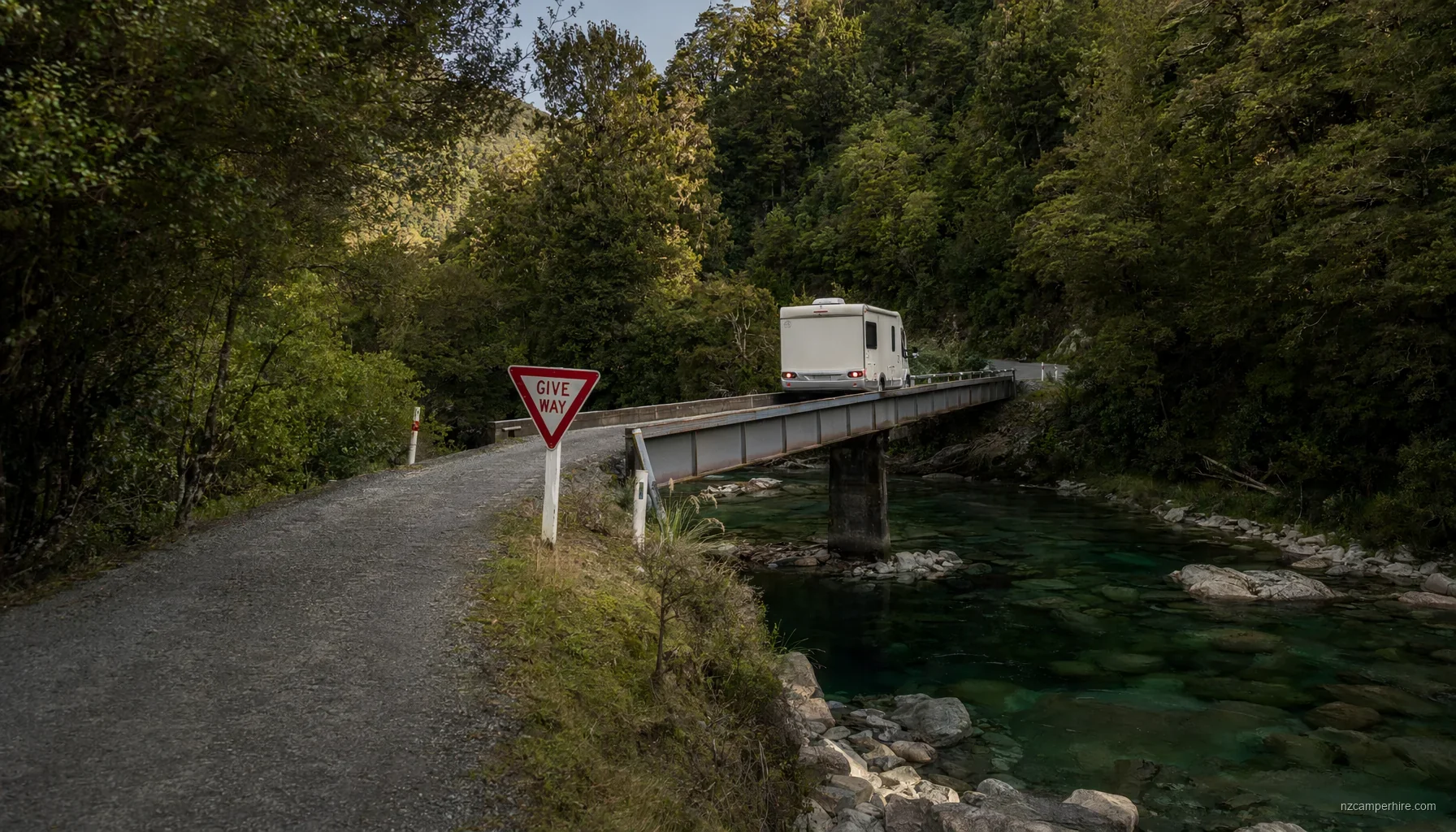
Solo traveller in a 2-berth FAQ
Will a 2-berth still feel cramped on day 14?
Is it safe to stay at DOC campsites alone?
Should a solo traveller pay more attention to insurance?
Talk to a planner about solo traveller in a 2-berth
Vehicle pick depends on dates, party size, and route. Send us a short outline and we'll come back with a model recommendation and a paced trip to match.