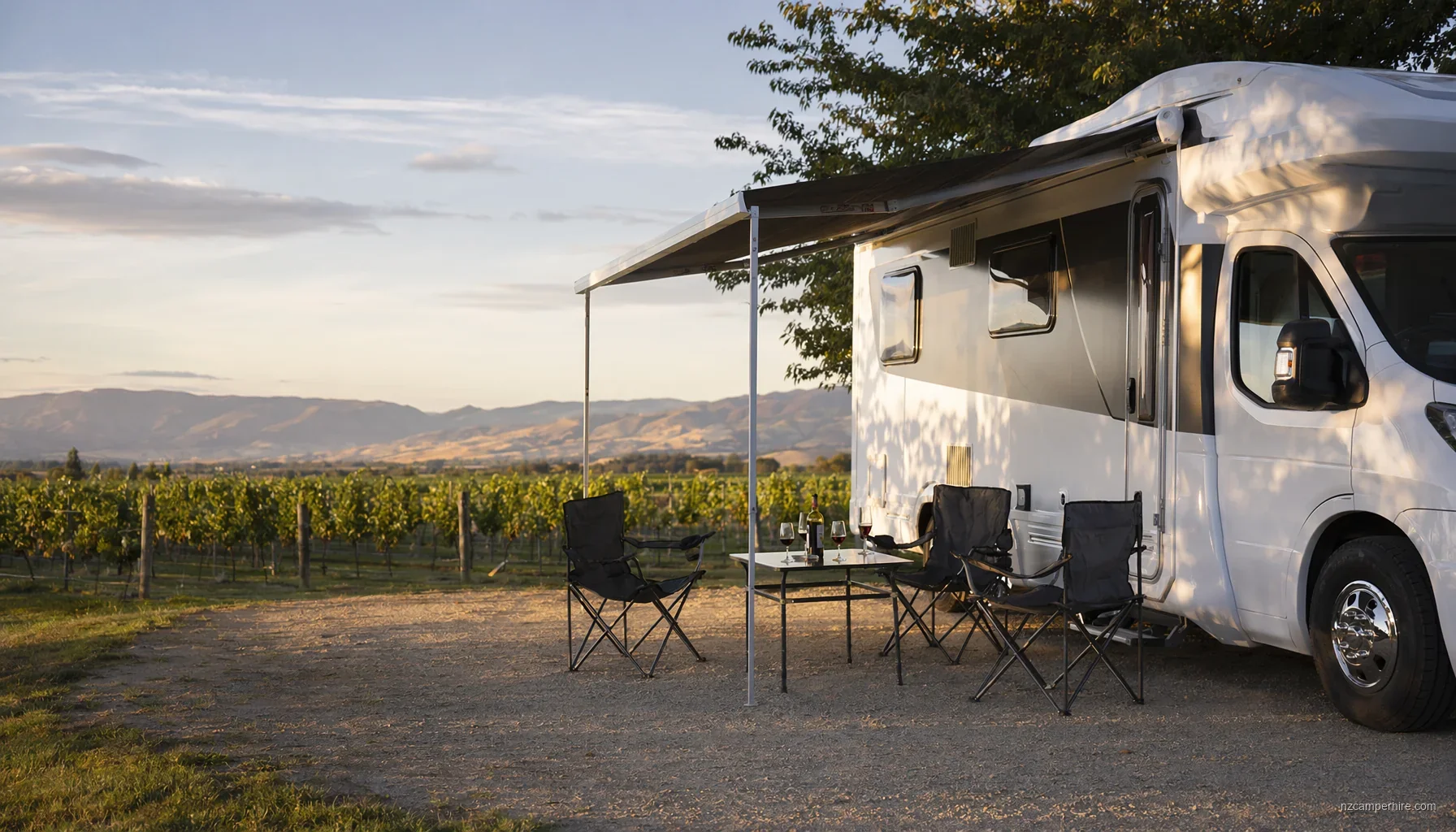
Two couples in a 6-berth motorhome in NZ
two couples in a 6-berth
Two couples in a 6-berth can make good sense in New Zealand. You split the fixed daily costs four ways, get an onboard toilet and shower, and usually have enough living space for wet jackets, walking shoes and food bags.
Have a planner sense-check whether this configuration fits the route and dates you've got in mind — reply below with the rough shape of your trip.
Why this configuration suits two couples
The main reason is cost sharing. A 6-berth often costs less per person than two separate 2-berths, especially once you add campsite powered sites, insurance excess reduction and ferry length charges. It also keeps the group together for cooking, weather calls and early starts.
The fit is strongest on open South Island routes where you are not threading through city streets every day. South Island in 14 days works well: Christchurch to Lake Tekapo is about 230 km and 3 hours 15 minutes, Lake Tekapo to Mount Cook is 105 km and 1 hour 20 minutes, then Wanaka or Queenstown gives you proper breaks between driving days. Christchurch to Queenstown is another good shape if you want fewer one-night stops.
Use the Vehicle choice for NZ motorhome trips hub for the wider decision, then read the 4-berth vs 6-berth motorhome comparison if one couple is unsure about sharing.
What to look for when you scan the rental sites
Do not start with the glossy exterior photo. Start with the floor plan. Four adults want two beds that can stay made up, or at least one fixed bed and one bed that is easy to convert. The over-cab bed is common, but check ladder access if anyone has knee or back issues.
- Privacy: many layouts use a curtain, not a solid door, between sleeping areas.
- Seating: confirm there are four proper belted seats for travel days.
- Storage: four soft bags are easier than four hard suitcases.
- Bathroom: check shower size, hot water system and toilet cassette access.
- Certification: look for current self-contained certification if you plan any council-approved freedom camping.
If this is your first time driving a motorhome, read First time driving a motorhome before you choose the biggest vehicle on the page. New Zealand drives on the left. Foreign licences in English are normally valid for 12 months; if your licence is not in English, carry an International Driving Permit or approved translation. Minimum hire age varies from about 18 to 25 depending on operator and vehicle class.
Trade-offs you find out about on day 5
The first trade-off is privacy. Two couples can share happily, but it works better when everyone is tidy, direct about bathroom timing, and realistic about noise. A curtain between sleeping areas is fine for friends who have travelled together before. It is less fine for two couples who barely know each other.
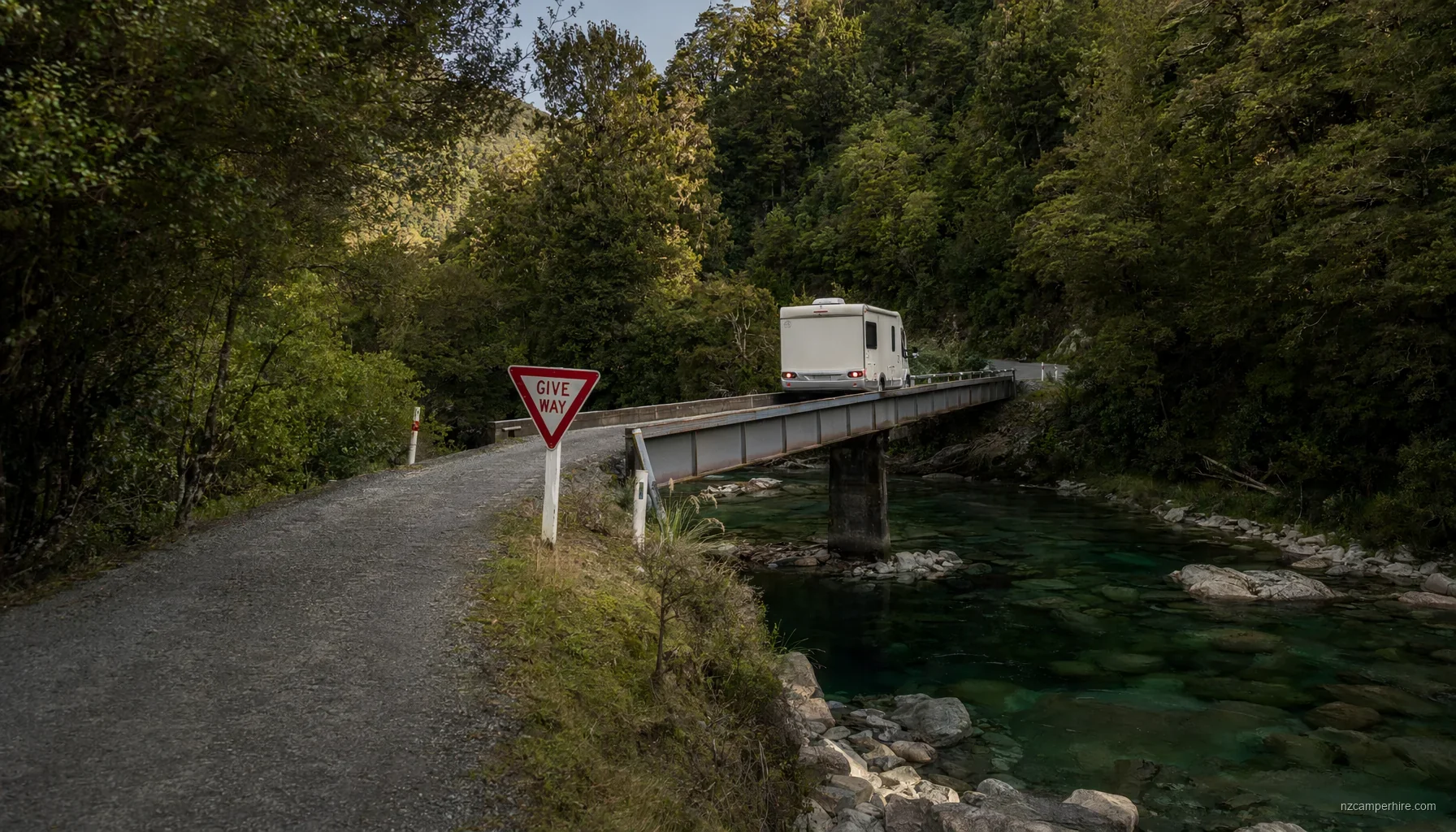
The second trade-off is road confidence. A 6-berth can be around 7 m to 7.7 m long. That matters on SH94 to Milford Sound, on the Crown Range Road at 1,121 m, and in Queenstown supermarket car parks. Lindis Pass on SH8 reaches 965 m and is wide enough, but you still feel the size in wind. Haast Pass is lower at 564 m, yet it has bends, rain and slow sections.
Plan more powered holiday park nights than you would in a smaller van. Creeksyde Queenstown, Oamaru Top 10 and Hokitika Holiday Park make laundry, showers and dump station routines easier. DOC sites like White Horse Hill, Lake Pukaki and Cascade Creek are great, but book or arrive early in peak months. For cost planning, read What a NZ campervan trip actually costs and include insurance excess reduction, fuel and paid campsites, not just the daily hire rate.
Real options on the market
When you research the rental market, you may see model names such as Maui Cascade, Britz Frontier and Apollo Euro Deluxe. Treat those as examples of common 6-berth layouts, not automatic recommendations. The useful details are bed position, vehicle length, bathroom layout, heating, transmission, luggage space and how recently the interior was refreshed.
If your route includes Wellington and Picton, remember the Cook Strait ferry adds another planning layer. Interislander and Bluebridge crossings take about 3 hours 20 minutes, or closer to 3.5 hours once loading is included. In December and January, book the vehicle space around 4 months out if your dates are fixed.
Two couples in a 6-berth FAQ
Can two couples really survive a 6-berth for three weeks?
Will the ensuite still feel cramped on day 14?
Is a 4-berth easier for two couples than a 6-berth?
Talk to a planner about two couples in a 6-berth
Vehicle pick depends on dates, party size, and route. Send us a short outline and we'll come back with a model recommendation and a paced trip to match.