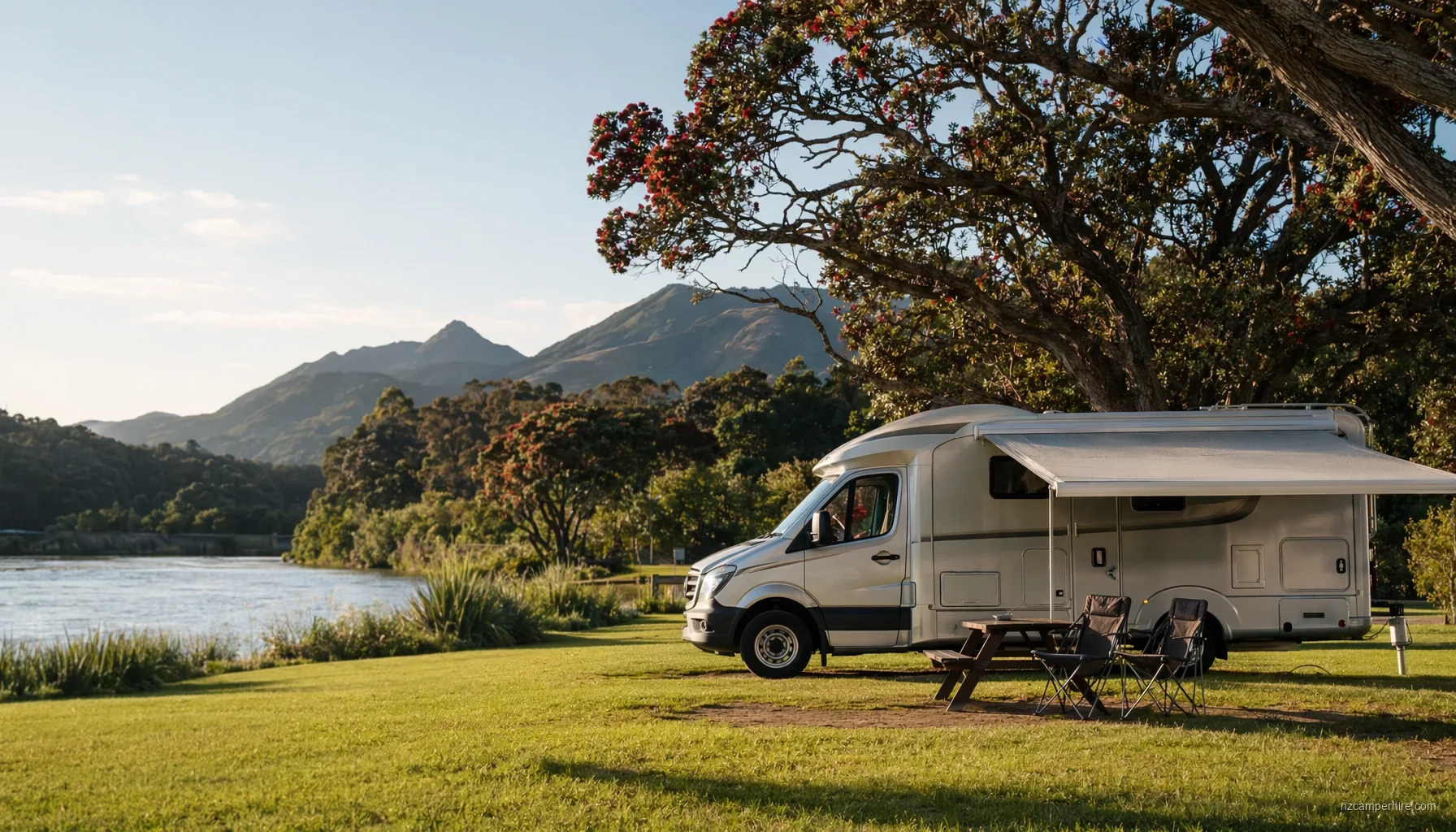
Dickson Holiday Park Thames motorhome stay guide
dickson holiday park thames
- holiday-park
- drive-in
- powered-sites
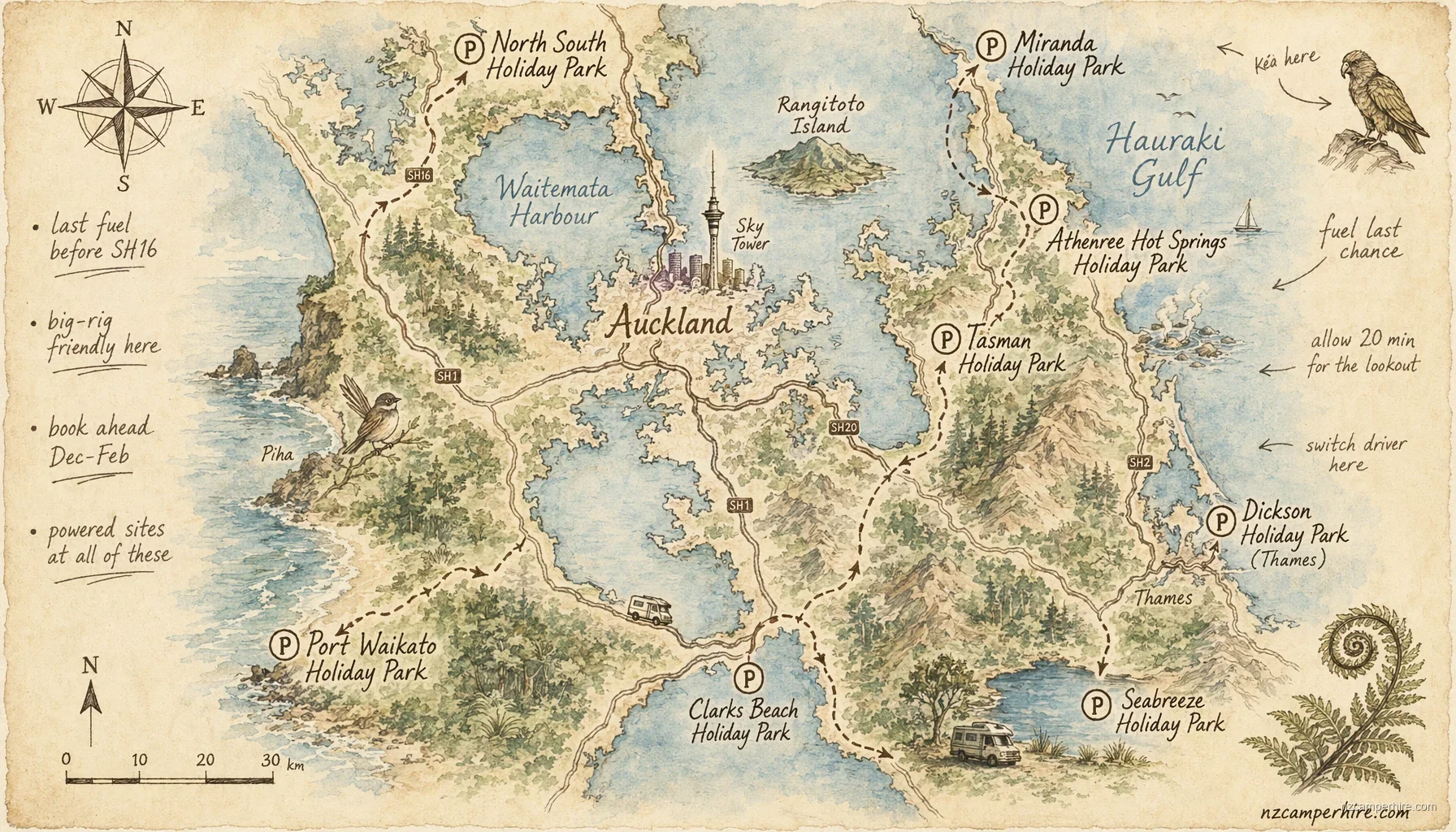
Dickson Holiday Park is an independent holiday park at the northern edge of Thames, useful when you are starting the Coromandel Peninsula loop after the Auckland region. It suits travellers who want a practical powered-site night, a shower, laundry, tanks sorted, and an early run up SH25 the next morning.
It is not a resort-style park. Think leafy, older, functional, and close enough to Thames for fuel and groceries without sleeping beside the main town traffic.
Get the regional plan that pairs Dickson Holiday Park with Shag Stream and Hotoritori DOC campsites within 30 minutes, or send your dates if you'd like a planner to sense-check the booking window for your week.
Where it is, and who it suits
The park sits in the Tararu side of Thames, about 3 km north of the town centre. In a motorhome, allow 5 to 8 minutes to the main supermarket and fuel stops around SH25 and Pollen Street. Walking into town is possible, but it is around 35 to 45 minutes each way, so most travellers drive.
It works well for a 1 or 2-night stop on the Auckland to Coromandel drive or the wider Coromandel Peninsula loop. From Auckland Airport, expect roughly 115 km and 1 hour 45 minutes to 2 hours 15 minutes, depending on SH1 and SH2 traffic. New Zealand drives on the left, and this is a sensible first-day target if you land early, not late at night.
What you get for the price
Powered sites for two adults are typically around NZ$55-75 in peak summer, with winter and midweek rates noticeably lower. Prices move with school holidays and long weekends, so treat that as a planning band, not a promise.
On site, expect the normal holiday-park basics: communal kitchen, lounge or TV space, laundry, showers, toilets, Wi-Fi that is fine for messages but not something to build a workday around, plus a swimming pool in season. There is usually a dump station for guests, which is one reason it beats trying to freestyle a Thames overnight.
Large vans should mention length when checking availability. A 6 to 7 m motorhome is usually straightforward. Longer vehicles, rear bike racks, or towing can make tree-lined sites and turning spaces more awkward.
Powered vs unpowered sites
For most international motorhome travellers, powered is worth it here. You can recharge house batteries, run the heater or fan properly, use the kitchen without watching battery levels, and reset before the narrower Coromandel roads north of Thames.
Unpowered can make sense for small certified self-contained vans in settled weather. It is less appealing after a wet day, with laundry to dry and devices to charge. If your next night is a DOC campsite in Kauaeranga Valley, use Dickson as the tidy-up night first.
What's nearby for a 1 or 2-night stay
Kauaeranga Valley is the main reason to pause. The visitor centre is about 16 km away, usually 20 to 25 minutes by road. The Pinnacles trail road end is farther inland, and day walkers need an early start, decent shoes, and weather that is not turning.
Closer to town, the Hauraki Rail Trail passes through Thames, and the waterfront makes an easy short ride or walk. For DOC-style backup nights within 30 km, look at Shag Stream and Hotoritori in Kauaeranga Valley. They are simpler than a holiday park: fewer facilities, no powered sites, and a better fit once your tanks, water, and food are sorted.
How early to book
January is the pressure month. New Zealand families are on school holidays, and Thames fills as a gateway for the Coromandel. For late December through January, aim to arrange a powered site 2 to 3 months out. For February, March, and November, a few weeks is often enough unless your dates hit a public holiday.
Dickson is dog-friendly by prior approval rather than by assumption. Ask before you turn up, especially in peak weeks, and expect conditions around leads, cabins, and shared areas. For the wider choice between this style of stay and DOC camping, read the Holiday parks vs DOC campsites guide before setting your Coromandel mix.
Related reading
 REGION
 Auckland
Largest North Island depot. Start of every classic North Island loop (Bay of Islands, Coromandel, Rotorua, Hobbiton, Tongariro).
See the region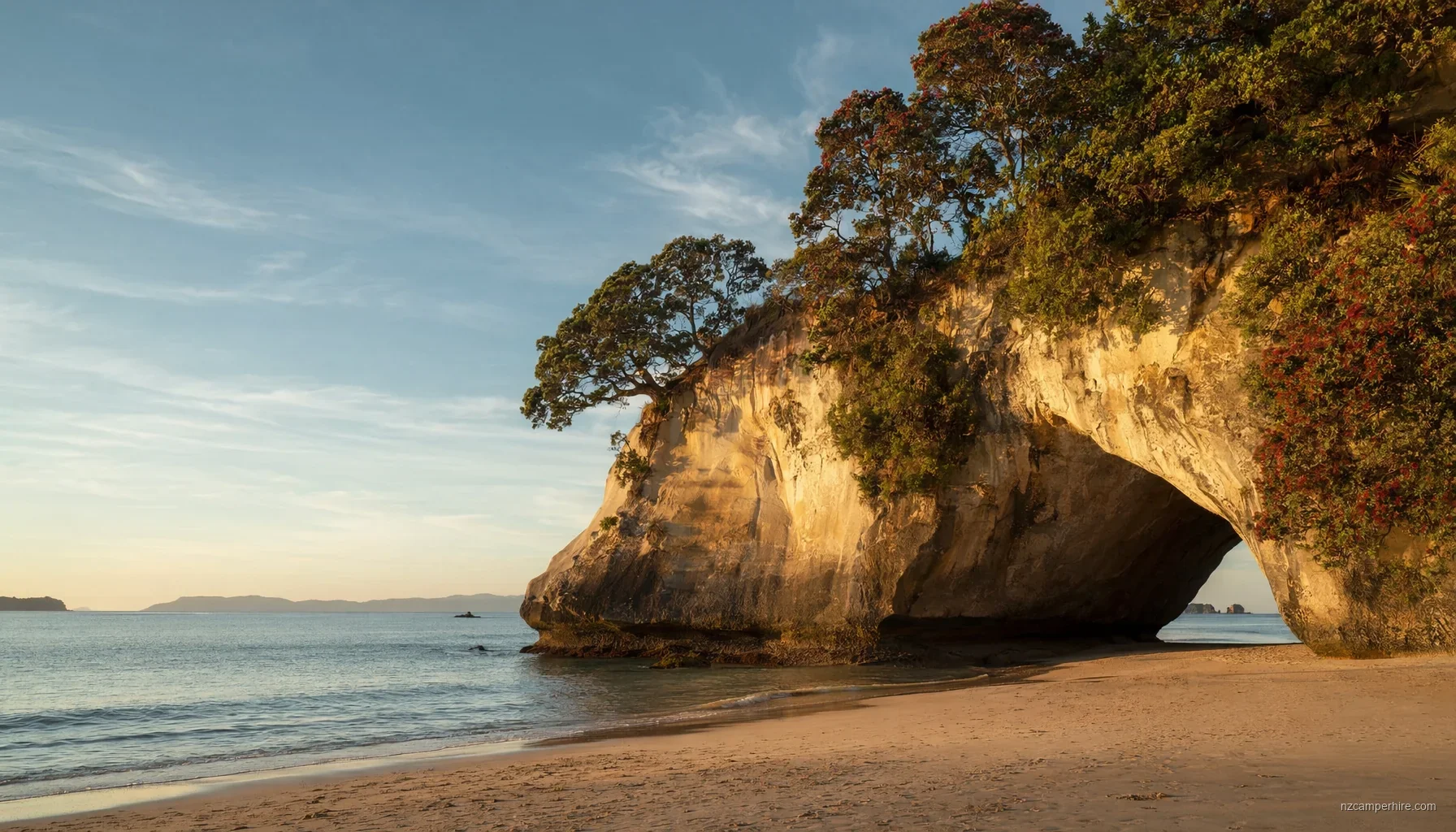 ROUTE
ROUTE Coromandel Peninsula loop
Short beach loop — Cathedral Cove, Hot Water Beach, 309 Road.
See the route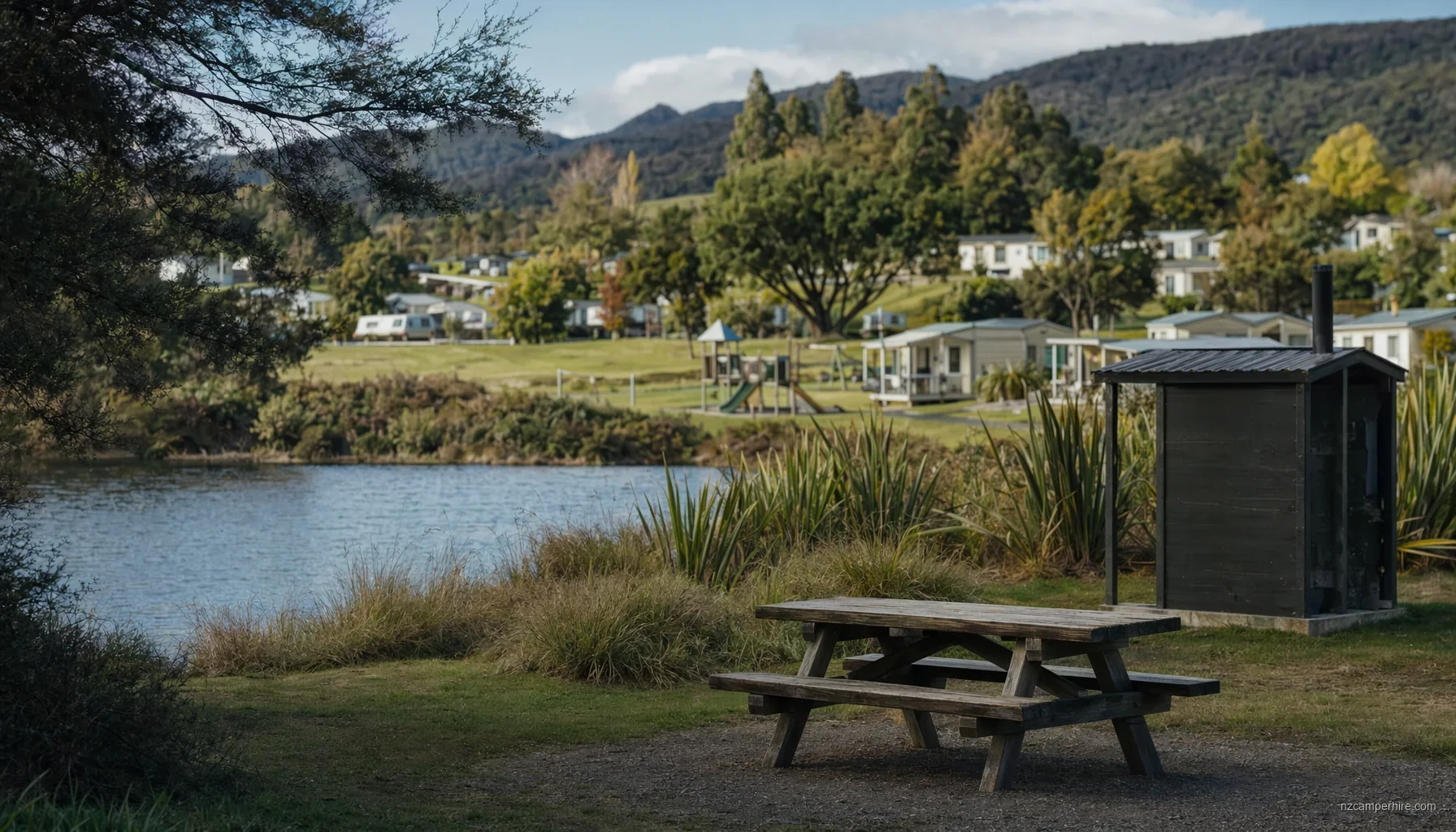 PRACTICAL GUIDE
 Holiday parks vs DOC campsites
Powered vs unpowered, facilities, booking, costs, and when each makes sense.
Read the guideDickson Holiday Park (Thames) — motorhome stay guide FAQ
Do I need to book in January?
Are powered sites really worth it here?
Can I dump tanks here without staying?
Talk to a planner about dickson holiday park (thames) — motorhome stay guide
Holiday parks book up fast in peak season and vary widely in what they offer. Send your dates and we'll come back with whether this one fits your trip and the right time to book it.