- spring
- shoulder
- west coast
Avg temp 8–18°C
Rainfall Variable
Daylight 11-14 hr
Phase Shoulder
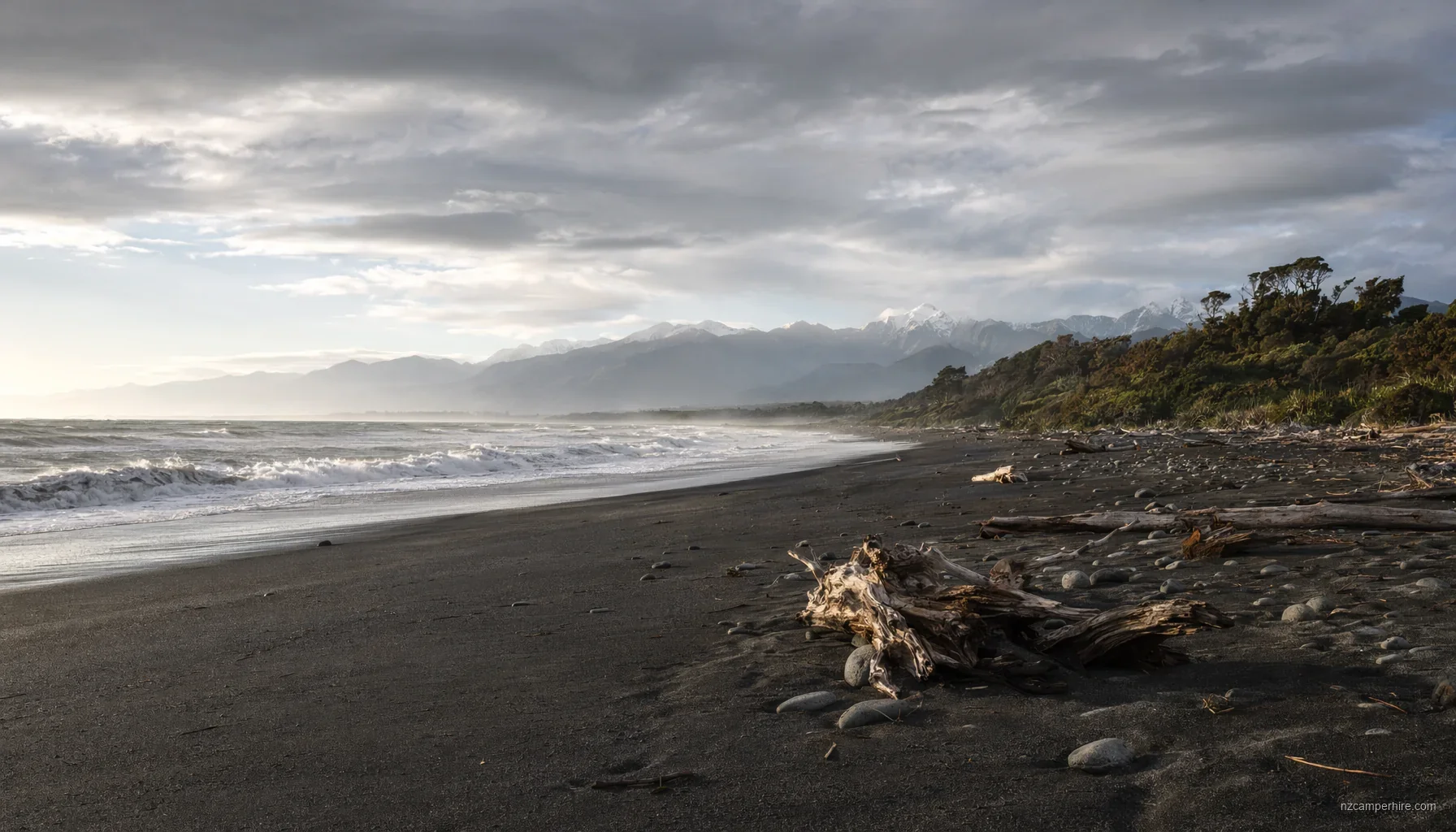
Early spring — unpredictable, alpine still snow-affected, lambs everywhere, shoulder rates
West Coast in September is early spring. It can be green, quiet and good value, but it is not settled. Expect wet days, lambs in the farm paddocks, snow still sitting on the tops, and the odd cold snap that affects the alpine passes.
This month works well if you leave slack in the plan. It is less useful if every glacier walk, pass crossing and ferry connection is fixed to the hour. Get a September-in-West Coast planning note with the booking windows pre-set, or reply with your dates if you'd like a planner to flag the gotchas for your exact week.
The coast is waking up, but winter has not fully left. In Hokitika, Greymouth, Franz Josef and Fox Glacier, the forest is bright and the waterfalls run hard after rain. The Tasman Sea still throws weather at SH6, and cloud can sit low around the glaciers for half a day.
For motorhome travellers, September is a shoulder-season month. Daily rates are usually well below January and February, but not always as soft as deep winter. The last week can overlap with NZ spring school holidays, so holiday parks fill faster than the quiet first half of the month.
Use Hokitika as the practical weather marker for the central West Coast. September averages sit around 13°C by day and 6°C overnight. Franz Josef and Fox Glacier feel similar, though damp air and shade make evenings colder in a van.
Rain is part of the region, not a glitch. September is not the wettest month, but alpine showers are expected and multi-day fronts are normal. Pack proper rain gear and treat glacier views as weather-dependent.
Daylight improves quickly. Early September has first light around 6:35 a.m. and last light around 6:35 p.m. By late September, after daylight saving starts, last light pushes close to 8:05 p.m. That extra hour helps on SH6, where single-lane bridges and roadside stops slow the day down.
Coastal SH6 is usually straightforward in September, but the roads into and out of the West Coast need respect. Arthur's Pass on SH73 is 920 m and is the main snow and ice watch if you are driving Greymouth to Christchurch. Lewis Pass on SH7 can also be affected. Haast Pass on SH6 is lower at 564 m, but cold rain, slips and short closures still happen.
Snow chains are not normally needed on the coast itself. They may be required on alpine approaches after a southerly front, and some rental operators set rules around where chains can be fitted. Read Snow chains in NZ: when you actually need them before building a fixed pass-crossing day.
NZ drives on the left. If your licence is in English it is normally valid for up to 12 months; if not, carry an International Driving Permit or approved translation.
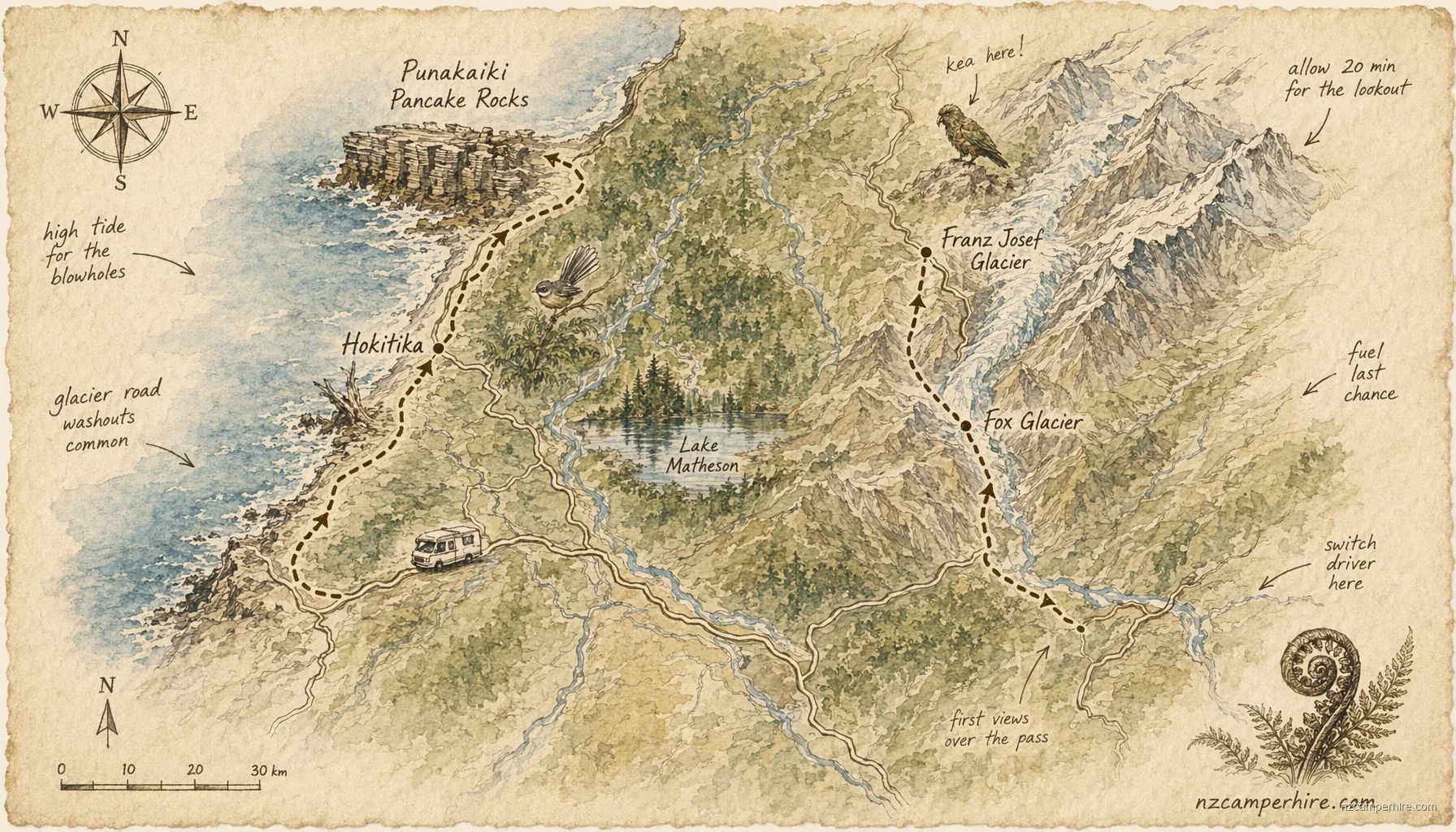
September suits short weather-window activities. Hokitika Gorge, Lake Matheson, the Franz Josef Glacier Valley track, Punakaiki Pancake Rocks and the Hokitika to Greymouth coast drive all work well between showers. Longer glacier heli activities can be excellent, but do not make them the only reason you are there.
Hokitika Holiday Park is a useful powered-stop base if the forecast turns wet. Around Franz Josef, choose a holiday park night rather than trying to stretch freedom camping rules in heavy rain. Lake Mahinapua DOC campsite is a good fine-weather option south of Hokitika, but check access and ground conditions after prolonged rain.
For wider timing context, compare this page with the September when-to-go page and the West Coast region guide. The Best time of year for a NZ campervan trip guide explains why September is cheaper and quieter, but more weather-sensitive.
The safest September routes give you a buffer before and after the coast. South Island in 14 days is a better fit than South Island in 7 days if you want Christchurch, Arthur's Pass, Hokitika, Franz Josef, Wanaka and Queenstown without forcing a pass drive in poor weather.
For shorter legs, Greymouth to Franz Josef is about 175 km and 2.5 to 3 hours in real motorhome time. Franz Josef to Fox Glacier is only 25 km, but still deserves a slow morning if the weather clears. Fox Glacier to Wanaka via Haast Pass is about 265 km and 4.5 to 5.5 hours with stops, longer if road works or weather intervene.
If you are arriving through Picton, the Cook Strait ferry with a campervan guide matters. Interislander and Bluebridge take about 3 hours 20 minutes across Picton to Wellington, around 3.5 hours with loading time. In September, book earlier for late-month school holidays, especially with a larger motorhome.

Tell us what kind of trip you're imagining and your flexibility on dates. We come back with month suggestions and what each one will cost.